
In an era of increasing environmental awareness and urgent climate action, the role of civil engineering in shaping sustainable infrastructure has never been more critical. This article delves into the complex world of emissions reduction in infrastructure systems, exploring innovative strategies, technologies, and best practices that are transforming the way we build and maintain our built environment.
What are Infrastructure Systems?
Infrastructure systems form the backbone of our society, encompassing a wide range of physical structures and facilities that support economic activity, social well-being, and environmental sustainability. These systems include:
- Transportation networks (roads, bridges, railways, airports)
- Energy distribution systems
- Water supply and wastewater management
- Communication networks
- Public buildings and facilities
- Urban spaces and green infrastructure
Overview of Emissions in Civil Engineering
The construction and operation of infrastructure systems are significant contributors to global greenhouse gas emissions. According to the United Nations Environment Programme, the building and construction sector accounted for 38% of total global energy-related CO2 emissions in 2019. This includes both operational emissions (from energy use in buildings) and embodied carbon emissions (from the manufacturing of construction materials and the construction process itself).
Civil engineering projects, by their nature, involve extensive use of energy-intensive materials like concrete and steel, heavy machinery operations, and long-term energy consumption for maintenance and operation. Each stage of an infrastructure project’s lifecycle – from material extraction and processing to construction, operation, maintenance, and eventual decommissioning – has its own emission profile.
The Importance of Reducing Emissions
Reducing emissions from infrastructure systems is crucial for several reasons:
- Climate Change Mitigation: As a major contributor to global emissions, the infrastructure sector has a significant role to play in meeting international climate goals, such as those set out in the Paris Agreement.
- Resource Efficiency: Low-emission strategies often go hand-in-hand with more efficient use of resources, leading to cost savings and reduced environmental impact.
- Public Health: Many emission reduction strategies also lead to improvements in air quality and overall environmental health, benefiting local communities.
- Economic Opportunities: The shift towards sustainable infrastructure creates new markets for green technologies and materials, driving innovation and economic growth.
- Resilience: Sustainable infrastructure is often more resilient to climate change impacts, ensuring long-term functionality and reduced maintenance costs.
As we delve deeper into this topic, we’ll explore the various sources of emissions in infrastructure, innovative strategies for reduction, and the transformative potential of sustainable civil engineering practices.
Key Sources of Emissions in Infrastructure
Understanding the primary sources of emissions in infrastructure systems is crucial for developing effective reduction strategies. This section examines the major contributors to greenhouse gas emissions across the lifecycle of infrastructure projects.
Emissions from Construction Activities
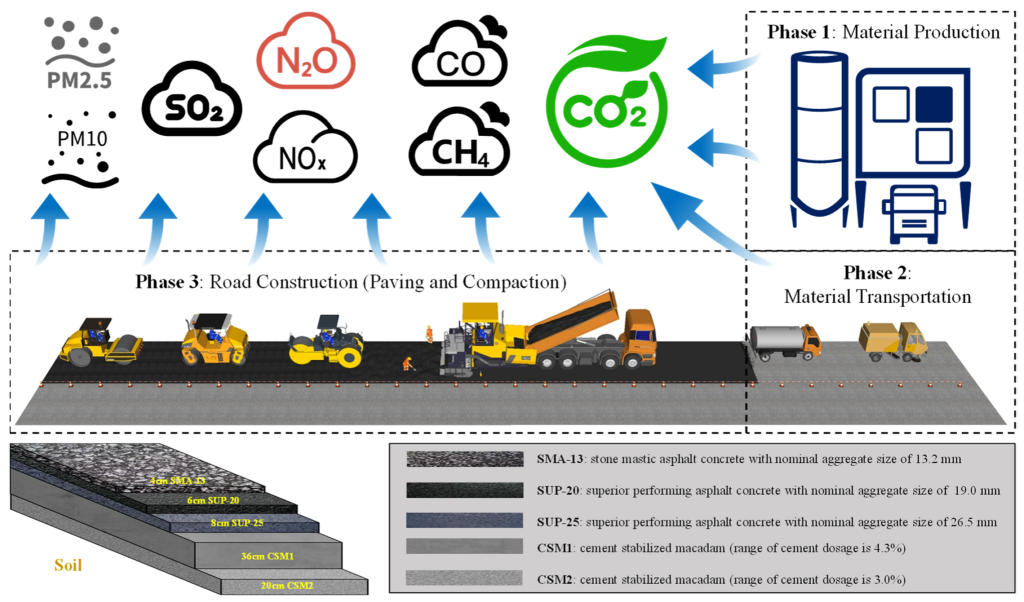
Construction activities are a significant source of direct emissions in infrastructure projects. These emissions primarily come from:
- Heavy Machinery: Excavators, bulldozers, cranes, and other construction equipment typically run on diesel fuel, emitting substantial amounts of CO2 and other pollutants.
- On-Site Energy Use: Temporary power generation for construction sites, often using diesel generators, contributes to emissions.
- Land Clearing and Vegetation Removal: These activities release stored carbon from soil and biomass.
- Waste Generation and Disposal: Construction waste and its transportation to disposal sites add to the emission footprint.
According to a study published in the Journal of Cleaner Production, construction activities can account for up to 5-10% of a building’s total lifecycle emissions.
Energy Consumption in Infrastructure
Once operational, infrastructure systems continue to consume energy and produce emissions. Key areas include:
- Building Operations: Heating, cooling, lighting, and powering appliances in buildings account for a significant portion of global energy use and related emissions.
- Water Treatment and Distribution: Pumping, treating, and distributing water requires substantial energy, particularly in areas with water scarcity.
- Street Lighting and Traffic Systems: These essential urban services contribute to ongoing energy consumption and emissions.
- Maintenance Activities: Regular upkeep of infrastructure, including repairs and renovations, involves energy use and potential emissions.
The International Energy Agency reports that buildings and construction together account for 36% of global final energy use and 39% of energy-related carbon dioxide emissions.
Transportation and Logistics-Related Emissions
Infrastructure systems both facilitate and generate transportation-related emissions:
- Material Transportation: The movement of construction materials from production sites to construction locations often involves long-distance trucking or shipping, resulting in significant emissions.
- Commuter Traffic: The design and layout of infrastructure systems influence transportation patterns and related emissions.
- Logistics Networks: Infrastructure supporting supply chains and goods movement contributes to overall transportation emissions.
A report by the International Transport Forum suggests that transport CO2 emissions could increase by 60% by 2050 if current trends persist, highlighting the need for sustainable infrastructure design.
Material Sourcing and Supply Chain Impacts
The production and transportation of construction materials contribute significantly to the overall emission profile of infrastructure projects:
- Cement Production: The cement industry alone is responsible for about 8% of global CO2 emissions, according to the International Energy Agency.
- Steel Manufacturing: Steel production is energy-intensive and a major source of industrial emissions.
- Extraction of Raw Materials: Mining and quarrying activities for construction materials have substantial environmental impacts, including emissions from heavy machinery and processing.
- Global Supply Chains: The international nature of material sourcing leads to emissions from long-distance transportation and complex logistics networks.
Understanding these key sources of emissions is the first step in developing comprehensive strategies for reduction. In the following sections, we will explore how sustainable design, innovative technologies, and policy frameworks can address these emission hotspots and pave the way for greener infrastructure systems.
Sustainable Design and Planning
Sustainable design and planning are fundamental to reducing emissions in infrastructure systems. This approach considers the environmental impact of a project throughout its entire lifecycle, from conception to demolition. By integrating sustainability principles early in the design process, civil engineers can significantly minimize the carbon footprint of infrastructure projects.
Incorporating Low-Carbon Materials
The selection of construction materials plays a crucial role in determining the overall emissions of an infrastructure project. Low-carbon alternatives to traditional materials are increasingly available and can substantially reduce embodied carbon:
- Low-Carbon Concrete: Innovations in concrete mixtures, such as geopolymer concrete or concrete with reduced clinker content, can lower CO2 emissions by up to 80% compared to traditional Portland cement concrete.
- Recycled Steel: Using recycled steel in construction can reduce emissions by up to 90% compared to virgin steel production.
- Timber and Engineered Wood Products: Wood-based materials act as carbon sinks and can have a negative carbon footprint when sourced sustainably.
- Bio-based Materials: Materials derived from renewable resources, such as hemp or mycelium, offer innovative low-carbon alternatives for insulation and non-structural components.
A study published in the Journal of Cleaner Production found that using alternative binders in concrete could reduce CO2 emissions by up to 64% compared to ordinary Portland cement.
Green Building Certifications (e.g., LEED, BREEAM)
Green building certification systems provide frameworks for designing, constructing, and operating sustainable buildings and infrastructure. These systems encourage emission reduction through various criteria:
- LEED (Leadership in Energy and Environmental Design): Developed by the U.S. Green Building Council, LEED certification considers factors such as energy efficiency, water usage, material selection, and indoor environmental quality.
- BREEAM (Building Research Establishment Environmental Assessment Method): This UK-based system assesses factors including energy, water, waste, pollution, and ecological impact.
- CEEQUAL (Civil Engineering Environmental Quality Assessment and Award Scheme): Specifically designed for infrastructure projects, CEEQUAL addresses sustainability in civil engineering, infrastructure, landscaping, and public realm projects.
According to the U.S. Green Building Council, LEED-certified buildings consume 25% less energy and 11% less water compared to non-certified buildings.
Lifecycle Assessment in Infrastructure Planning
Lifecycle Assessment (LCA) is a crucial tool in sustainable infrastructure planning. It involves analyzing the environmental impacts of a project from cradle to grave, including:
- Raw material extraction and processing
- Manufacturing and construction
- Operation and maintenance
- End-of-life disposal or recycling
LCA helps identify emission hotspots throughout the project lifecycle, enabling engineers to make informed decisions about materials, construction methods, and operational strategies. For example, a study published in the Journal of Infrastructure Systems found that incorporating LCA in bridge design could lead to a 20% reduction in lifecycle CO2 emissions.
Urban Planning for Reduced Emissions
Sustainable urban planning can significantly influence the long-term emission profile of infrastructure systems. Key strategies include:
- Transit-Oriented Development (TOD): Designing compact, walkable communities around high-quality public transport reduces reliance on personal vehicles and associated emissions.
- Mixed-Use Development: Integrating residential, commercial, and recreational spaces reduces the need for long-distance travel.
- Green Spaces and Urban Forests: Incorporating vegetation into urban design helps sequester carbon and reduce the urban heat island effect, lowering cooling energy demands.
- Sustainable Transportation Infrastructure: Designing for active transportation (walking, cycling) and efficient public transit reduces overall transportation emissions.
A study by the Urban Land Institute found that TOD can reduce per capita CO2 emissions by 20-30% compared to conventional suburban development.
By embracing these sustainable design and planning principles, civil engineers can create infrastructure systems that not only reduce emissions but also enhance quality of life, promote economic efficiency, and build resilience against climate change impacts. In the next section, we’ll explore how innovative technologies are further advancing these sustainability goals in infrastructure development.
Innovative Technologies for Emission Reduction
The field of civil engineering is witnessing a technological revolution that is transforming the way we approach emission reduction in infrastructure systems. From advanced construction techniques to smart energy management systems, these innovations are paving the way for a more sustainable built environment.
Advanced Construction Techniques
Modular and Prefabricated Construction
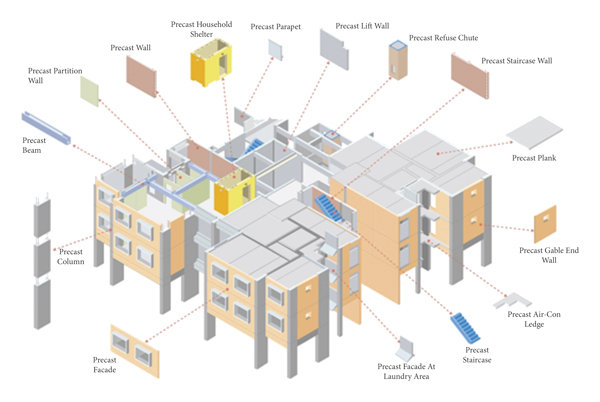
Modular and prefabricated construction methods are gaining traction due to their potential to reduce emissions and improve efficiency:
- Reduced On-Site Construction Time: By manufacturing components off-site, the duration of on-site construction activities is significantly reduced, leading to lower emissions from machinery and transportation.
- Improved Quality Control: Factory-controlled environments allow for more precise manufacturing, reducing material waste and improving energy efficiency.
- Optimized Material Use: Prefabrication enables better planning and utilization of materials, minimizing waste and associated emissions.
A study published in the Journal of Cleaner Production found that modular construction can reduce greenhouse gas emissions by up to 31% compared to traditional construction methods.
3D Printing in Civil Engineering
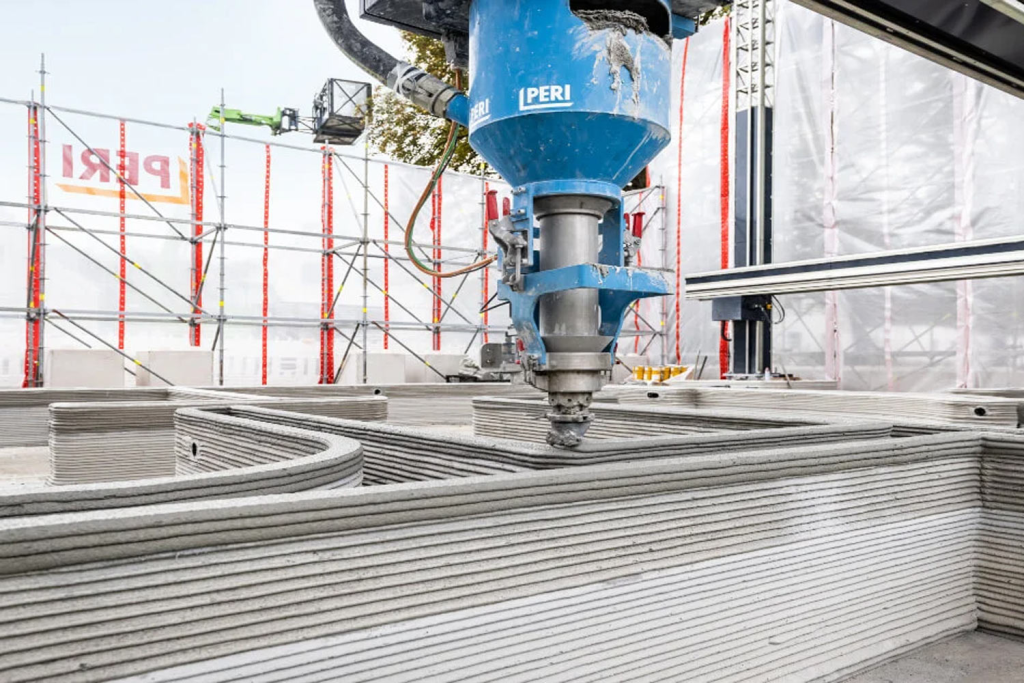
3D printing, or additive manufacturing, is emerging as a game-changing technology in construction:
- Material Efficiency: 3D printing allows for precise material deposition, significantly reducing waste compared to traditional construction methods.
- Complex Geometries: The ability to create complex shapes can lead to more efficient structural designs that use less material.
- On-Site Production: Mobile 3D printing units can produce components on-site, reducing transportation emissions.
Research from Loughborough University suggests that 3D printing in construction could reduce waste by up to 30% and cut labor costs by 50-80%.
Energy-Efficient Building Systems
Smart Grids and Microgrids
Smart grid technologies are revolutionizing energy management in infrastructure systems:
- Demand Response: Smart grids enable real-time adjustments to energy consumption based on supply and demand, reducing peak loads and associated emissions.
- Integration of Renewable Energy: Advanced grid systems facilitate the incorporation of variable renewable energy sources, reducing reliance on fossil fuels.
- Microgrids: These localized grids can operate autonomously, improving energy resilience and enabling greater use of local renewable energy sources.
The U.S. Department of Energy reports that smart grid technologies could reduce electricity consumption by up to 4% by 2030, equivalent to eliminating the fuel and greenhouse gas emissions from 70 million of today’s passenger vehicles.
Renewable Energy Integration
Integrating renewable energy sources into infrastructure systems is crucial for long-term emission reduction:
- Building-Integrated Photovoltaics (BIPV): Solar panels integrated into building materials can generate clean electricity while serving as functional building components.
- Wind Energy: Small-scale wind turbines can be incorporated into urban environments, complementing larger wind farms in rural areas.
- Geothermal Systems: Ground source heat pumps can provide efficient heating and cooling for buildings, reducing reliance on fossil fuels.
According to the International Renewable Energy Agency, renewable energy and electrification can deliver over 90% of the energy-related CO2 emission reductions needed to meet climate goals.
Carbon Capture and Storage (CCS)
Carbon Capture and Storage technologies are being developed to mitigate emissions from hard-to-abate sectors in infrastructure:
- Post-Combustion Capture: CO2 is captured from flue gases after combustion, applicable to existing infrastructure.
- Pre-Combustion Capture: Carbon is removed before combustion, typically in new, specially designed plants.
- Oxy-Fuel Combustion: Fuel is burned in pure oxygen, producing a more concentrated CO2 stream for easier capture.
The International Energy Agency estimates that CCS could contribute to 14% of cumulative emissions reductions through 2060 in a sustainable development scenario.
AI and Big Data for Optimized Resource Use
Artificial Intelligence and Big Data analytics are transforming infrastructure management:
- Predictive Maintenance: AI algorithms can predict when infrastructure components are likely to fail, allowing for timely maintenance and reducing energy waste from inefficient operations.
- Optimized Energy Management: Machine learning algorithms can analyze vast amounts of data to optimize energy use in buildings and infrastructure systems.
- Traffic Management: AI-powered traffic systems can reduce congestion and emissions by optimizing traffic flow in real-time.
- Resource Allocation: Big data analytics can help in better allocation of resources, reducing waste and associated emissions.
A study by PwC estimates that AI applications could reduce global greenhouse gas emissions by 4% in 2030, equivalent to 2.4 Gt CO2e.
These innovative technologies are not only reducing emissions but also improving the overall efficiency and performance of infrastructure systems. As we move forward, the integration of these technologies will play a crucial role in creating sustainable, low-emission infrastructure.
Case Studies: Successful Implementation
Examining real-world examples of successful emission reduction in infrastructure projects provides valuable insights into effective strategies and their practical application. The following case studies showcase innovative approaches across various types of infrastructure.
Eco-Friendly Bridges and Highways
Case Study: Kurilpa Bridge, Brisbane, Australia
The Kurilpa Bridge, completed in 2009, is the world’s largest tensegrity bridge and a prime example of sustainable infrastructure design:
- Energy-Efficient Lighting: The bridge utilizes LED lighting powered by solar panels, reducing operational emissions.
- Innovative Design: The tensegrity structure minimizes material use while maintaining structural integrity.
- Sustainable Materials: The bridge incorporates recycled materials and low-carbon concrete in its construction.
According to the Australian Institute of Architects, the Kurilpa Bridge’s design resulted in a 35% reduction in steel usage compared to conventional bridge designs.
Green Roofs and Living Walls in Urban Areas
Case Study: ACROS Fukuoka Prefectural International Hall, Japan
This building, designed by Emilio Ambasz & Associates, exemplifies the integration of green infrastructure in urban environments:
- Extensive Green Roof: The building features a series of garden terraces that ascend the full height of the building, covering 5,400 square meters.
- Cooling Effect: The green roof helps reduce the urban heat island effect and lowers the building’s cooling energy demand.
- Carbon Sequestration: The vegetation on the building absorbs an estimated 4.5 tons of CO2 annually.
- Biodiversity: The green spaces support local flora and fauna, enhancing urban biodiversity.
Studies have shown that green roofs can reduce a building’s energy consumption for cooling by up to 75% during summer months.
Low-Emission Public Transport Infrastructure
Case Study: Bogotá TransMilenio Bus Rapid Transit (BRT) System, Colombia
Bogotá’s TransMilenio is a pioneering BRT system that has significantly reduced urban transport emissions:
- Dedicated Bus Lanes: Exclusive lanes for high-capacity buses reduce travel times and improve fuel efficiency.
- Clean Vehicle Technology: The system uses a fleet of low-emission and electric buses.
- Modal Shift: By providing an efficient alternative to private vehicles, the system has encouraged a shift towards public transport.
A study by the C40 Cities Climate Leadership Group found that the TransMilenio system has reduced CO2 emissions by over 1.6 million tons since its inception in 2000.
Sustainable Water Management Systems
Case Study: Changi Water Reclamation Plant, Singapore
Singapore’s Changi Water Reclamation Plant is a model of sustainable water infrastructure:
- Energy Recovery: The plant uses anaerobic digestion to treat sewage sludge, generating biogas that is used to power the facility.
- Water Recycling: The plant produces high-grade reclaimed water (NEWater), reducing the need for energy-intensive desalination.
- Efficient Design: The plant’s compact, underground design minimizes land use and reduces pumping energy requirements.
According to PUB, Singapore’s National Water Agency, the Changi plant’s energy recovery system generates enough electricity to meet up to 25% of the facility’s energy needs.
These case studies demonstrate that significant emission reductions are achievable across various types of infrastructure through innovative design, technology integration, and sustainable practices. They serve as inspiring examples for future infrastructure projects worldwide.
Policy and Regulatory Frameworks
Effective policy and regulatory frameworks are crucial for driving and supporting emission reduction efforts in infrastructure systems. These frameworks create incentives, set standards, and provide guidance for sustainable practices in civil engineering and construction.
International Agreements and Guidelines
Paris Agreement and Infrastructure Emissions
The Paris Agreement, adopted in 2015, has significant implications for infrastructure development:
- Emission Reduction Targets: Countries’ Nationally Determined Contributions (NDCs) often include commitments related to infrastructure and construction.
- Long-term Strategies: The agreement encourages countries to develop long-term low greenhouse gas emission development strategies, which often involve sustainable infrastructure planning.
- Climate Finance: The agreement aims to make finance flows consistent with a pathway towards low greenhouse gas emissions, potentially increasing funding for low-emission infrastructure projects.
According to the UNFCCC, as of 2021, 191 parties have submitted their first NDCs, many of which include targets related to infrastructure and construction emissions.
National and Local Government Initiatives
Many countries and cities have implemented policies to reduce emissions from infrastructure:
- Building Codes and Standards: Increasingly stringent energy efficiency requirements in building codes are driving down operational emissions.
- Carbon Pricing: Some jurisdictions have implemented carbon taxes or cap-and-trade systems that incentivize low-carbon construction and operation.
- Green Public Procurement: Governments are using their purchasing power to drive demand for low-emission materials and practices in public infrastructure projects.
For example, the European Union’s Energy Performance of Buildings Directive requires all new buildings to be nearly zero-energy by 2021.
Incentives for Green Infrastructure Development
Various incentive programs have been implemented to encourage sustainable infrastructure development:
- Tax Incentives: Many countries offer tax credits or deductions for energy-efficient buildings and renewable energy installations.
- Grants and Subsidies: Government funding programs support research, development, and implementation of low-emission technologies in infrastructure.
- Expedited Permitting: Some jurisdictions offer faster approval processes for projects that meet certain sustainability criteria.
The U.S. Department of Energy’s Better Buildings Initiative has partnered with over 900 organizations, helping them save nearly $11 billion on energy costs and avoiding 105 million metric tons of CO2 emissions.
Compliance and Monitoring Tools
Ensuring compliance with emission reduction targets requires robust monitoring and reporting mechanisms:
- Greenhouse Gas Protocols: Standardized methods for measuring and reporting emissions, such as those developed by the World Resources Institute, provide a common language for emission accounting.
- Building Energy Management Systems (BEMS): These systems allow for real-time monitoring and optimization of energy use in buildings.
- Life Cycle Assessment Tools: Software tools that help quantify the environmental impacts of infrastructure projects throughout their lifecycle.
The CDP (formerly Carbon Disclosure Project) reports that in 2020, over 9,600 companies disclosed environmental data through their platform, representing over 50% of global market capitalization.
Effective policy and regulatory frameworks, coupled with appropriate incentives and monitoring tools, create an enabling environment for emission reduction in infrastructure systems. As these frameworks continue to evolve, they will play a crucial role in accelerating the transition to sustainable, low-emission infrastructure worldwide.
Challenges and Barriers to Emission Reduction
While significant progress has been made in reducing emissions from infrastructure systems, several challenges and barriers remain. Understanding these obstacles is crucial for developing effective strategies to overcome them.
Economic Considerations and Cost-Benefit Analysis
One of the primary challenges in implementing low-emission infrastructure is the perception of higher upfront costs:
- Initial Investment: Sustainable technologies and materials often have higher initial costs, even though they may offer long-term savings.
- Short-term Financial Focus: Many decision-makers prioritize short-term financial gains over long-term environmental benefits.
- Difficulty in Quantifying Benefits: Some benefits of low-emission infrastructure, such as improved public health or ecosystem services, are challenging to quantify in monetary terms.
A study by the World Green Building Council found that while green buildings can cost up to 12% more to build, they also offer operational savings of up to 37% over 20 years.
Technical Challenges in Retrofitting Old Infrastructure
Adapting existing infrastructure to reduce emissions presents unique challenges:
- Structural Limitations: Older buildings and structures may not be suitable for certain energy-efficient upgrades without significant modifications.
- Heritage Conservation: Historic buildings often have restrictions on modifications, limiting the potential for energy efficiency improvements.
- Disruption to Operations: Retrofitting can cause significant disruptions to building occupants or infrastructure users.
The International Energy Agency estimates that two-thirds of the building stock in most developed countries will still be in use in 2050, highlighting the importance of effective retrofitting strategies.
Public Perception and Acceptance
Public attitudes and behaviors can significantly impact the success of emission reduction initiatives:
- Resistance to Change: People may be reluctant to adopt new technologies or change their behaviors related to infrastructure use.
- Lack of Awareness: There may be limited public understanding of the environmental impact of infrastructure and the benefits of low-emission alternatives.
- NIMBY (Not In My Back Yard) Syndrome: Local opposition can hinder the development of certain types of sustainable infrastructure, such as wind farms or waste-to-energy plants.
A survey by the Pew Research Center found that while 65% of Americans prioritize developing alternative energy sources, support varies significantly for specific technologies and their local implementation.
Lack of Standardized Metrics for Emission Reduction
The absence of universally accepted standards for measuring and reporting emissions in infrastructure projects poses challenges:
- Inconsistent Methodologies: Different regions and sectors may use varying methods to calculate emissions, making comparisons difficult.
- Incomplete Data: Gaps in data collection and reporting can lead to underestimation of emissions or missed reduction opportunities.
- Evolving Technologies: Rapid technological advancements can make it challenging to establish long-term standards for emission measurement and reduction.
The International Organization for Standardization (ISO) has developed several standards related to greenhouse gas management, such as ISO 14064 and ISO 14067, but their adoption is not yet universal.
Addressing these challenges requires a multi-faceted approach involving policy innovations, technological advancements, public education, and cross-sector collaboration. By recognizing and systematically tackling these barriers, the civil engineering community can accelerate progress towards low-emission infrastructure systems.
Future Trends in Sustainable Infrastructure
The future of sustainable infrastructure is shaped by emerging technologies, changing climate conditions, and evolving societal needs. Understanding these trends is crucial for civil engineers and policymakers to plan and design infrastructure systems that are not only low in emissions but also resilient and adaptable.
Next-Generation Materials and Technologies
Innovative materials and technologies are set to revolutionize infrastructure development:
- Self-Healing Materials: Concrete and asphalt that can repair themselves, reducing maintenance needs and associated emissions.
- Nanotechnology: Nano-engineered materials that offer improved strength, durability, and energy efficiency.
- Biomimicry: Infrastructure designs inspired by natural systems, optimizing resource use and reducing environmental impact.
- Energy-Generating Infrastructure: Roads, buildings, and bridges that generate electricity through integrated solar cells or piezoelectric systems.
Research published in the journal Nature Materials suggests that self-healing concrete could reduce lifecycle CO2 emissions by up to 50% compared to conventional concrete.
Resilience Planning in the Face of Climate Change
As climate change impacts intensify, infrastructure must be designed with resilience in mind:
- Adaptive Design: Infrastructure that can be easily modified or upgraded to meet changing environmental conditions.
- Nature-Based Solutions: Integrating natural systems into infrastructure design to enhance resilience and provide ecosystem services.
- Predictive Modeling: Advanced climate models to inform infrastructure design and planning for future scenarios.
- Multi-Functional Infrastructure: Designs that serve multiple purposes, such as flood defenses that also function as public spaces.

The World Bank estimates that investing $1 trillion in climate-resilient infrastructure in developing countries could yield $4.2 trillion in benefits.
The Role of Circular Economy in Infrastructure
Circular economy principles are increasingly being applied to infrastructure development:
- Design for Disassembly: Creating infrastructure components that can be easily separated and recycled at the end of their life.
- Material Passports: Detailed documentation of materials used in construction to facilitate future recycling and reuse.
- Waste-to-Resource: Technologies that convert waste materials into valuable resources for infrastructure projects.
- Sharing Economy Models: Optimizing infrastructure use through shared resources and spaces.
A report by the Ellen MacArthur Foundation suggests that applying circular economy principles could reduce CO2 emissions from the built environment by 38% by 2050.
Global Initiatives Driving Change in Civil Engineering
Several global initiatives are shaping the future of sustainable infrastructure:
- UN Sustainable Development Goals (SDGs): Particularly SDG 9 (Industry, Innovation, and Infrastructure) and SDG 11 (Sustainable Cities and Communities) are driving sustainable infrastructure development.
- New Urban Agenda: This UN framework promotes sustainable urban development, including low-emission infrastructure.
- Global Infrastructure Hub: An G20 initiative to promote quality infrastructure investment worldwide.
- One Planet Network: A multi-stakeholder partnership for sustainable consumption and production, including in the built environment.
The World Economic Forum estimates that meeting the UN Sustainable Development Goals will require $6.9 trillion in annual infrastructure investment through 2030, presenting both a challenge and an opportunity for sustainable development.
As these trends continue to evolve, they will shape the future of civil engineering and infrastructure development. The integration of these innovations and approaches will be crucial in creating infrastructure systems that are not only low in emissions but also resilient, adaptive, and aligned with broader sustainability goals.
Practical Tips for Engineers and Planners
For civil engineers and urban planners working on infrastructure projects, incorporating emission reduction strategies can seem daunting. Here are some practical tips to help integrate sustainable practices into your work:
How to Incorporate Emission Reduction in Projects
- Start Early: Incorporate emission reduction goals at the earliest stages of project planning and design.
- Use Life Cycle Assessment (LCA): Employ LCA tools to evaluate the environmental impact of different design options and materials.
- Prioritize Passive Design: Maximize the use of natural lighting, ventilation, and thermal mass to reduce energy demands.
- Optimize Material Use: Choose low-carbon materials and design for material efficiency to reduce embodied carbon.
- Integrate Renewable Energy: Consider on-site renewable energy generation in your designs.
A study in the Journal of Cleaner Production found that early integration of sustainability considerations can reduce a building’s carbon footprint by up to 70% without significant cost increases.
Best Practices for Collaboration Across Disciplines
Effective emission reduction often requires cross-disciplinary collaboration:
- Engage Stakeholders Early: Involve all relevant parties, including architects, engineers, environmental scientists, and end-users, from the project’s inception.
- Utilize Integrated Design Process (IDP): This approach brings together various disciplines to optimize the project as a whole, rather than individual components.
- Leverage BIM (Building Information Modeling): Use BIM tools to facilitate collaboration and optimize designs for energy efficiency and reduced emissions.
- Encourage Knowledge Sharing: Create platforms for sharing best practices and lessons learned across projects and disciplines.
Research published in Automation in Construction suggests that BIM can contribute to energy savings of up to 30% in building projects.
Tools and Resources for Measuring Impact
Several tools are available to help quantify and reduce emissions in infrastructure projects:
- Carbon Calculators: Tools like the Infrastructure Carbon Review Tool or the GHG Protocol tools can help estimate project emissions.
- Energy Modeling Software: Programs such as EnergyPlus or IES-VE can simulate building energy performance.
- Environmental Product Declarations (EPDs): Use EPDs to compare the environmental impact of different materials and products.
- Sustainability Rating Systems: Frameworks like CEEQUAL or Envision can guide and assess sustainable infrastructure development.
A survey by the American Council for an Energy-Efficient Economy found that projects using energy modeling achieved average energy savings of 13% compared to code-compliant designs.
Engaging Stakeholders in Sustainable Practices
Effective stakeholder engagement is crucial for the success of sustainable infrastructure projects:
- Educate and Inform: Provide clear information about the benefits of emission reduction strategies to all stakeholders.
- Demonstrate Value: Use case studies and life cycle cost analyses to show the long-term benefits of sustainable practices.
- Involve the Community: Engage local communities in the planning process to ensure projects meet their needs and gain public support.
- Provide Training: Offer training programs for contractors and operators on sustainable construction and operation practices.
- Monitor and Report: Implement systems to track and report on emission reductions, sharing successes with stakeholders.
According to the Project Management Institute, projects with excellent stakeholder engagement are 50% more likely to complete on time and on budget.
By implementing these practical tips, engineers and planners can play a crucial role in reducing emissions from infrastructure systems. These strategies not only contribute to environmental sustainability but also often lead to more efficient, cost-effective, and resilient infrastructure projects.
The Road Ahead for Green Infrastructure
As we’ve explored throughout this article, reducing emissions from infrastructure systems is not just an environmental imperative but also an opportunity for innovation, efficiency, and improved quality of life. The road ahead for green infrastructure is both challenging and promising, requiring concerted efforts from civil engineers, policymakers, and society at large.
The Long-Term Benefits of Reducing Emissions
The transition to low-emission infrastructure offers numerous long-term benefits:
- Climate Change Mitigation: Significant reductions in greenhouse gas emissions, contributing to global climate goals.
- Economic Savings: Lower operational costs and increased efficiency over the lifecycle of infrastructure projects.
- Health Improvements: Reduced air pollution and improved indoor environmental quality leading to better public health outcomes.
- Resource Conservation: More efficient use of materials and energy, preserving natural resources for future generations.
- Resilience: Infrastructure better equipped to withstand and adapt to changing environmental conditions.
The Global Commission on the Economy and Climate estimates that bold climate action, including in infrastructure, could deliver at least $26 trillion in economic benefits through 2030.
Call to Action for Civil Engineers
Civil engineers have a crucial role to play in shaping a sustainable future:
- Embrace Innovation: Stay informed about and implement cutting-edge sustainable technologies and practices.
- Advocate for Sustainability: Use your expertise to influence policy and decision-making towards more sustainable infrastructure.
- Prioritize Lifecycle Thinking: Consider the full environmental impact of projects from conception to end-of-life.
- Collaborate Across Disciplines: Work with professionals from diverse fields to develop holistic, sustainable solutions.
- Educate and Inspire: Share knowledge about sustainable practices with colleagues, clients, and the public.
The American Society of Civil Engineers (ASCE) has committed to working towards carbon neutrality in infrastructure by 2050, highlighting the profession’s pivotal role in addressing climate change.
Building a Sustainable Future Together
Creating truly sustainable infrastructure systems requires collective action:
- Public-Private Partnerships: Collaboration between governments, businesses, and civil society to drive innovation and investment in green infrastructure.
- Community Engagement: Involving local communities in the planning and implementation of sustainable infrastructure projects.
- Global Cooperation: Sharing best practices, technologies, and resources across borders to accelerate progress worldwide.
- Continuous Learning and Adaptation: Embracing a culture of ongoing improvement and flexibility in the face of new challenges and opportunities.
The UN Environment Programme states that sustainable infrastructure is essential for achieving 92% of the targets across all 17 Sustainable Development Goals.
In conclusion, the journey towards low-emission infrastructure is well underway, driven by technological innovations, policy shifts, and growing public awareness. While challenges remain, the potential benefits for our climate, economy, and society are immense. As civil engineers, planners, and global citizens, we have the opportunity and responsibility to shape a more sustainable and resilient built environment for current and future generations.
By embracing sustainable practices, leveraging innovative technologies, and fostering collaboration, we can create infrastructure systems that not only minimize emissions but also enhance quality of life, promote economic prosperity, and protect our planet. The road ahead may be complex, but with commitment, creativity, and collective action, we can build a greener, more sustainable future for all.
Frequently Asked Questions (FAQ)
What are the most effective strategies for reducing emissions in infrastructure?
The most effective strategies for reducing emissions in infrastructure include:
- Incorporating low-carbon and recycled materials in construction
- Implementing energy-efficient designs and systems
- Integrating renewable energy sources
- Optimizing transportation and logistics in construction and operation
- Utilizing advanced technologies like AI and IoT for efficient resource management
The effectiveness of these strategies can vary depending on the specific project and context. A comprehensive approach combining multiple strategies often yields the best results.
How does green infrastructure differ from traditional infrastructure?
Green infrastructure differs from traditional infrastructure in several key ways:
- Environmental Impact: Green infrastructure aims to minimize negative environmental impacts and often provides ecosystem services.
- Resource Efficiency: It focuses on optimizing resource use throughout the lifecycle of the project.
- Adaptability: Green infrastructure is often designed to be more flexible and adaptable to changing conditions.
- Multifunctionality: It often serves multiple purposes, such as managing stormwater while also providing recreational spaces.
- Long-term Perspective: Green infrastructure considers long-term sustainability and resilience in addition to immediate functionality.
What are the costs involved in implementing low-emission infrastructure?
The costs of implementing low-emission infrastructure can vary widely depending on the project type and scale. Generally, considerations include:
- Upfront Costs: These may be higher due to the use of advanced technologies or sustainable materials.
- Operational Savings: Many green infrastructure projects result in lower operational costs over time.
- Lifecycle Costs: When considering the entire lifecycle, low-emission infrastructure often proves more cost-effective.
- External Benefits: There are often additional benefits like improved public health or increased property values that should be considered in cost-benefit analyses.
A report by the Global Commission on the Economy and Climate suggests that while upfront costs for sustainable infrastructure may be 4.5% higher, overall lifecycle costs could be as much as 18% lower compared to traditional infrastructure.
How can civil engineers contribute to emission reduction?
Civil engineers can contribute to emission reduction in several ways:
- Sustainable Design: Incorporating energy-efficient and low-carbon designs in infrastructure projects.
- Material Selection: Choosing and advocating for low-carbon and recycled materials.
- Innovation: Developing and implementing new technologies and methods for sustainable construction and operation.
- Lifecycle Assessment: Conducting comprehensive lifecycle assessments to identify and mitigate emission hotspots.
- Education and Advocacy: Educating clients, colleagues, and the public about the importance and methods of emission reduction in infrastructure.
- Policy Influence: Contributing expertise to the development of policies and standards that promote sustainable infrastructure.
The Institution of Civil Engineers (ICE) has set a target for its members to help reduce infrastructure carbon emissions by 30% by 2030, highlighting the crucial role of civil engineers in this global challenge.
These FAQs provide a brief overview of key aspects of emission reduction in infrastructure systems. For more detailed information on any of these topics, refer to the relevant sections in the main article or consult specific resources and case studies in the field of sustainable civil engineering.
In conclusion, reducing emissions from infrastructure systems is a complex but crucial challenge that requires innovative thinking, collaborative efforts, and a commitment to sustainability from all stakeholders. As we’ve explored throughout this article, there are numerous strategies, technologies, and approaches available to civil engineers and planners to create more sustainable and low-emission infrastructure.
From incorporating advanced materials and construction techniques to leveraging AI and big data for optimized resource use, the field of civil engineering is at the forefront of combating climate change through infrastructure development. While challenges remain, particularly in terms of economic considerations and retrofitting existing infrastructure, the long-term benefits of sustainable practices far outweigh the initial costs.
As we look to the future, it’s clear that the role of civil engineers in shaping a sustainable built environment has never been more important. By embracing the principles and practices outlined in this article, professionals in the field can make significant contributions to reducing global emissions and creating resilient, efficient, and environmentally friendly infrastructure systems.
The road to green infrastructure is ongoing, but with continued innovation, collaboration, and commitment, we can build a more sustainable world for current and future generations.
This article provides a comprehensive overview of strategies for reducing emissions from infrastructure systems. For the most up-to-date information and specific guidelines, always consult the latest research, industry standards, and local regulations in your area.