In an era of increasing environmental awareness and sustainable development, green building certifications and standards have become crucial tools for civil engineers and construction professionals. These certifications serve as benchmarks for sustainable construction practices, promoting energy efficiency, resource conservation, and environmental responsibility in the built environment.
Green building certifications are third-party verification systems that assess and recognize buildings and construction projects that meet specific environmental performance criteria. These standards encompass various aspects of sustainability, including energy efficiency, water conservation, material selection, indoor environmental quality, and overall environmental impact.
For civil engineers, understanding and implementing these certifications is essential for several reasons:
- They provide a structured framework for incorporating sustainable practices into design and construction processes.
- They help in meeting increasingly stringent environmental regulations and building codes.
- They contribute to the creation of healthier, more efficient, and environmentally responsible buildings.
- They can lead to significant long-term cost savings through reduced energy and resource consumption.
- They enhance the marketability and value of construction projects.
This comprehensive guide will explore the most prominent green building certifications and standards, their importance, and how civil engineers can leverage them to create more sustainable and efficient buildings. We’ll delve into the specifics of each certification, discuss their global impact, and provide insights into the certification process and future trends in green building practices.
The Importance of Green Building Certifications
Green building certifications play a vital role in promoting sustainable construction practices and have far-reaching impacts on the environment, economy, and society. Let’s explore these aspects in detail:
Environmental Impact Reduction
One of the primary goals of green building certifications is to minimize the environmental footprint of construction projects. This is achieved through various means:
- Energy Efficiency: Certified buildings are designed to consume less energy through improved insulation, efficient HVAC systems, and the use of renewable energy sources. According to the U.S. Green Building Council, LEED-certified buildings consume 25% less energy compared to non-certified buildings.
- Water Conservation: Green certifications promote water-saving fixtures, rainwater harvesting, and efficient landscaping practices. The USGBC reports that LEED-certified buildings use 11% less water than traditional buildings.
- Waste Reduction: Certifications encourage the use of recycled materials, proper waste management during construction, and designing for eventual deconstruction and material reuse.
- Carbon Footprint Reduction: By promoting energy efficiency and sustainable materials, green buildings significantly reduce greenhouse gas emissions. The World Green Building Council estimates that green buildings can reduce carbon emissions by up to 84%.
Economic Benefits
While the initial costs of achieving green certification may be higher, the long-term economic benefits are substantial:
- Energy Cost Savings: The improved energy efficiency of certified buildings leads to significant reductions in operational costs. The U.S. Department of Energy reports that LEED-certified buildings can reduce energy costs by up to 30%.
- Water Cost Savings: Efficient water use translates to lower water bills. Green-certified buildings can reduce water usage by 30-50% compared to conventional buildings.
- Increased Property Value: Green-certified buildings often command higher rental rates and sales prices. A study by the Royal Institution of Chartered Surveyors found that BREEAM-certified buildings achieved up to 11.8% higher rental values compared to non-certified properties.
- Lower Maintenance Costs: The use of durable, sustainable materials and efficient systems can lead to reduced maintenance and replacement costs over the building’s lifecycle.
- Tax Incentives: Many jurisdictions offer tax breaks and incentives for green-certified buildings, further enhancing their economic appeal.
Social Responsibility and Marketability
Green building certifications also have significant social impacts and marketing benefits:
- Enhanced Reputation: Companies that invest in green-certified buildings demonstrate a commitment to sustainability, enhancing their corporate image and attracting environmentally conscious clients and employees.
- Improved Occupant Health and Productivity: Green buildings often have better indoor air quality, natural lighting, and thermal comfort, leading to improved health outcomes and increased productivity for occupants. A study by Harvard T.H. Chan School of Public Health found that occupants of green-certified buildings had 26% higher cognitive function scores compared to those in non-certified buildings.
- Competitive Advantage: In an increasingly environmentally aware market, green certifications can provide a significant competitive edge. Many governments and large corporations now require green certification for their buildings or leased spaces.
- Community Benefits: Green buildings often incorporate features that benefit the wider community, such as green spaces, improved pedestrian access, and reduced strain on local infrastructure.
Key Green Building Certifications
Several green building certification systems have emerged globally, each with its own focus and criteria. Let’s explore some of the most prominent certifications:
LEED (Leadership in Energy and Environmental Design)
Developed by the U.S. Green Building Council (USGBC), LEED is one of the most widely recognized green building certification systems worldwide.
Overview:
- LEED provides a framework for healthy, highly efficient, and cost-saving green buildings.
- It can be applied to virtually all building types, from homes to corporate headquarters.
- LEED certification is available for new construction, interior fit-outs, operations and maintenance, and neighborhood development.
Certification Levels:
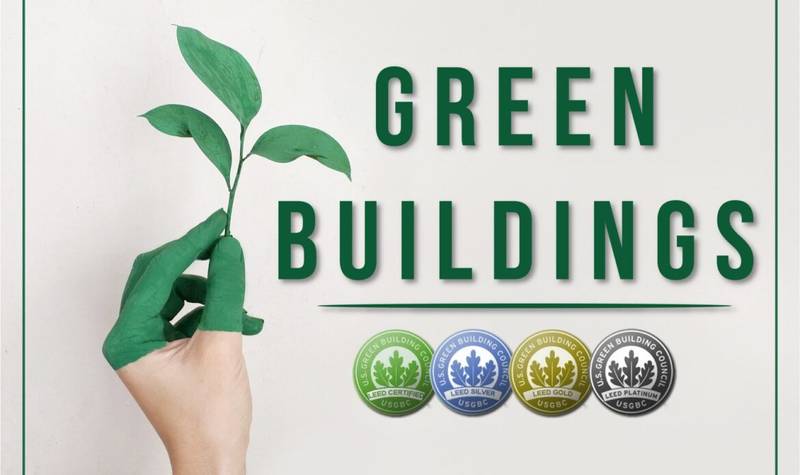
- Certified: 40-49 points
- Silver: 50-59 points
- Gold: 60-79 points
- Platinum: 80+ points
Key Criteria:
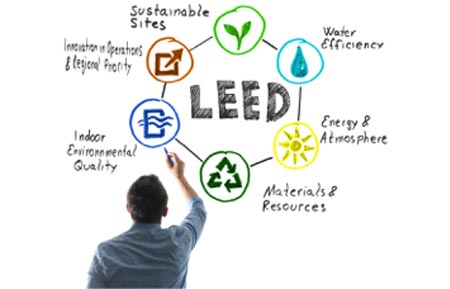
LEED evaluates projects across several categories:
- Location and Transportation
- Sustainable Sites
- Water Efficiency
- Energy and Atmosphere
- Materials and Resources
- Indoor Environmental Quality
- Innovation
- Regional Priority
Benefits for Civil Engineers:
- Provides a comprehensive framework for sustainable design and construction
- Enhances professional credentials and marketability
- Offers flexibility in achieving certification through various credit options
- Provides access to a global network of green building professionals
BREEAM (Building Research Establishment Environmental Assessment Method)
BREEAM, developed in the UK, is the world’s longest established method of assessing, rating, and certifying the sustainability of buildings.
Overview:
- BREEAM can be used to assess a wide range of building types, including new construction, in-use buildings, and refurbishment projects.
- It has been used in over 80 countries, making it a truly global certification system.
- BREEAM is known for its scientific rigor and emphasis on lifecycle thinking.
Assessment Categories:
- Energy
- Health and Wellbeing
- Innovation
- Land Use
- Materials
- Management
- Pollution
- Transport
- Waste
- Water
Scoring System:
- Unclassified: <30%
- Pass: ≥30%
- Good: ≥45%
- Very Good: ≥55%
- Excellent: ≥70%
- Outstanding: ≥85%
Comparison to LEED:
- BREEAM tends to be more prescriptive in its requirements compared to LEED’s more flexible approach.
- BREEAM places a stronger emphasis on lifecycle analysis and operational performance.
- While LEED is more prevalent in North America, BREEAM has a stronger presence in Europe and is gaining traction globally.
WELL Building Standard
The WELL Building Standard focuses on enhancing people’s health and well-being through the built environment.
Overview:
- Developed by the International WELL Building Institute (IWBI)
- Focuses on seven concepts: Air, Water, Nourishment, Light, Fitness, Comfort, and Mind
- Can be applied to new and existing buildings, interior spaces, and communities
Certification Levels:
- Silver
- Gold
- Platinum
Relevance for Civil Engineers:
- Emphasizes the importance of considering human health in building design and construction
- Provides guidelines for creating spaces that enhance occupant well-being
- Complements other green building certifications, often used in conjunction with LEED or BREEAM
Green Globes
Green Globes is a web-based program for green building guidance and certification that includes an onsite assessment by a third party.
Overview:
- Developed by the Green Building Initiative (GBI)
- Offers a streamlined and more affordable alternative to LEED
- Uses a questionnaire-based approach for assessment
Rating System:
- One Globe: 35-54% achievement
- Two Globes: 55-69% achievement
- Three Globes: 70-84% achievement
- Four Globes: 85-100% achievement
Application:
- New Construction and Major Renovations
- Existing Buildings
- Sustainable Interiors
Other Notable Certifications
Living Building Challenge:
- One of the most rigorous green building certifications
- Requires net-positive energy, water, and waste
- Emphasizes biophilic design and connection to nature
Energy Star:
- Focuses specifically on energy efficiency
- Widely recognized in the United States
- Provides benchmarking tools for comparing building energy performance
National Green Building Standard (NGBS):
- Specifically for residential buildings in the U.S.
- Addresses single-family homes, multifamily buildings, remodeling projects, and land development
- Approved by the American National Standards Institute (ANSI)
Global Green Building Standards
In addition to certification systems, there are several global standards that influence green building practices:
ISO 14001 Environmental Management
ISO 14001 is an internationally recognized standard for environmental management systems (EMS). While not specific to construction, it has significant relevance for the industry:
- Provides a framework for organizations to manage their environmental responsibilities
- Helps construction companies minimize their environmental impact and comply with regulations
- Can be integrated with other management systems like ISO 9001 for quality management
ASHRAE Standards
The American Society of Heating, Refrigerating and Air-Conditioning Engineers (ASHRAE) develops standards that are widely adopted in building codes worldwide. Key standards include:
- ASHRAE 90.1: Energy Standard for Buildings Except Low-Rise Residential Buildings
- Sets minimum requirements for energy-efficient design in most buildings
- Referenced by many green building certification systems, including LEED
- ASHRAE 189.1: Standard for the Design of High-Performance Green Buildings
- Provides total building sustainability guidance
- Addresses site sustainability, water use efficiency, energy efficiency, indoor environmental quality, and the building’s impact on the atmosphere, materials, and resources
International Green Construction Code (IgCC)
The IgCC is a model code that provides a baseline for green construction regulations:
- Developed by the International Code Council (ICC) in collaboration with other organizations
- Addresses site development, material resource conservation, energy efficiency, water efficiency, indoor environmental quality, and building owner/facility management education
- Can be adopted and enforced by jurisdictions as part of their building codes
Local and Regional Standards
Many countries and regions have developed their own green building standards to address local environmental concerns and building practices. Some notable examples include:
- DGNB (German Sustainable Building Council): A comprehensive certification system used in Germany and other European countries
- NABERS (National Australian Built Environment Rating System): Measures the environmental performance of Australian buildings and tenancies
- Green Mark: Singapore’s national green building certification scheme
- CASBEE (Comprehensive Assessment System for Built Environment Efficiency): Japan’s system for evaluating and rating the environmental performance of buildings
How to Achieve Green Building Certification
Achieving green building certification requires careful planning and execution throughout the project lifecycle. Here’s a general overview of the process:
Steps in the Certification Process
- Project Registration: Register the project with the chosen certification body (e.g., USGBC for LEED, BRE for BREEAM).
- Team Assembly: Form a team of professionals with expertise in sustainable design and the specific certification system.
- Goal Setting: Determine the desired certification level and identify the strategies to achieve it.
- Design Phase:
- Integrate sustainable strategies into the building design
- Conduct energy modeling and lifecycle assessments
- Select sustainable materials and systems
- Document design decisions and calculations
- Construction Phase:
- Implement sustainable construction practices
- Ensure proper documentation of material sourcing and waste management
- Conduct regular site inspections to verify compliance with green building requirements
- Commissioning: Verify that all building systems are installed and performing as designed.
- Documentation Submission: Compile and submit all required documentation to the certifying body.
- Review Process: The certifying body reviews the submission and may request additional information or clarifications.
- Certification Award: Upon successful review, the project is awarded its certification level.
- Ongoing Performance: Many certifications require ongoing monitoring and reporting to maintain certification status.
Common Challenges and Solutions
Achieving green building certification can present several challenges. Here are some common obstacles and strategies to overcome them:
- Higher Initial Costs:
- Challenge: Green building technologies and materials can be more expensive upfront.
- Solution: Conduct lifecycle cost analyses to demonstrate long-term savings. Explore available incentives and rebates for green building practices.
- Lack of Expertise:
- Challenge: Team members may lack experience with green building practices or specific certification systems.
- Solution: Invest in training and education for team members. Consider hiring a sustainability consultant or LEED Accredited Professional.
- Complex Documentation:
- Challenge: Certification processes often require extensive documentation.
- Solution: Implement a robust documentation system from the project’s outset. Assign specific team members to manage certification-related documentation.
- Balancing Multiple Objectives:
- Challenge: Reconciling sustainability goals with other project objectives like budget and schedule.
- Solution: Integrate sustainability into the project’s core objectives from the beginning. Use integrated design processes to find synergies between different project goals.
- Resistance to Change:
- Challenge: Stakeholders may be resistant to new practices or technologies.
- Solution: Educate stakeholders on the benefits of green building. Use case studies to demonstrate successful implementation in similar projects.
Role of Civil Engineers in Certification
Civil engineers play a crucial role in achieving green building certifications:
- Sustainable Site Planning: Optimizing site selection, managing stormwater, reducing heat island effect, and promoting biodiversity.
- Water Efficiency: Designing water-efficient landscaping, implementing rainwater harvesting systems, and specifying water-saving fixtures.
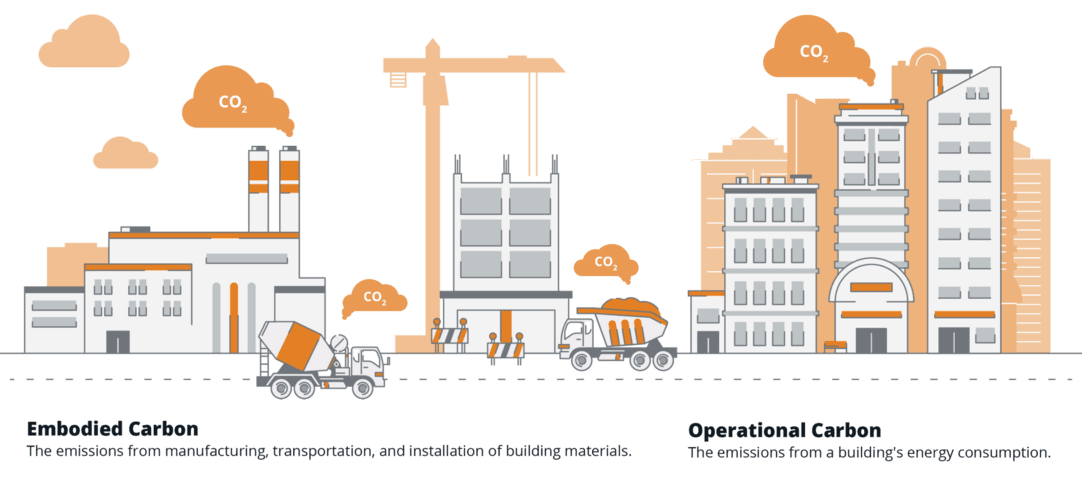
- Material Selection: Specifying sustainable materials, considering embodied carbon, and promoting the use of recycled and locally sourced materials.
- Waste Management: Developing construction waste management plans and designing for eventual deconstruction and material reuse.
- Energy Efficiency: Collaborating with other disciplines to optimize building envelope design and integrate renewable energy systems.
- Innovation: Proposing and implementing innovative solutions that push the boundaries of sustainable design.
- Documentation and Compliance: Ensuring that design and construction practices meet certification requirements and are properly documented.
Benefits of Green Building Certifications for Civil Engineers
Enhancing Professional Reputation
Proficiency in green building certifications can significantly boost a civil engineer’s career prospects:
- Increased Marketability: As sustainability becomes increasingly important in construction, engineers with green building expertise are in high demand.
- Professional Credibility: Certifications like LEED AP or BREEAM Assessor demonstrate a commitment to sustainable practices and specialized knowledge.
- Leadership Opportunities: Engineers with green building expertise often take on leadership roles in sustainability initiatives within their organizations.
- Competitive Advantage: In a competitive job market, green building knowledge can set engineers apart from their peers.
Contributions to Sustainable Development Goals (SDGs)
Green building certifications align closely with several UN Sustainable Development Goals:
- SDG 7 (Affordable and Clean Energy): Green buildings promote energy efficiency and renewable energy use.
- SDG 11 (Sustainable Cities and Communities): Sustainable construction practices contribute to more resilient and livable urban environments.
- SDG 12 (Responsible Consumption and Production): Green buildings emphasize efficient resource use and waste reduction.
- SDG 13 (Climate Action): Energy-efficient buildings help mitigate climate change by reducing greenhouse gas emissions.
By contributing to these goals, civil engineers can play a vital role in addressing global sustainability challenges.
Future Trends in Green Building Certifications
Technological Advancements
Emerging technologies are shaping the future of green building certifications:
- Building Information Modeling (BIM): BIM is increasingly being used to streamline the certification process by integrating sustainability data into 3D building models.
- Internet of Things (IoT): Smart building technologies allow for real-time monitoring and optimization of building performance, which can contribute to ongoing certification requirements.
- Artificial Intelligence (AI): AI can help predict building performance, optimize energy use, and assist in decision-making for sustainable design.
- Digital Twins: Virtual replicas of buildings can be used to simulate and optimize performance throughout the building’s lifecycle.
Evolving Standards and Regulations
Green building standards are continually evolving to address new challenges and incorporate new knowledge:
- Net Zero Energy: Many certification systems are moving towards requiring net-zero energy performance for the highest levels of certification.
- Resilience: There’s an increasing focus on building resilience to climate change impacts, which is being incorporated into certification criteria.
- Health and Well-being: Following the COVID-19 pandemic, there’s a greater emphasis on indoor air quality and occupant health in green building standards.
- Circular Economy: Future standards are likely to place more emphasis on circular economy principles, promoting material reuse and recycling.
Increased Focus on Embodied Carbon
The construction industry is paying more attention to embodied carbon – the CO2 emissions associated with materials and construction processes:
- Lifecycle Assessments: More comprehensive lifecycle assessments are being required to account for a building’s total carbon footprint.
- Low-Carbon Materials: There’s a growing emphasis on using materials with low embodied carbon, such as timber and low-carbon concrete.
- Carbon Accounting: New tools and methodologies are being developed to accurately measure and report embodied carbon in construction projects.
- Regulatory Pressure: Some jurisdictions are beginning to regulate embodied carbon in construction, a trend that is likely to continue.
Case Studies of Certified Green Buildings
High-Profile LEED Projects
- Shanghai Tower, China (LEED Platinum)
- The second-tallest building in the world
- Features a double-skin façade that significantly reduces energy consumption
- Incorporates rainwater recycling and gray water treatment systems
- The Edge, Amsterdam, Netherlands (LEED Platinum)
- Achieved the highest BREEAM score ever awarded: 98.36%
- Uses an array of smart technologies to optimize energy use and employee comfort
- Generates more electricity than it uses through solar panels and geothermal energy storage
BREEAM Certified Projects
- Bloomberg European Headquarters, London, UK (BREEAM Outstanding)
- Achieved the highest BREEAM score of any major office development
- Features a natural ventilation system through bronze fins on the façade
- Uses an on-site combined heat and power generation plant
- Kampung Admiralty, Singapore (BREEAM Excellent)
- A vertical village that integrates housing for the elderly with healthcare, social, and commercial facilities
- Incorporates extensive green spaces and rainwater harvesting
- Designed for natural ventilation and daylight optimization
Innovative Projects Meeting Multiple Certifications
- Bullitt Center, Seattle, USA (Living Building Challenge Certified, LEED Platinum)
- Often called the “greenest commercial building in the world”
- Achieves net-positive energy and water use
- Features a solar array that generates 60% more energy than the building uses
- One Angel Square, Manchester, UK (BREEAM Outstanding, LEED Platinum)
- Uses a combined heat and power system running on rapeseed oil to generate its own electricity
- Features a double-skin façade for natural ventilation
- Incorporates rainwater harvesting and recycling systems
Frequently Asked Questions (FAQ)
- What is the most widely recognized green building certification?
LEED (Leadership in Energy and Environmental Design) is generally considered the most widely recognized green building certification globally. However, BREEAM (Building Research Establishment Environmental Assessment Method) is more prevalent in some regions, particularly in Europe.
- How does LEED certification benefit civil engineers?
LEED certification enhances a civil engineer’s professional credentials, demonstrates expertise in sustainable design, and can lead to increased job opportunities. It also provides a structured framework for implementing sustainable practices in construction projects.
- What is the difference between LEED and BREEAM?
While both LEED and BREEAM are green building certification systems, they differ in their approach and prevalence. LEED, developed in the U.S., is more common in North America and uses a points-based system. BREEAM, originating in the UK, is more prevalent in Europe and uses a percentage-based scoring system. BREEAM tends to be more prescriptive, while LEED offers more flexibility in achieving credits.
- Can a building be certified under more than one green building standard?
Yes, it’s possible and increasingly common for buildings to pursue multiple certifications. For example, a building might be certified under both LEED and WELL to address both environmental sustainability and occupant health. However, this approach can increase complexity and cost.
- How do green building certifications affect property value?
Green building certifications generally have a positive impact on property value. Certified buildings often command higher rental rates and sales prices due to lower operating costs, improved occupant satisfaction, and the prestige associated with certification. Studies have shown premiums of up to 11% for sales prices and up to 6% for rental rates for green-certified buildings.
- What role do civil engineers play in the green certification process?
Civil engineers play a crucial role in achieving green building certifications. They are involved in sustainable site development, water efficiency strategies, material selection, waste management, and some aspects of energy efficiency. They also contribute to the documentation and compliance processes necessary for certification.
Green building certifications have become an integral part of the construction industry, driving the adoption of sustainable practices and technologies. These certifications provide a structured approach to creating buildings that are not only environmentally responsible but also more efficient, healthier for occupants, and often more economically viable in the long term.
For civil engineers, understanding and implementing these certifications is no longer optional but a crucial part of professional practice. Green building certifications offer a framework for innovation, pushing the boundaries of what’s possible in sustainable construction. They also provide a common language for sustainability in the built environment, allowing for benchmarking and continuous improvement.
As we face increasing environmental challenges, including climate change and resource depletion, the role of green building certifications in shaping a more sustainable built environment becomes ever more critical. These certifications are evolving to address new challenges, incorporating advanced technologies, and placing greater emphasis on holistic sustainability that considers the entire lifecycle of buildings.
Call to Action
As a civil engineer, embracing green building certifications is not just about staying relevant in the industry—it’s about being part of the solution to some of the most pressing challenges of our time. Here are some steps you can take:
- Educate yourself about different green building certifications and stay updated on their evolving standards.
- Consider pursuing professional accreditations such as LEED AP or BREEAM Assessor to enhance your expertise.
- Advocate for sustainable practices in your projects, even when formal certification is not pursued.
- Engage with professional organizations and attend conferences to stay abreast of the latest developments in sustainable construction.
- Contribute to the development of green building standards through feedback and participation in industry bodies.
- Mentor younger professionals in sustainable design and construction practices.
By leveraging green building certifications and embracing sustainable practices, civil engineers can play a pivotal role in creating a built environment that meets the needs of the present without compromising the ability of future generations to meet their own needs. The journey towards truly sustainable construction is ongoing, and your expertise and commitment are crucial in shaping a greener, more resilient future.