As our planet faces unprecedented environmental challenges, the need for sustainable and effective coastal protection strategies has never been more critical. This article explores the concept of Nature-Based Solutions (NBS) for coastal protection, offering a comprehensive overview of their importance, implementation, and potential to safeguard our coastlines while preserving ecosystems.
What Are Nature-Based Solutions (NBS)?
Nature-Based Solutions (NBS) are interventions that harness the power of natural processes to address environmental, social, and economic challenges. In the context of coastal protection, NBS refer to approaches that work with and enhance natural ecosystems to defend coastlines against erosion, flooding, and the impacts of climate change.
These solutions are designed to mimic or reinforce existing natural systems, such as mangroves, coral reefs, and wetlands, which have inherently protected coastlines for millennia. By leveraging these natural defenses, NBS offer a sustainable alternative to traditional hard engineering approaches, providing not only coastal protection but also a host of additional ecological and social benefits.
The importance of NBS in sustainable coastal management cannot be overstated. As we grapple with the realities of climate change and its impact on our coastlines, these solutions offer a way to adapt to changing conditions while preserving biodiversity and supporting local communities. NBS align with the principles of ecosystem-based management, recognizing the interconnectedness of coastal ecosystems and human well-being.
Importance of Coastal Protection
Coastal areas are among the most dynamic and vulnerable environments on Earth. They serve as critical interfaces between land and sea, hosting diverse ecosystems and supporting millions of people worldwide. The significance of protecting these areas extends far beyond mere conservation; it’s a matter of economic stability, food security, and cultural preservation.
Coastal zones are home to some of the world’s most productive ecosystems, including mangrove forests, salt marshes, and coral reefs. These ecosystems provide essential services such as:
- Storm protection and erosion control
- Carbon sequestration
- Habitat for diverse marine and terrestrial species
- Support for fisheries and aquaculture
- Tourism and recreational opportunities
However, these vital areas face unprecedented threats from climate change and rising sea levels. The Intergovernmental Panel on Climate Change (IPCC) predicts that global sea levels could rise by up to 1.1 meters by 2100 if greenhouse gas emissions continue unabated. This rise, coupled with more frequent and intense storms, poses a significant risk to coastal communities and ecosystems.
The challenges posed by climate change include:
- Increased coastal erosion
- More frequent and severe flooding
- Saltwater intrusion into freshwater aquifers
- Loss of coastal habitats
- Threats to infrastructure and human settlements
In light of these challenges, effective coastal protection strategies are crucial. Nature-Based Solutions offer a promising approach to address these issues while maintaining the ecological integrity of coastal environments.
The Need for Nature-Based Solutions
Threats to Coastal Areas
Coastal areas worldwide are under increasing pressure from a combination of natural processes and human activities. Understanding these threats is crucial for developing effective protection strategies.
Rising Sea Levels and Climate Change
Climate change is arguably the most significant long-term threat to coastal regions. The IPCC’s Sixth Assessment Report (2021) indicates that global mean sea level has risen faster since 1900 than over any preceding century in the last 3,000 years. This accelerated rise is primarily due to thermal expansion of the oceans and melting of glaciers and ice sheets.
The impacts of rising sea levels include:
- Increased coastal flooding and storm surge
- Accelerated coastal erosion
- Saltwater intrusion into freshwater systems
- Loss of coastal habitats, including wetlands and mangroves
Coastal Erosion and Habitat Loss
Coastal erosion is a natural process exacerbated by human activities and climate change. It leads to the loss of land and critical habitats, threatening both ecosystems and human settlements. According to a study published in Nature Climate Change, up to 70% of the world’s beaches could disappear by 2100 due to erosion and sea-level rise.
Human Activities and Urbanization
Human-induced pressures on coastal areas are intensifying as populations grow and urbanization increases. The United Nations estimates that by 2050, 68% of the world’s population will live in urban areas, with many megacities located in coastal regions. This urbanization leads to:
- Destruction of natural coastal defenses for development
- Increased pollution and waste in coastal waters
- Over-extraction of resources, including sand and water
- Alteration of natural sediment flows
Limitations of Traditional Coastal Protection Methods
Historically, coastal protection has relied heavily on hard engineering solutions such as seawalls, groynes, and breakwaters. While these methods can provide immediate protection, they often come with significant drawbacks:
Environmental Impacts:
- Disruption of natural sediment transport processes
- Destruction of natural habitats
- Alteration of coastal ecosystems
- Potential increase in erosion in adjacent unprotected areas
Economic Impacts:
- High initial construction costs
- Ongoing maintenance expenses
- Limited lifespan, requiring periodic replacement or upgrades
- Potential negative impacts on tourism and local economies
A study by the World Bank and the Nature Conservancy found that in many scenarios, nature-based solutions can be two to five times more cost-effective than traditional engineered solutions over their lifetime.
Given these limitations, there is a growing recognition of the need for more sustainable and holistic approaches to coastal protection, leading to increased interest in Nature-Based Solutions.
Types of Nature-Based Solutions for Coastal Protection
Nature-Based Solutions for coastal protection encompass a diverse range of approaches, each tailored to specific coastal environments and challenges. Here, we explore some of the most effective and widely implemented NBS strategies.
Living Shorelines
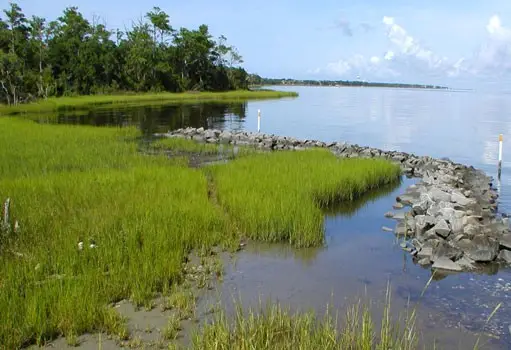
Living shorelines are a coastal management technique that uses native vegetation, often in combination with some harder shoreline structures, to stabilize shorelines and protect against erosion while maintaining natural coastal processes.
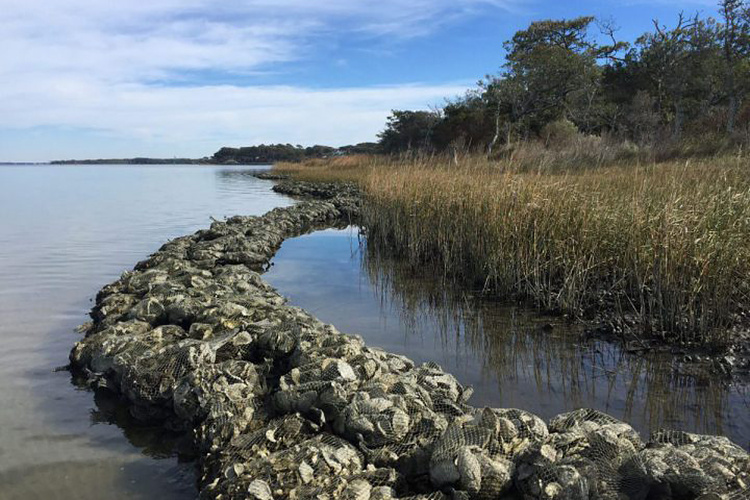
Key features of living shorelines:
- Incorporation of native plants and natural materials
- Creation of a gradual slope from land to water
- Preservation of natural shoreline dynamics
- Enhancement of habitat for marine and terrestrial species
Examples of implementation:
- Oyster reefs: Oyster reefs can be created or restored to act as natural breakwaters, reducing wave energy and providing habitat for marine life. The Billion Oyster Project in New York Harbor is a prime example of this approach.
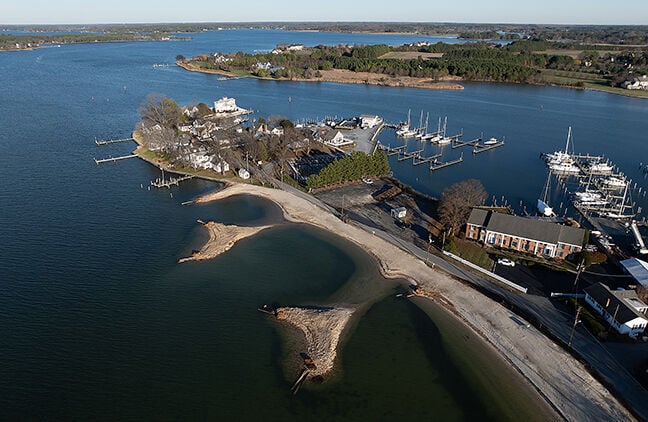
- Marsh grasses: Planting native marsh grasses helps stabilize shorelines and trap sediment. The Living Shoreline Project in Chesapeake Bay, Maryland, has successfully used this technique to protect coastlines and improve water quality.
Mangrove Restoration
Mangroves are salt-tolerant trees that thrive in intertidal zones of tropical and subtropical coastlines. They play a crucial role in coastal protection by:
- Reducing wave energy and storm surge
- Trapping sediment and stabilizing shorelines
- Providing habitat for diverse marine species
- Sequestering carbon and mitigating climate change
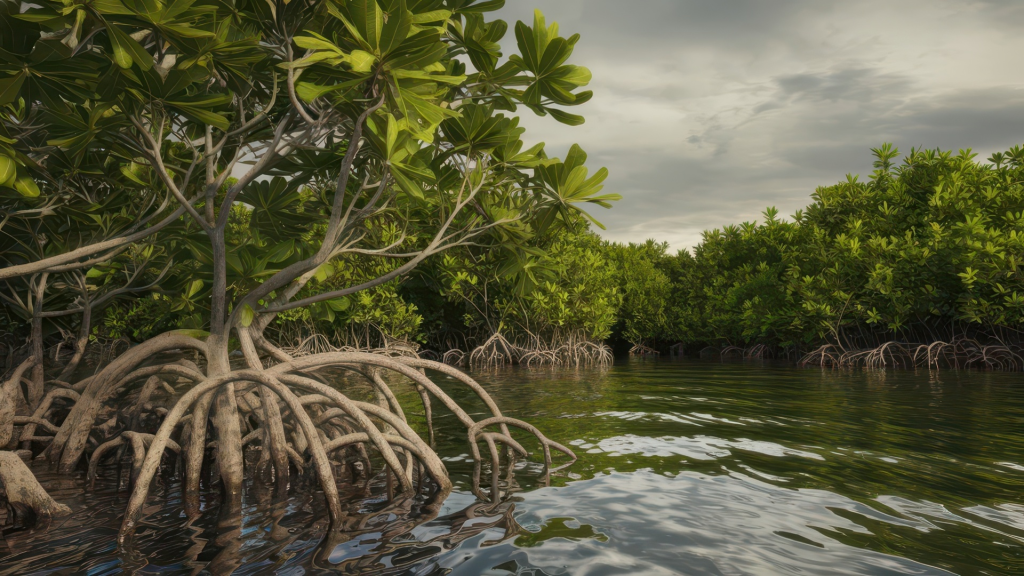
A study published in Nature Geoscience found that mangroves can reduce wave heights by up to 66% over 100 meters of forest width.
Case studies of successful mangrove restoration projects:
- Guyana Mangrove Restoration Project: This initiative has restored over 11 kilometers of mangrove forests along Guyana’s coast, enhancing flood protection and biodiversity.
- Mangrove Action Project in Thailand: This community-based restoration effort has successfully replanted mangroves in abandoned shrimp ponds, improving coastal resilience and local livelihoods.
Coral Reef Restoration
Coral reefs are natural breakwaters that protect coastlines by dissipating wave energy. They also support biodiversity and provide economic benefits through tourism and fisheries. However, coral reefs are under threat from climate change, ocean acidification, and human activities.
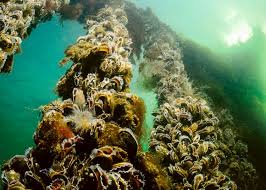
How coral reefs act as natural barriers:
- Reduce wave energy by up to 97% (according to a study in Nature Communications)
- Provide a physical barrier against storm surges
- Contribute to sand formation, helping to maintain beaches
Innovative methods for coral reef restoration:
- Coral gardening: This technique involves growing coral fragments in nurseries and transplanting them onto degraded reefs. The Coral Restoration Foundation in Florida has successfully used this method to restore large areas of reef.
- Assisted evolution: Researchers are exploring ways to enhance coral resilience to climate change through selective breeding and genetic modification. The SECORE International project is at the forefront of this research.
- 3D printed reef structures: Artificial reef structures created using 3D printing technology can provide a substrate for coral growth. The Mars Coral Reef Restoration Project in Indonesia has pioneered this approach.
Dune and Beach Nourishment
Dune systems are natural barriers that protect coastlines from erosion and flooding. They act as a buffer against storm surges and provide habitat for various species. Beach nourishment involves adding sand or sediment to beaches to counteract erosion and maintain shoreline position.
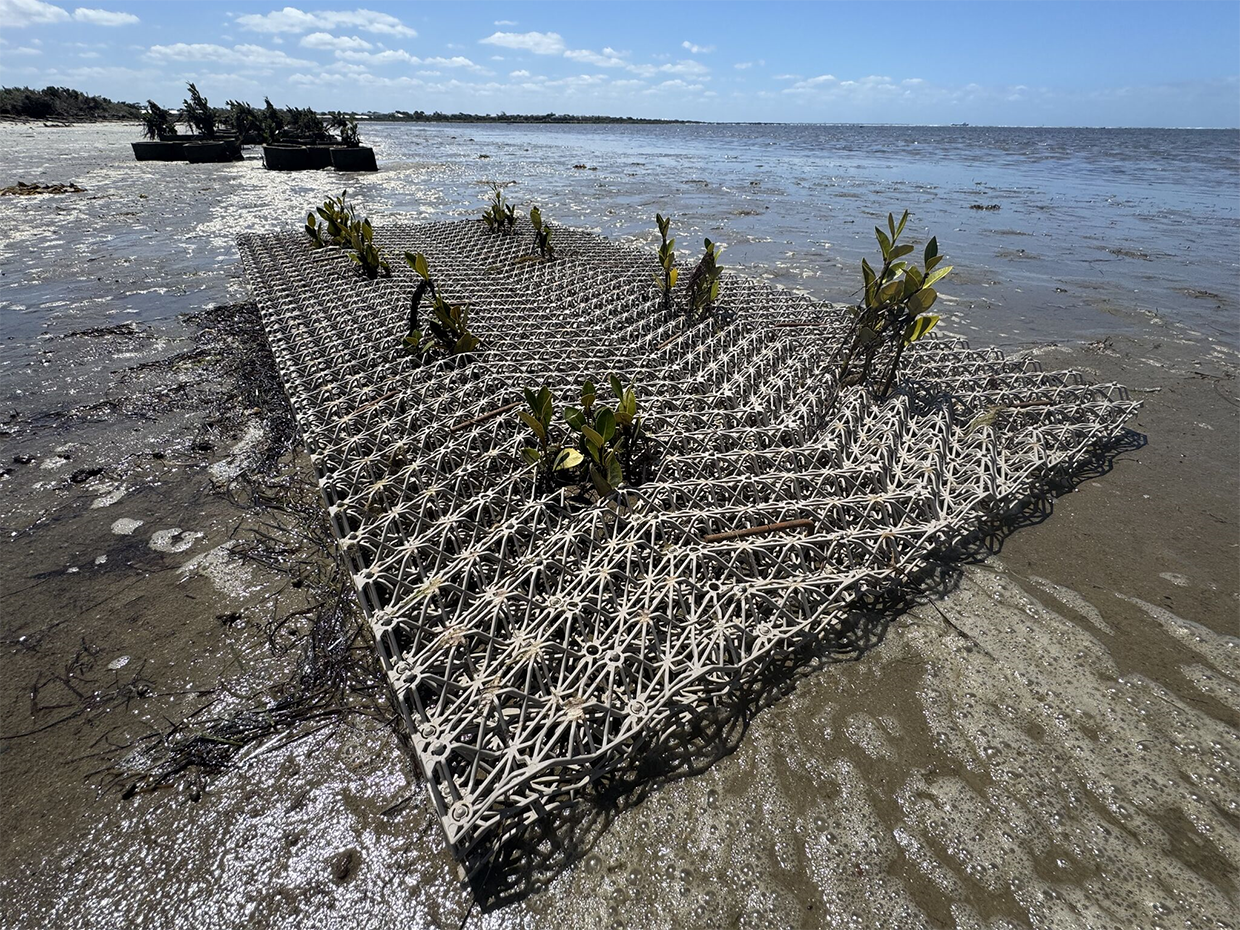
Role of dune systems in coastal protection:
- Absorb wave energy during storms
- Act as a sand reservoir for beaches
- Protect inland areas from flooding
- Support unique ecosystems
Techniques for beach nourishment and dune stabilization:
- Sand fencing: Installing fences to trap windblown sand and build dunes
- Vegetation planting: Using native plants to stabilize dunes and prevent erosion
- Beach replenishment: Adding sand to eroded beaches, often from offshore sources
- Dune walkovers: Constructing elevated walkways to prevent damage to dunes from foot traffic
The Sand Engine project in the Netherlands is an innovative example of large-scale beach nourishment, where a massive amount of sand was deposited in one location and allowed to disperse naturally along the coast over time.
Wetland Restoration
Wetlands, including salt marshes and freshwater swamps, play a crucial role in coastal protection by absorbing wave energy, storing floodwaters, and preventing erosion. They also provide essential ecosystem services such as water purification and carbon sequestration.
Importance of wetlands in coastal protection:
- Reduce wave height and energy
- Store excess water during floods
- Filter pollutants and improve water quality
- Provide habitat for diverse species
Restoration efforts and best practices:
- Hydrological restoration: Reestablishing natural water flow patterns
- Revegetation: Planting native wetland species
- Sediment management: Adding or removing sediment to achieve optimal elevation
- Invasive species control: Removing non-native plants that disrupt natural wetland functions
A notable example of successful wetland restoration is the Coastal Wetlands Planning, Protection and Restoration Act (CWPPRA) projects in Louisiana, USA. These projects have restored over 100,000 acres of wetlands since 1990, significantly enhancing coastal resilience in the region.
Benefits of Nature-Based Solutions
Nature-Based Solutions offer a multitude of benefits that extend far beyond coastal protection. These solutions provide environmental, economic, and social advantages that make them particularly attractive for sustainable coastal management.
Environmental Benefits
Biodiversity Conservation
NBS play a crucial role in preserving and enhancing biodiversity:
- Provide habitats for diverse species of flora and fauna
- Support endangered and threatened species
- Maintain ecological connectivity between terrestrial and marine ecosystems
- Enhance genetic diversity within populations
For example, mangrove restoration projects have been shown to increase fish species diversity by up to 80% compared to degraded areas, according to a study published in the journal Ecological Applications.
Carbon Sequestration and Climate Regulation
Many NBS contribute significantly to climate change mitigation through carbon sequestration:
- Mangroves, salt marshes, and seagrass meadows (known as “blue carbon” ecosystems) sequester carbon at rates up to 50 times higher than tropical forests
- Wetlands store approximately 35% of global terrestrial carbon
- Coral reefs facilitate carbon storage in adjacent sediments
A report by the High Level Panel for a Sustainable Ocean Economy estimates that ocean-based climate solutions, including coastal ecosystem restoration, could reduce global greenhouse gas emissions by nearly 4 billion tonnes of CO2 equivalent per year by 2030.
Economic Benefits
Cost-effectiveness Compared to Traditional Methods
NBS often provide more cost-effective coastal protection compared to traditional engineering approaches:
- Lower initial implementation costs in many cases
- Reduced maintenance costs over time
- Self-adapting to changing environmental conditions, potentially reducing the need for upgrades
A study by the Nature Conservancy and the University of California, Santa Cruz found that nature-based coastal defense projects were two to five times more cost-effective than conventional engineering approaches across 52 coastal defense projects in the United States.
Long-term Resilience and Sustainability
NBS offer long-term economic benefits through enhanced resilience and sustainability:
- Reduced damage from storms and flooding, lowering disaster recovery costs
- Support for sustainable industries such as fisheries and tourism
- Provision of ecosystem services with significant economic value (e.g., water purification, pollination)
The Global Commission on Adaptation estimates that investing $1.8 trillion globally in climate adaptation, including nature-based solutions, from 2020 to 2030 could generate $7.1 trillion in total net benefits.
Social and Cultural Benefits
Enhancing Local Livelihoods
NBS can significantly contribute to local economies and livelihoods:
- Support for traditional fishing and aquaculture practices
- Creation of eco-tourism opportunities
- Provision of sustainable resources (e.g., timber from mangroves)
- Job creation in restoration and conservation sectors
For instance, the restoration of mangroves in Vietnam not only enhanced coastal protection but also increased the income of local communities by 200% through improved aquaculture and fisheries productivity.
Protecting Cultural Heritage Sites
NBS play a crucial role in preserving cultural heritage in coastal areas:
- Protection of archaeological sites from erosion and flooding
- Preservation of traditional landscapes and seascapes
- Maintenance of cultural practices tied to coastal ecosystems
The Living Shorelines project in Maryland, USA, has successfully protected historic waterfronts and maintained the cultural character of coastal communities while enhancing ecological values.
Challenges and Limitations
While Nature-Based Solutions offer numerous benefits, their implementation is not without challenges. Understanding these limitations is crucial for developing effective strategies and realistic expectations.
Technical and Logistical Challenges
Difficulties in Large-scale Implementation
- Complexity of ecosystem dynamics and interactions
- Need for site-specific designs and adaptations
- Longer timeframes for full effectiveness compared to hard engineering solutions
- Limited availability of suitable areas in highly developed coastal regions
The success of large-scale NBS projects like the Sand Engine in the Netherlands demonstrates that these challenges can be overcome, but they require significant planning, expertise, and resources.
Monitoring and Maintenance Issues
- Need for long-term monitoring to assess effectiveness and adapt management strategies
- Challenges in measuring and quantifying ecosystem services
- Ongoing maintenance requirements, especially in the early stages of implementation
- Potential for unexpected ecosystem responses or cascading effects
The development of standardized monitoring protocols and innovative technologies, such as remote sensing and environmental DNA analysis, can help address these challenges.
Policy and Regulatory Barriers
Need for Supportive Policies and Regulations
- Lack of specific regulations for NBS in many jurisdictions
- Challenges in integrating NBS into existing coastal management frameworks
- Need for cross-sectoral collaboration and integrated coastal zone management
- Potential conflicts with existing land use policies or property rights
The European Union’s efforts to incorporate NBS into its climate adaptation and biodiversity strategies provide a model for policy integration that other regions can learn from.
Challenges in Securing Funding and Resources
- Limited understanding of the economic value of ecosystem services
- Difficulty in attracting private investment due to long-term nature of benefits
- Competition for funding with traditional infrastructure projects
- Need for new financing mechanisms and public-private partnerships
Innovative financing approaches, such as blue bonds and payments for ecosystem services, are emerging to address these challenges.
Community Engagement and Education
Importance of Involving Local Communities
- Need for stakeholder buy-in and participation in planning and implementation
- Potential conflicts with traditional uses of coastal areas
- Importance of incorporating local knowledge and practices
- Challenges in equitable distribution of benefits
Successful community engagement, as demonstrated in the Mikoko Pamoja mangrove restoration project in Kenya, can lead to more sustainable and effective NBS implementation.
Education and Awareness Campaigns
- Need for public understanding of NBS benefits and limitations
- Importance of building local capacity for implementation and maintenance
- Challenges in communicating complex ecosystem processes to diverse audiences
- Need for long-term commitment to education and outreach
Initiatives like the Blue Schools program in Europe demonstrate the potential of educational approaches to foster understanding and support for NBS among younger generations.
Case Studies and Success Stories
Examining successful implementations of Nature-Based Solutions provides valuable insights into best practices and potential outcomes. Here, we highlight several global examples that demonstrate the effectiveness of NBS in coastal protection.
Global Examples of Successful NBS Implementation
1. Mangrove Restoration in Vietnam
Location: Red River Delta, Vietnam
Project Overview: Since 1994, the Vietnam Red Cross has worked with local communities to plant and protect mangrove forests along the coast.
Outcomes:
- Over 9,000 hectares of mangroves planted
- Reduced maintenance costs for sea dykes by $7.3 million per year
- Improved livelihoods for 7,750 families through increased aquaculture productivity
- Enhanced protection against typhoons and storm surges
2. Living Shorelines in Chesapeake Bay, USA
Location: Maryland and Virginia, USA
Project Overview: Multiple living shoreline projects have been implemented across the Chesapeake Bay to combat erosion and improve water quality.
Outcomes:
- Over 200 miles of shoreline protected using natural techniques
- Significant reduction in erosion rates
- Improved habitat for fish, crabs, and other marine life
- Enhanced water quality through nutrient filtering
3. Coral Reef Restoration in Indonesia
Location: Sulawesi, Indonesia
Project Overview: The Mars Coral Reef Restoration Project uses innovative “spider” structures to support coral growth and reef regeneration.
Outcomes:
- Over 19,000 coral reef structures installed
- Coral cover increased from 10% to 60% in restored areas
- Fish biomass increased by 50% in restored areas
- Enhanced coastal protection against wave energy
4. Dune Restoration in the Netherlands
Location: Dutch North Sea Coast
Project Overview: The Sand Motor project involved depositing 21.5 million cubic meters of sand along the coast to be naturally distributed by wind, waves, and currents.
Outcomes:
- Created 35 hectares of new beach and dunes
- Extended coastline protection for up to 20 years
- Reduced frequency and cost of beach nourishment activities
- Provided new recreational areas and habitats
Lessons Learned
What made these projects successful?
- Long-term commitment: Successful projects often require sustained effort over many years to achieve full benefits.
- Community involvement: Engaging local communities in planning, implementation, and monitoring enhances project success and sustainability.
- Adaptive management: Flexibility to adjust strategies based on monitoring results and changing conditions is crucial.
- Interdisciplinary approach: Collaboration between ecologists, engineers, social scientists, and policymakers leads to more comprehensive and effective solutions.Integration with existing systems: Successful NBS often complement or enhance existing coastal protection measures rather than replacing them entirely.
Key takeaways for future projects:
- Prioritize site-specific designs that account for local ecological and social contexts.
- Invest in robust monitoring programs to evaluate effectiveness and inform adaptive management.
- Develop diverse partnerships to leverage resources and expertise.
- Focus on building local capacity to ensure long-term project sustainability.
- Communicate benefits clearly to stakeholders to maintain support and secure funding.
Future Trends in Nature-Based Coastal Protection
Innovations in NBS
Emerging technologies and methods:
- Bioengineering techniques: Advanced materials and methods that combine natural and engineered elements for enhanced coastal protection.
- Eco-concrete: Development of environmentally friendly concrete that promotes marine life colonization.
- Artificial reefs: 3D-printed structures designed to mimic natural reef formations and enhance coastal protection.
- Remote sensing and drones: Improved monitoring and assessment capabilities for large-scale NBS projects.
Role of artificial intelligence and data analytics:
- Predictive modeling for optimal NBS placement and design
- Real-time monitoring and early warning systems for coastal hazards
- Machine learning algorithms for analyzing complex ecosystem interactions
- Big data integration for comprehensive coastal management strategies
Scaling Up NBS
Strategies for large-scale implementation:
- Development of national and regional NBS frameworks and policies
- Integration of NBS into climate adaptation and disaster risk reduction strategies
- Creation of NBS investment portfolios to attract diverse funding sources
- Standardization of NBS design and implementation guidelines
Importance of international collaboration:
- Knowledge sharing and technology transfer between countries
- Coordinated research efforts to address knowledge gaps
- Development of international standards and best practices
- Collaborative funding mechanisms for transboundary NBS projects
Practical Guide to Implementing Nature-Based Solutions
Steps for Planning and Implementing NBS
- Initial assessment and site selection:
- Evaluate coastal vulnerabilities and ecosystem health
- Identify potential NBS opportunities
- Consider local ecological, social, and economic contexts
- Stakeholder engagement:
- Identify and involve key stakeholders early in the process
- Conduct community consultations and workshops
- Incorporate local knowledge and preferences
- Design and planning:
- Develop site-specific NBS designs
- Conduct environmental impact assessments
- Create implementation and monitoring plans
- Securing funding:
- Explore diverse funding sources (government, private sector, NGOs)
- Develop compelling business cases highlighting multiple benefits
- Consider innovative financing mechanisms (e.g., blue bonds)
- Implementation:
- Engage local workforce and build capacity
- Follow best practices and adaptive management principles
- Ensure proper documentation and reporting
- Monitoring and evaluation:
- Implement long-term monitoring programs
- Assess ecological and socio-economic impacts
- Adjust strategies based on monitoring results
Best Practices and Guidelines
Dos:
- Prioritize ecosystem health and biodiversity alongside coastal protection goals
- Engage local communities throughout the project lifecycle
- Integrate NBS with existing coastal management strategies
- Adopt a long-term perspective in planning and evaluation
- Implement robust monitoring and adaptive management protocols
Don’ts:
- Overlook potential negative impacts on adjacent ecosystems or communities
- Neglect ongoing maintenance and management requirements
- Assume one-size-fits-all solutions; tailor NBS to local contexts
- Underestimate the time required for NBS to reach full effectiveness
- Fail to communicate realistic expectations to stakeholders
The Future of Coastal Protection
Nature-Based Solutions offer a promising pathway for sustainable coastal protection in the face of climate change and increasing environmental pressures. By harnessing the power of natural ecosystems, NBS provide multiple benefits beyond coastal defense, including biodiversity conservation, carbon sequestration, and support for local livelihoods.
As we look to the future, the integration of NBS into comprehensive coastal management strategies will be crucial. The success of NBS implementation depends on continued research, innovation, and collaboration across disciplines and borders. By embracing these solutions, we can create more resilient coastlines that benefit both nature and human communities.
Call to Action
The shift towards sustainable coastal management using Nature-Based Solutions requires collective effort and commitment. Here are ways you can support and engage with NBS initiatives:
- Educate yourself and others about the benefits of NBS for coastal protection
- Support local and national policies that promote the implementation of NBS
- Participate in community-based coastal restoration projects
- Consider NBS approaches for personal property if you live in a coastal area
- Advocate for increased funding and research in NBS
For further reading and engagement, explore resources from organizations such as the International Union for Conservation of Nature (IUCN), The Nature Conservancy, and local environmental agencies focused on coastal management.
FAQ Section
What are nature-based solutions?
Nature-based solutions (NBS) are approaches that work with and enhance natural processes to address environmental, social, and economic challenges. In the context of coastal protection, NBS involve using or mimicking natural ecosystems like mangroves, coral reefs, and wetlands to defend coastlines against erosion, flooding, and storm impacts.
How do nature-based solutions differ from traditional coastal protection methods?
Unlike traditional hard engineering approaches such as seawalls or breakwaters, NBS work with natural processes and provide multiple co-benefits beyond coastal protection. They are often more adaptable to changing conditions, can self-repair to some extent, and offer advantages like biodiversity enhancement and carbon sequestration.
Can nature-based solutions be combined with traditional methods?
Yes, hybrid approaches that combine NBS with traditional engineering methods are often effective. For example, a “living shoreline” might incorporate natural elements like vegetation and oyster reefs alongside strategically placed hard structures for enhanced protection.
What are the costs involved in implementing nature-based solutions?
Costs vary widely depending on the specific solution and location. While initial implementation costs can be significant, NBS often prove more cost-effective over time due to lower maintenance requirements and the provision of additional ecosystem services. Some studies suggest NBS can be 2-5 times more cost-effective than traditional methods over their lifetime.
How can local communities get involved in nature-based coastal protection?
Local communities can participate in various ways: – Engaging in planning and decision-making processes – Volunteering for restoration projects (e.g., planting mangroves or dune vegetation) – Supporting local policies that promote NBS – Participating in citizen science programs to monitor coastal ecosystems – Educating others about the importance of natural coastal defenses
By embracing Nature-Based Solutions, we can create more resilient, sustainable, and biodiverse coastlines that benefit both ecosystems and human communities. As we face the challenges of climate change and increasing coastal pressures, NBS offer a promising path forward for coastal protection and management.