
Climate change poses unprecedented challenges to our built environment. This guide explores how to design resilient infrastructure that can withstand and adapt to environmental changes, ensuring the safety and sustainability of our communities for generations to come.
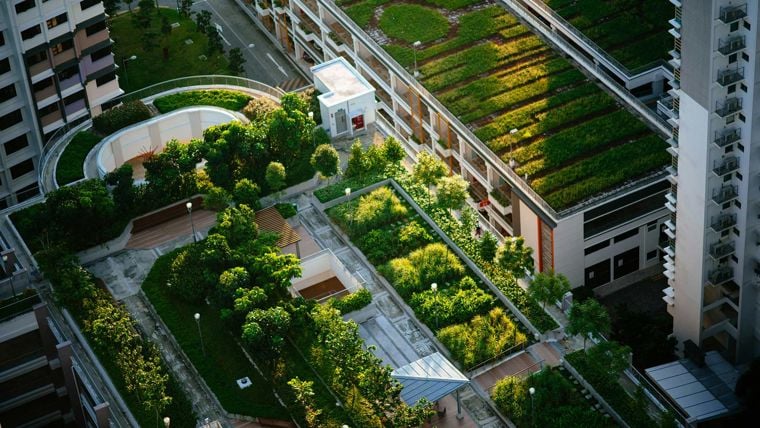
Introduction to Climate Change Adaptation in Infrastructure
What is Climate Change Adaptation?
Climate change adaptation refers to the process of adjusting to actual or expected climate changes and their effects. In the context of infrastructure, it involves modifying existing structures and designing new ones to withstand the impacts of global warming, sea-level rise, and extreme weather events.
The Importance of Infrastructure Resilience
Infrastructure resilience is crucial for maintaining the functionality of essential systems in the face of climate-related stresses. Resilient infrastructure can withstand shocks, recover quickly from disruptions, and adapt to changing conditions over time. This adaptability is key to protecting communities, economies, and ecosystems from the adverse effects of climate change.
Current Challenges in Infrastructure Design
Designers and engineers face numerous challenges when creating climate-resilient infrastructure:
- Uncertainty in climate projections and the magnitude of future impacts
- Balancing short-term costs with long-term benefits
- Integrating new technologies and approaches into existing systems
- Addressing the interdependencies between different infrastructure sectors
- Navigating complex regulatory environments and funding mechanisms
Overcoming these challenges requires innovative thinking, cross-sector collaboration, and a commitment to long-term planning.
The Impact of Climate Change on Infrastructure
Climate change affects infrastructure in various ways, necessitating adaptive strategies across different sectors and geographical contexts.
Rising Sea Levels and Coastal Erosion
Coastal areas face significant threats from rising sea levels and increased erosion:
- Flooding of low-lying areas and coastal infrastructure
- Saltwater intrusion into freshwater systems
- Accelerated deterioration of structures due to increased exposure to saltwater
- Loss of land and habitats essential for coastal protection
Adapting to these challenges requires a combination of hard engineering solutions, such as sea walls and levees, and soft approaches like beach nourishment and wetland restoration.
Extreme Weather Events: Floods, Storms, and Heatwaves
The increasing frequency and intensity of extreme weather events pose severe risks to infrastructure:
- Floods can overwhelm drainage systems and damage buildings and roads
- Intense storms may cause structural damage and power outages
- Heatwaves stress cooling systems and can lead to material degradation
Designing for these events requires robust risk assessment, improved forecasting capabilities, and the implementation of adaptive measures such as flood-resistant materials and enhanced cooling systems.
Long-Term Environmental Changes: Droughts and Desertification
Gradual environmental changes also significantly impact infrastructure:
- Prolonged droughts strain water supply systems and hydroelectric power generation
- Desertification affects soil stability, potentially compromising foundations
- Changing precipitation patterns may render existing water management infrastructure inadequate
Addressing these challenges requires long-term planning, water-efficient technologies, and flexible infrastructure designs that can adapt to changing environmental conditions.
Economic and Social Implications
The impacts of climate change on infrastructure extend beyond physical damage, affecting economies and societies:
- Disruptions to critical services can lead to economic losses and social instability
- The cost of repairing and upgrading infrastructure strains public budgets
- Climate-related migration may put pressure on urban infrastructure in receiving areas
- Vulnerable communities often bear a disproportionate burden of climate impacts
Addressing these implications requires holistic approaches that consider not only technical solutions but also social equity, economic resilience, and community engagement in the adaptation process.
Principles of Climate-Resilient Infrastructure Design
Designing infrastructure that can withstand and adapt to climate change requires a shift in traditional approaches. The following principles guide the creation of resilient systems:
Flexibility and Modularity in Design
Flexible and modular designs allow infrastructure to adapt to changing conditions:
- Modular components can be easily replaced or upgraded as needs change
- Flexible designs accommodate future modifications without major overhauls
- Scalable systems can grow or shrink in response to demand fluctuations
For example, modular flood barriers can be adjusted based on water levels, while scalable renewable energy systems can adapt to changing energy demands.
Incorporating Redundancy and Fail-Safes
Redundancy in critical systems ensures continuity during disruptions:
- Multiple power sources reduce the risk of complete blackouts
- Diverse water supply options safeguard against drought-induced shortages
- Backup communication networks maintain connectivity during emergencies
Implementing fail-safes, such as automatic shut-off valves in gas lines during earthquakes, can prevent cascading failures and minimize damage.
Using Sustainable and Durable Materials
The choice of materials plays a crucial role in infrastructure resilience:
- Heat-resistant paving materials reduce urban heat island effects
- Corrosion-resistant alloys extend the lifespan of coastal structures
- Self-healing concrete reduces maintenance needs and improves longevity
- Recycled and low-carbon materials minimize environmental impact
Selecting appropriate materials based on local climate projections enhances durability and reduces long-term costs.
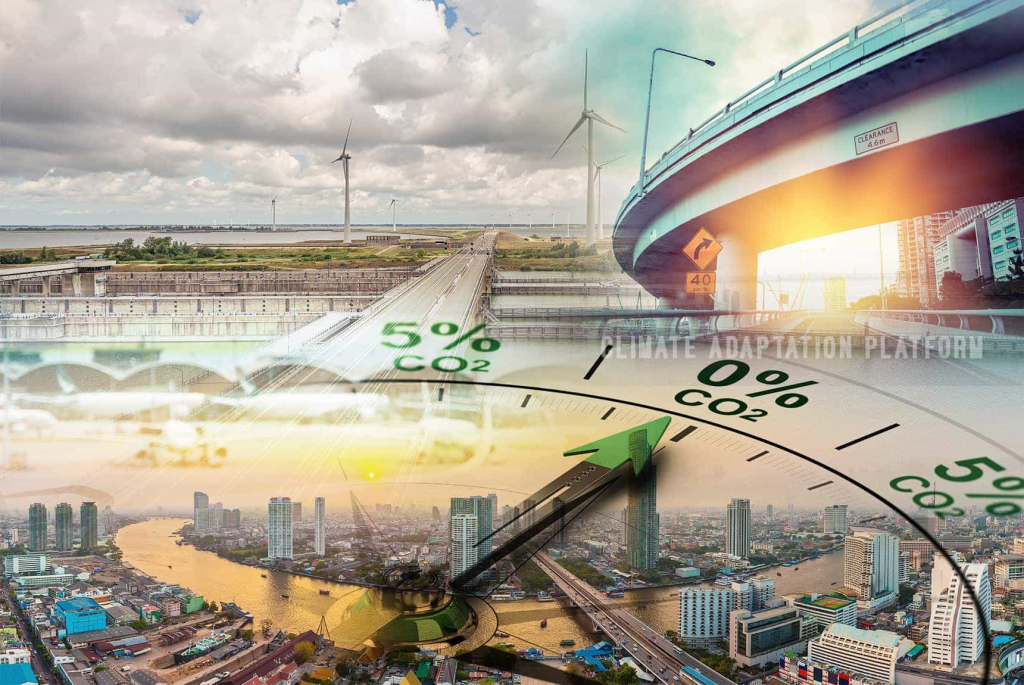
Integrating Nature-Based Solutions
Nature-based solutions leverage natural processes to enhance resilience:
- Urban forests and green spaces mitigate heat and manage stormwater
- Restored wetlands act as natural buffers against floods and storm surges
- Bioswales and rain gardens filter pollutants and reduce runoff
- Living shorelines protect coastlines while supporting biodiversity
These solutions often provide multiple benefits, including improved air quality, enhanced biodiversity, and increased community well-being.
Emphasizing Community Involvement and Equity
Engaging communities in the design process ensures that infrastructure meets local needs and promotes equity:
- Participatory planning processes incorporate local knowledge and preferences
- Equity assessments identify and address disparities in infrastructure access and quality
- Community-based monitoring systems improve maintenance and early warning capabilities
- Capacity-building initiatives empower local stakeholders to participate in adaptation efforts
This approach fosters ownership, improves project outcomes, and builds social resilience alongside physical infrastructure.
Case Studies of Successful Adaptation
Examining real-world examples of climate-resilient infrastructure provides valuable insights and inspiration for future projects.
Coastal Infrastructure in the Netherlands
The Netherlands, with much of its land below sea level, has pioneered innovative approaches to coastal protection:
- The Maeslantkering storm surge barrier protects Rotterdam’s port using massive movable arms
- The Sand Motor project uses natural processes to distribute sand along the coast, reducing erosion
- The Room for the River program creates floodplains that accommodate periodic flooding while preserving land use
These projects demonstrate how combining engineering solutions with natural processes can create flexible and effective coastal defenses.
Urban Flood Management in Copenhagen
Copenhagen’s Cloudburst Management Plan addresses increased rainfall and flooding risks:
- A network of parks and urban spaces doubles as water storage during heavy rainfall
- Green corridors channel excess water away from vulnerable areas
- Permeable paving and bioswales improve water absorption throughout the city
This integrated approach not only manages flood risks but also enhances urban livability and biodiversity.
Heat-Resilient Infrastructure in Australia
Australia has implemented various strategies to combat increasing temperatures:
- The Cool Routes to School program in Western Sydney creates shaded pathways using trees and built structures
- Heat-resistant paving materials and light-colored surfaces reduce urban heat absorption
- Building codes mandate improved insulation and passive cooling design in new constructions
These initiatives showcase how combining urban planning, material science, and policy can create more livable cities in hot climates.
Water-Sensitive Urban Design in Singapore
Singapore’s holistic approach to water management addresses both scarcity and excess:
- The Active, Beautiful, Clean Waters Program transforms drainage infrastructure into public spaces
- Rainwater harvesting systems on buildings reduce reliance on imported water
- The Marina Barrage creates a freshwater reservoir while providing flood control and recreational space
Singapore’s success demonstrates how integrating water management into urban planning can create resilient and livable cities.
These case studies illustrate the diverse approaches to climate-resilient infrastructure design, highlighting the importance of context-specific solutions and multi-functional designs that provide broader societal benefits.
Principles of Climate-Resilient Infrastructure Design
Designing infrastructure that can withstand and adapt to climate change requires a shift in traditional approaches. The following principles guide the creation of resilient systems:
Flexibility and Modularity in Design
Flexible and modular designs allow infrastructure to adapt to changing conditions:
- Modular components can be easily replaced or upgraded as needs change
- Flexible designs accommodate future modifications without major overhauls
- Scalable systems can grow or shrink in response to demand fluctuations
For example, modular flood barriers can be adjusted based on water levels, while scalable renewable energy systems can adapt to changing energy demands.
Incorporating Redundancy and Fail-Safes
Redundancy in critical systems ensures continuity during disruptions:
- Multiple power sources reduce the risk of complete blackouts
- Diverse water supply options safeguard against drought-induced shortages
- Backup communication networks maintain connectivity during emergencies
Implementing fail-safes, such as automatic shut-off valves in gas lines during earthquakes, can prevent cascading failures and minimize damage.
Using Sustainable and Durable Materials
The choice of materials plays a crucial role in infrastructure resilience:
- Heat-resistant paving materials reduce urban heat island effects
- Corrosion-resistant alloys extend the lifespan of coastal structures
- Self-healing concrete reduces maintenance needs and improves longevity
- Recycled and low-carbon materials minimize environmental impact
Selecting appropriate materials based on local climate projections enhances durability and reduces long-term costs.
Integrating Nature-Based Solutions
Nature-based solutions leverage natural processes to enhance resilience:
- Urban forests and green spaces mitigate heat and manage stormwater
- Restored wetlands act as natural buffers against floods and storm surges
- Bioswales and rain gardens filter pollutants and reduce runoff
- Living shorelines protect coastlines while supporting biodiversity
These solutions often provide multiple benefits, including improved air quality, enhanced biodiversity, and increased community well-being.
Emphasizing Community Involvement and Equity
Engaging communities in the design process ensures that infrastructure meets local needs and promotes equity:
- Participatory planning processes incorporate local knowledge and preferences
- Equity assessments identify and address disparities in infrastructure access and quality
- Community-based monitoring systems improve maintenance and early warning capabilities
- Capacity-building initiatives empower local stakeholders to participate in adaptation efforts
This approach fosters ownership, improves project outcomes, and builds social resilience alongside physical infrastructure.
Case Studies of Successful Adaptation
Examining real-world examples of climate-resilient infrastructure provides valuable insights and inspiration for future projects.
Coastal Infrastructure in the Netherlands
The Netherlands, with much of its land below sea level, has pioneered innovative approaches to coastal protection:
- The Maeslantkering storm surge barrier protects Rotterdam’s port using massive movable arms
- The Sand Motor project uses natural processes to distribute sand along the coast, reducing erosion
- The Room for the River program creates floodplains that accommodate periodic flooding while preserving land use
These projects demonstrate how combining engineering solutions with natural processes can create flexible and effective coastal defenses.
Urban Flood Management in Copenhagen
Copenhagen’s Cloudburst Management Plan addresses increased rainfall and flooding risks:
- A network of parks and urban spaces doubles as water storage during heavy rainfall
- Green corridors channel excess water away from vulnerable areas
- Permeable paving and bioswales improve water absorption throughout the city
This integrated approach not only manages flood risks but also enhances urban livability and biodiversity.
Heat-Resilient Infrastructure in Australia
Australia has implemented various strategies to combat increasing temperatures:
- The Cool Routes to School program in Western Sydney creates shaded pathways using trees and built structures
- Heat-resistant paving materials and light-colored surfaces reduce urban heat absorption
- Building codes mandate improved insulation and passive cooling design in new constructions
These initiatives showcase how combining urban planning, material science, and policy can create more livable cities in hot climates.
Water-Sensitive Urban Design in Singapore
Singapore’s holistic approach to water management addresses both scarcity and excess:
- The Active, Beautiful, Clean Waters Program transforms drainage infrastructure into public spaces
- Rainwater harvesting systems on buildings reduce reliance on imported water
- The Marina Barrage creates a freshwater reservoir while providing flood control and recreational space
Singapore’s success demonstrates how integrating water management into urban planning can create resilient and livable cities.
These case studies illustrate the diverse approaches to climate-resilient infrastructure design, highlighting the importance of context-specific solutions and multi-functional designs that provide broader societal benefits.
Technologies and Innovations in Climate-Adapted Infrastructure
Emerging technologies play a crucial role in enhancing the resilience and adaptability of infrastructure in the face of climate change.
Smart Infrastructure and IoT for Real-Time Monitoring
Smart infrastructure leverages Internet of Things (IoT) devices and advanced sensors to provide real-time data and enable proactive management:
- Sensor networks monitor structural health, detecting early signs of wear or damage
- Smart water systems identify leaks and optimize distribution based on demand
- Connected traffic management systems adjust to changing weather conditions
- Early warning systems use real-time data to alert communities of impending hazards
These technologies allow for more efficient resource allocation and rapid response to changing conditions, enhancing overall resilience.
Renewable Energy Integration
Integrating renewable energy sources into infrastructure design reduces carbon emissions and improves energy resilience:
- Solar panels on buildings and along highways generate clean electricity
- Wind turbines in coastal areas harness offshore breezes
- Geothermal systems provide stable heating and cooling for buildings
- Microgrids enable local energy generation and storage, improving reliability
These systems not only reduce reliance on fossil fuels but also provide backup power during grid disruptions.
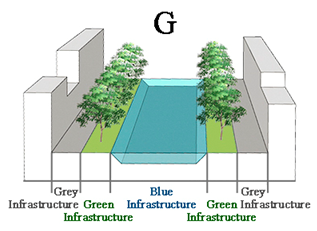
Green Infrastructure and Blue-Green Solutions
Green and blue-green infrastructure solutions mimic natural processes to manage environmental challenges:
- Green roofs and walls reduce urban heat and manage stormwater
- Constructed wetlands filter pollutants and buffer against floods
- Permeable pavements allow water infiltration, reducing runoff
- Urban forests and parks create cooling corridors and carbon sinks
These nature-based solutions often provide multiple benefits, including improved air quality, biodiversity support, and enhanced public spaces.
Advanced Materials for Extreme Weather Conditions
Innovative materials improve the durability and performance of infrastructure in challenging environments:
- Self-healing concrete uses bacteria or polymers to repair cracks automatically
- Phase-change materials in building envelopes regulate indoor temperatures
- Graphene-enhanced materials offer superior strength and conductivity
- Biomimetic materials inspired by nature provide enhanced resilience and efficiency
These advanced materials can significantly extend the lifespan of infrastructure and improve its performance under stress.
Predictive Modeling and Simulation Tools
Advanced modeling and simulation technologies aid in planning and decision-making:
- Climate models project future scenarios to inform long-term planning
- Digital twins simulate infrastructure performance under various conditions
- Machine learning algorithms optimize resource allocation and maintenance schedules
- Virtual reality tools enable stakeholders to visualize proposed designs and impacts
These tools help designers and policymakers make informed decisions and anticipate future challenges.
Policy and Regulatory Frameworks
Effective policies and regulations are essential for promoting and implementing climate-resilient infrastructure.
International Guidelines and Agreements
Global frameworks provide guidance and set standards for climate adaptation:
- The Paris Agreement emphasizes the need for climate-resilient development
- The Sendai Framework for Disaster Risk Reduction promotes resilient infrastructure
- The United Nations Sustainable Development Goals include targets related to resilient infrastructure
These agreements create a global context for national and local adaptation efforts.
National and Local Adaptation Plans
Countries and cities are developing specific plans to address their unique climate challenges:
- National adaptation plans outline country-wide strategies and priorities
- Local resilience plans address community-specific vulnerabilities and assets
- Sector-specific guidelines provide detailed recommendations for different infrastructure types
These plans translate broad goals into actionable strategies tailored to local contexts.
Funding and Incentives for Climate-Resilient Projects
Financial mechanisms encourage investment in resilient infrastructure:
- Green bonds finance environmentally beneficial projects
- Resilience bonds link insurance premiums to risk reduction measures
- Tax incentives promote adoption of climate-adaptive technologies
- Grant programs support innovative resilience projects
These financial tools help bridge the investment gap for climate-resilient infrastructure.
The Role of Public-Private Partnerships
Collaboration between public and private sectors can accelerate adaptation efforts:
- Private sector expertise and innovation complement public resources
- Risk-sharing arrangements encourage investment in resilient projects
- Joint research and development initiatives drive technological advancements
- Community engagement processes ensure projects meet local needs
These partnerships can leverage diverse resources and perspectives to create more effective and sustainable solutions.
Effective policy frameworks and regulatory environments are crucial for mainstreaming climate resilience in infrastructure development. They provide the necessary guidance, incentives, and support to drive systemic change across sectors and scales.
Challenges in Implementing Climate-Resilient Infrastructure
While the need for climate-resilient infrastructure is clear, several challenges hinder widespread implementation.
Financial Constraints and Investment Gaps
The costs associated with climate-resilient infrastructure can be significant:
- Higher upfront costs for resilient designs and materials
- Limited public budgets, especially in developing countries
- Difficulty in quantifying long-term benefits for cost-benefit analyses
- Competition for funding with other pressing societal needs
Innovative financing mechanisms and clear demonstration of long-term value are crucial to overcome these financial hurdles.
Political and Institutional Barriers
Political dynamics and institutional structures can impede progress:
- Short-term political cycles misaligned with long-term resilience planning
- Fragmented governance and lack of coordination between agencies
- Resistance to change in established practices and regulations
- Varying levels of climate change acknowledgment and prioritization
Overcoming these barriers requires strong leadership, cross-sector collaboration, and efforts to build consensus on the urgency of climate adaptation.
Technical and Engineering Limitations
The complexity of climate change poses technical challenges:
- Uncertainty in climate projections and future scenarios
- Need for new design standards and methodologies
- Lack of historical data for extreme events in many regions
- Interdependencies between different infrastructure systems
Addressing these limitations requires ongoing research, knowledge sharing, and the development of flexible design approaches that can adapt to new information.
Societal Resistance and Behavioral Change
Public perception and behavior play a crucial role in adaptation efforts:
- Resistance to changes in familiar landscapes or practices
- Lack of awareness about climate risks and adaptation benefits
- Difficulty in visualizing long-term climate impacts
- Equity concerns in the distribution of adaptation measures
Effective community engagement, education, and participatory planning processes are essential to build public support and ensure equitable outcomes.
Future Trends in Infrastructure Adaptation
As climate change continues to evolve, so too will the approaches to infrastructure adaptation. Several emerging trends are shaping the future of resilient design.
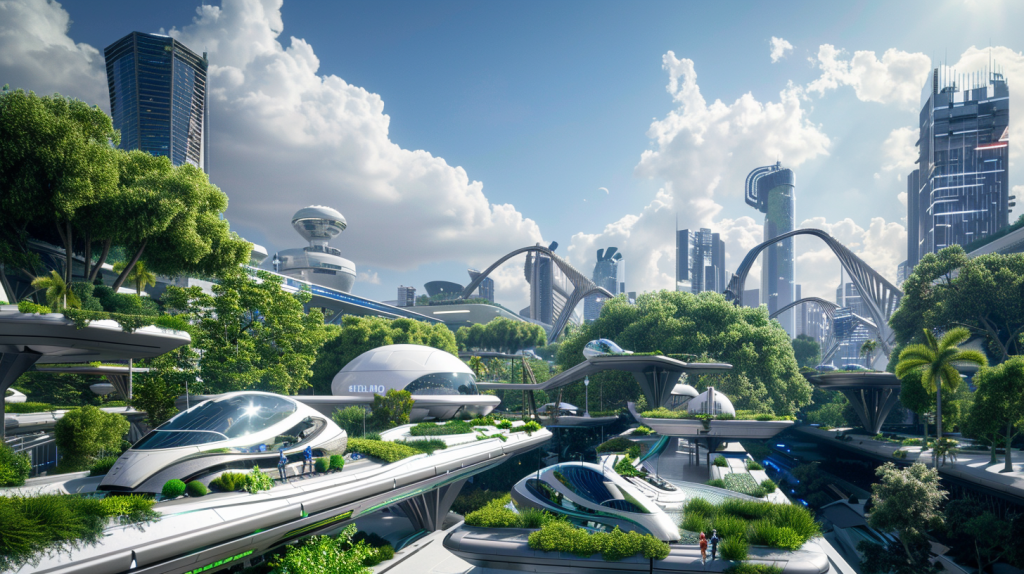
The Role of Artificial Intelligence and Machine Learning
AI and machine learning are revolutionizing infrastructure planning and management:
- Predictive maintenance using AI-powered analysis of sensor data
- Optimization of resource allocation based on real-time conditions
- Improved climate modeling and risk assessment
- Automated design processes that generate climate-resilient solutions
These technologies enable more precise, data-driven decision-making and adaptive management of infrastructure systems.
Decentralized and Off-Grid Infrastructure Systems
There’s a growing trend towards decentralized infrastructure solutions:
- Microgrids and distributed energy systems enhance energy resilience
- Decentralized water treatment and reuse systems reduce reliance on centralized networks
- Local food production systems improve food security
- Community-scale waste management solutions promote circular economies
These decentralized approaches often provide greater flexibility and resilience to localized disruptions.
Integration of Circular Economy Principles
Circular economy concepts are being applied to infrastructure design:
- Design for disassembly and material reuse in construction
- Waste-to-resource systems that turn byproducts into valuable inputs
- Regenerative design approaches that restore natural systems
- Sharing economy models for infrastructure services
These principles reduce resource consumption and waste, enhancing the sustainability and resilience of infrastructure systems.
Evolution of Climate Risk Assessment Techniques
Risk assessment methodologies are becoming more sophisticated:
- Integration of socio-economic factors with physical climate projections
- Dynamic risk assessments that update in real-time
- Scenario planning techniques that consider multiple possible futures
- Improved quantification of co-benefits from adaptation measures
These advanced techniques allow for more nuanced understanding of climate risks and the value of adaptation strategies.
As these trends continue to develop, they will shape the next generation of climate-resilient infrastructure, enabling more adaptive, efficient, and sustainable systems that can withstand the challenges of a changing climate.
Practical Tips for Infrastructure Professionals
For professionals working in infrastructure design, construction, and management, integrating climate resilience into projects requires a strategic approach.
Assessing Climate Risks for Your Project
Conducting thorough climate risk assessments is crucial:
- Use the latest climate projections relevant to your project’s location
- Consider both acute shocks (e.g., extreme weather events) and chronic stresses (e.g., sea-level rise)
- Assess the vulnerability of different project components to identified risks
- Quantify potential impacts in terms of financial, social, and environmental costs
- Identify interdependencies with other systems that could amplify risks
Remember that risk assessment is an ongoing process, as climate conditions and scientific understanding continue to evolve.
Engaging Stakeholders Early in the Design Process
Early and continuous stakeholder engagement is essential for successful adaptation:
- Identify and involve all relevant stakeholders, including local communities, government agencies, and subject matter experts
- Use participatory design techniques to incorporate local knowledge and preferences
- Clearly communicate climate risks and adaptation benefits to build support
- Address concerns and potential conflicts early in the process
- Establish ongoing feedback mechanisms throughout the project lifecycle
Effective stakeholder engagement can lead to more robust designs and smoother project implementation.
Prioritizing Adaptation Measures in Budgeting
Integrating adaptation into project budgets requires strategic thinking:
- Conduct cost-benefit analyses that include long-term climate risks and adaptation benefits
- Consider phased implementation of adaptation measures to spread costs over time
- Explore innovative financing mechanisms, such as resilience bonds or green finance
- Highlight co-benefits of adaptation measures to justify investments
- Include contingency funds for climate-related uncertainties
By making adaptation a core part of the budgeting process, you can ensure that resilience measures are not overlooked or underfunded.
Continuous Monitoring and Adaptive Management
Implementing adaptive management strategies allows for ongoing improvement:
- Establish monitoring systems to track key performance indicators and climate impacts
- Regularly review and update risk assessments based on new data and projections
- Build flexibility into designs to allow for future modifications
- Develop clear protocols for adjusting operations in response to changing conditions
- Foster a culture of learning and continuous improvement within your organization
Adaptive management ensures that infrastructure can respond to evolving climate challenges over its lifetime.
Throughout this guide, we’ve explored the multifaceted approach required to design infrastructure for climate change adaptation:
- The importance of understanding climate impacts on different infrastructure types
- Principles of resilient design, including flexibility, redundancy, and nature-based solutions
- Innovative technologies and materials enhancing adaptive capacity
- The role of policy frameworks and financial mechanisms in enabling adaptation
- Challenges in implementation and strategies to overcome them
- Future trends shaping the evolution of climate-resilient infrastructure
The Urgency of Proactive Adaptation
The need for climate-resilient infrastructure is not a distant concern but an immediate necessity. As climate impacts intensify, the cost of inaction grows exponentially. Proactive adaptation offers numerous benefits:
- Reduced long-term costs and damages from climate-related disruptions
- Enhanced safety and well-being for communities
- Improved infrastructure performance and longevity
- Opportunities for innovation and economic development
- Increased confidence in infrastructure investments
By embracing climate adaptation now, we can create a more resilient and sustainable future for generations to come.
Call to Action: Building a Resilient Future
As infrastructure professionals, policymakers, and community members, we all have a role to play in building climate resilience:
- Integrate climate considerations into all infrastructure decisions
- Advocate for policies and funding that support resilient infrastructure
- Invest in research and innovation for adaptive technologies
- Foster collaboration across sectors and disciplines
- Engage communities in the adaptation process
- Lead by example in implementing resilient practices
By working together and taking decisive action, we can create infrastructure systems that not only withstand the challenges of climate change but thrive in the face of them, ensuring a safer, more sustainable world for current and future generations.
Frequently Asked Questions (FAQs)
To address common inquiries about climate-resilient infrastructure, here are answers to frequently asked questions:
What is the role of engineers in climate change adaptation?
Engineers play a crucial role in climate change adaptation:
- Designing and implementing resilient infrastructure solutions
- Conducting risk assessments and vulnerability analyses
- Developing innovative technologies and materials for adaptation
- Integrating climate projections into engineering standards and practices
- Collaborating with policymakers and communities to develop adaptation strategies
Engineers are at the forefront of translating climate science into practical, resilient infrastructure solutions.
How can infrastructure be adapted to future climate scenarios?
Adapting infrastructure to future climate scenarios involves several strategies:
- Incorporating climate projections into design parameters and standards
- Implementing flexible and modular designs that can be adjusted over time
- Using robust decision-making techniques to account for uncertainty
- Integrating nature-based solutions to enhance adaptive capacity
- Developing adaptive management plans for ongoing adjustments
The key is to create infrastructure that can perform well across a range of possible future scenarios.
What are the costs associated with climate-resilient infrastructure?
The costs of climate-resilient infrastructure can vary widely, but generally include:
- Higher upfront costs for more robust designs and materials
- Expenses related to risk assessments and climate modeling
- Costs of integrating adaptive technologies and monitoring systems
- Potential land acquisition costs for nature-based solutions or managed retreat
However, these costs should be weighed against the long-term benefits of reduced damages, lower maintenance costs, and enhanced performance over the infrastructure’s lifetime.
How can communities contribute to infrastructure adaptation?
Communities can play a vital role in infrastructure adaptation:
- Participating in public consultations and planning processes
- Providing local knowledge about climate impacts and vulnerabilities
- Supporting and maintaining local green infrastructure
- Advocating for policies and funding for resilient infrastructure
- Implementing household-level adaptation measures
Community engagement ensures that adaptation measures are locally appropriate and garner public support.
What are the most common mistakes in designing climate-resilient infrastructure?
Common mistakes in designing climate-resilient infrastructure include:
- Relying solely on historical climate data without considering future projections
- Focusing on single-hazard resilience rather than multi-hazard approaches
- Neglecting the interdependencies between different infrastructure systems
- Overlooking the importance of community engagement and social factors
- Failing to incorporate adaptive management strategies for long-term resilience
Avoiding these mistakes requires a comprehensive, forward-looking approach to infrastructure design and management.
By addressing these frequently asked questions, we hope to provide clarity on key aspects of climate-resilient infrastructure design and implementation. As the field continues to evolve, ongoing learning and adaptation will be crucial for all stakeholders involved in building a resilient future.
This comprehensive guide aims to equip professionals, policymakers, and community members with the knowledge and strategies needed to design and implement climate-resilient infrastructure. As we face the challenges of a changing climate, our ability to adapt and build resilience will be crucial in creating sustainable, safe, and prosperous communities for generations to come.