
Environmental impact assessments (EIAs) play a crucial role in sustainable development and environmental protection. However, the accuracy of EIA predictions often faces challenges due to various uncertainties. This article explores the causes of uncertainty in EIA predictions, methods to manage it, and solutions to improve accuracy in environmental planning.
What is Environmental Impact Assessment (EIA)?
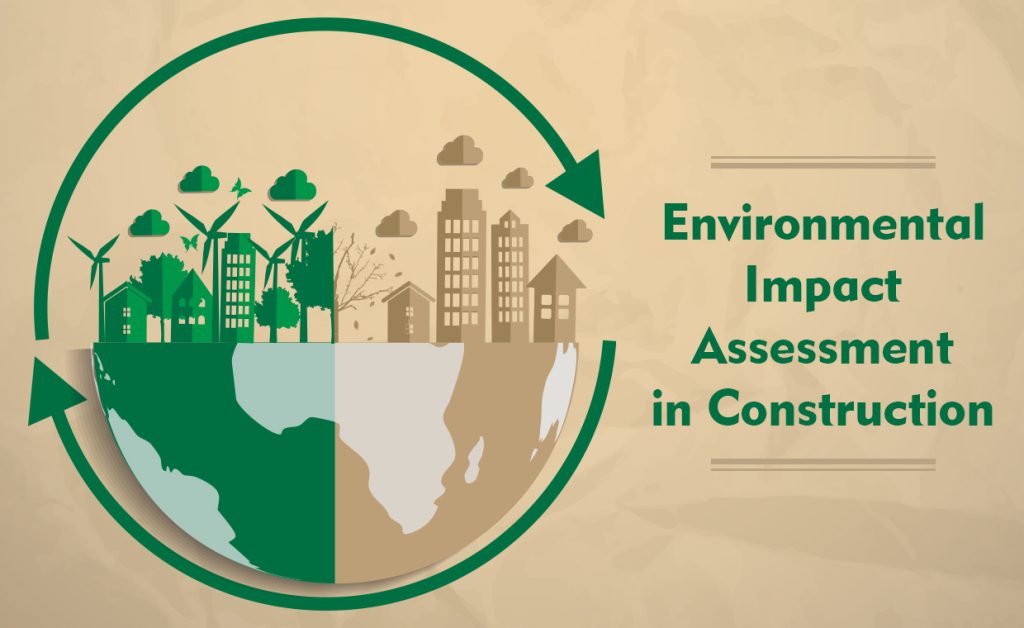
Environmental Impact Assessment is a systematic process used to identify, predict, and evaluate the potential environmental effects of proposed projects, policies, or programs. EIAs help decision-makers and stakeholders understand the possible consequences of their actions on the environment, allowing for more informed choices and mitigation strategies.
What Does Uncertainty Mean in EIA Predictions?
In the context of EIAs, uncertainty refers to the lack of precise knowledge about future environmental outcomes. It encompasses the range of possible impacts that may occur due to a proposed action, as well as the limitations in our ability to predict these impacts accurately. Understanding uncertainty is fundamental to effective environmental management, as it allows for more realistic expectations and better-prepared mitigation strategies.
Causes of Uncertainty in EIA Predictions
Several factors contribute to uncertainty in EIA predictions:
Lack of Data
Accurate predictions rely heavily on comprehensive baseline data. However, environmental systems are complex, and gathering complete data sets can be challenging. Insufficient or inadequate data introduces uncertainty into the assessment process.
Importance of baseline data for accurate predictions
Baseline data provides a starting point for understanding the current state of the environment. Without robust baseline information, it becomes difficult to predict how a proposed action might alter the existing conditions.
How insufficient data introduces uncertainty
When data is limited or of poor quality, predictions become less reliable. Gaps in information force assessors to make assumptions, which can lead to inaccurate conclusions about potential impacts.
Complexity of Environmental Systems
The intricate nature of ecosystems and their interactions adds another layer of uncertainty to EIA predictions.
Complexity in ecosystems and interactions
Environmental systems involve numerous interconnected components, each influencing the others in ways that can be difficult to fully comprehend or model. This complexity makes it challenging to predict how changes in one area might affect the system as a whole.
Natural variability as a source of uncertainty
Ecosystems exhibit natural fluctuations and cycles that can be hard to distinguish from human-induced changes. This inherent variability adds uncertainty to predictions about future environmental states.
Predictive Model Limitations
The models used in EIAs, while valuable tools, have inherent limitations that contribute to uncertainty.
Limitations of the models used in EIA predictions
Predictive models are simplifications of real-world systems and often struggle to capture all relevant factors and interactions. They may also rely on assumptions that don’t always hold true in practice.
Inability to simulate real-world complexity
Even the most sophisticated models cannot fully replicate the intricacies of natural systems. This gap between model simulations and reality introduces uncertainty into EIA predictions.
Human Error and Subjectivity
The human element in EIAs can be a significant source of uncertainty.
Role of human judgment in environmental impact assessments
EIAs often require expert judgment to interpret data and make predictions. This subjective element can introduce biases and inconsistencies into the assessment process.
Biases in the data interpretation process
Personal beliefs, experiences, and professional backgrounds can influence how individuals interpret environmental data, potentially leading to varied conclusions from the same information.
Climate Change and Unpredictable External Factors
The global climate crisis and other external factors add another dimension of uncertainty to EIA predictions.
Influence of climate change on the accuracy of EIA predictions
Changing climate patterns can alter ecosystems in ways that are difficult to predict, making long-term environmental forecasts increasingly uncertain.
External socioeconomic or political factors
Economic shifts, policy changes, and technological advancements can all impact the environment in unforeseen ways, contributing to the overall uncertainty in EIA predictions.
Types of Uncertainty in EIA
Understanding the different types of uncertainty can help in developing more effective strategies to manage them:
Natural Variability
This type of uncertainty stems from the inherent randomness and fluctuations in environmental processes. It includes factors like weather patterns, species population dynamics, and ecosystem interactions that can vary naturally over time.
Knowledge Uncertainty
Knowledge uncertainty arises from gaps in scientific understanding and limitations in available data. It reflects our incomplete knowledge of environmental systems and processes.
Decision-making Uncertainty
This form of uncertainty relates to the ambiguities in decision-making criteria and the diverse perspectives of stakeholders involved in the EIA process. It can include uncertainties about policy goals, societal values, and the relative importance of different environmental impacts.
Model Uncertainty
Model uncertainty refers to the limitations and simplifications inherent in the predictive models used to estimate environmental impacts. It includes uncertainties in model structure, parameters, and assumptions.
Methods to Manage and Reduce Uncertainty in EIA Predictions
Several techniques can help manage and reduce uncertainty in EIA predictions:
Sensitivity Analysis
Sensitivity analysis is a valuable tool for assessing how different variables impact EIA predictions.
How sensitivity analysis helps in assessing the impact of different variables on predictions
This method involves systematically varying input parameters to see how they affect the outcomes. It helps identify which factors have the most significant influence on predictions, allowing assessors to focus on reducing uncertainty in these critical areas.
Scenario Analysis
Scenario analysis involves developing multiple plausible future scenarios to account for different possibilities.
Using multiple scenarios to predict a range of possible outcomes
By considering various potential futures, EIA practitioners can provide a more comprehensive view of possible environmental impacts. This approach helps stakeholders understand the range of potential outcomes and make more informed decisions.
Adaptive Management
Adaptive management is an iterative approach that allows for ongoing adjustments based on new information and monitoring results.
Continuous monitoring and adjusting the predictions based on new information
This method acknowledges that initial predictions may not be perfect and allows for course corrections as more data becomes available. It helps reduce long-term uncertainty by incorporating real-world feedback into the management process.

Expert Judgment
While subjective, expert judgment can be a valuable tool in managing uncertainty, especially when combined with other methods.
The role of expert input in reducing uncertainty
Experts can provide insights based on experience and specialized knowledge that may not be captured by models or available data. Their input can help interpret results, identify potential issues, and suggest appropriate management strategies.
Data Improvement Techniques
Enhancing the quality and quantity of available data can significantly reduce uncertainty in EIA predictions.
Methods to improve data collection and quality for more accurate assessments
This can include using advanced monitoring technologies, increasing sampling frequencies, and employing standardized data collection protocols. Improved data provides a stronger foundation for accurate predictions and assessments.
Importance of Acknowledging Uncertainty in EIA Reports
Recognizing and communicating uncertainty in EIA reports is crucial for several reasons:
Transparency and Accountability
How acknowledging uncertainty increases transparency
By openly discussing the limitations and uncertainties in their predictions, EIA practitioners demonstrate transparency in their work. This openness helps build trust with stakeholders and decision-makers.
Enhancing Public Trust
Impact on public perception when uncertainty is acknowledged
When uncertainties are clearly communicated, the public is more likely to trust the assessment process. It shows that practitioners are being honest about what they know and don’t know, rather than presenting overly confident predictions.
Improving Decision-Making
How recognizing uncertainties can lead to better environmental planning decisions
Acknowledging uncertainty allows decision-makers to consider a range of possible outcomes and prepare accordingly. It encourages the development of flexible and robust management strategies that can adapt to different scenarios.
Solutions to Minimize Uncertainty in Environmental Predictions
While uncertainty can never be eliminated entirely, several approaches can help minimize it:
Improved Data Collection Methods
Techniques for gathering more reliable environmental data
Advances in remote sensing, environmental DNA analysis, and real-time monitoring systems can provide more comprehensive and accurate data. These improved data sources can significantly reduce uncertainty in EIA predictions.
Integration of Advanced Predictive Models
Use of AI, machine learning, and advanced models for more precise predictions
Artificial intelligence and machine learning algorithms can process vast amounts of data and identify complex patterns that might be missed by traditional methods. These advanced tools can help create more accurate and nuanced predictions of environmental impacts.
Collaboration Across Disciplines
Importance of interdisciplinary collaboration in reducing uncertainties
Environmental systems are complex and interconnected. Bringing together experts from various fields—ecology, climatology, sociology, economics, and more—can provide a more comprehensive understanding of potential impacts and reduce overall uncertainty.
Continuous Monitoring and Feedback Loops
How adaptive management and real-time monitoring help minimize uncertainty
Implementing ongoing monitoring programs allows for the continuous updating of predictions based on real-world data. This adaptive approach helps reduce long-term uncertainty by constantly refining our understanding of environmental responses to changes.
Case Studies Highlighting Uncertainty in EIA Predictions
Examining real-world examples can provide valuable insights into how uncertainty affects EIA predictions:
Case Study 1: Mining Project
Analysis of uncertainty in EIA predictions for a mining project
This case study could explore how uncertainties in factors like groundwater impacts, air quality effects, and long-term ecosystem recovery influenced the EIA process for a large-scale mining operation.
Case Study 2: Infrastructure Development
How EIA predictions for a highway development were impacted by uncertainty
This example might discuss uncertainties related to wildlife migration patterns, noise pollution impacts on local communities, and long-term changes in land use along the highway corridor.
Case Study 3: Coastal Development and Sea Level Rise
Uncertainty due to climate change and its influence on EIA for coastal areas
This case study could examine how uncertainties in sea level rise projections, storm frequency and intensity, and ecosystem responses complicate EIA predictions for coastal development projects.
Challenges and Limitations of Reducing Uncertainty in EIA
Despite best efforts, several challenges remain in minimizing uncertainty in EIAs:
Cost and Resource Constraints
Financial and time limitations in gathering comprehensive data
Collecting detailed environmental data and conducting thorough assessments can be expensive and time-consuming. Budget constraints often limit the depth and breadth of EIA studies, potentially increasing uncertainty.
Resistance to Acknowledging Uncertainty
How stakeholders often prefer certainties, leading to underreporting uncertainties
There can be pressure from various stakeholders to present more definitive predictions, even when significant uncertainties exist. This can lead to the underreporting of uncertainties in EIA reports.
Limitations of Current Technology
Current technological limitations in accurately predicting complex environmental outcomes
While technology has advanced significantly, there are still limitations in our ability to model and predict complex environmental systems, especially over long time scales.
Future of EIA and Uncertainty Management
Looking ahead, several trends are likely to shape the future of uncertainty management in EIAs:
Innovations in Predictive Modeling
Potential advancements in technology for reducing uncertainty
Continued improvements in computational power, data analytics, and modeling techniques are likely to enhance our ability to make more accurate environmental predictions.
Increasing Role of Stakeholders in Reducing Uncertainty
The role of public participation and stakeholder collaboration
Greater involvement of local communities and diverse stakeholders in the EIA process can help identify potential impacts and uncertainties that might otherwise be overlooked.
Sustainable Development Goals (SDGs)
Aligning uncertainty management in EIAs with global sustainability goals
The global focus on achieving the SDGs is likely to drive improvements in EIA practices, including better management of uncertainties to ensure more sustainable development outcomes.
Frequently Asked Questions (FAQ)
How does uncertainty impact the credibility of EIA predictions?
Uncertainty can affect the credibility of EIA predictions by introducing doubt about the accuracy and reliability of the assessment results. However, when properly acknowledged and managed, uncertainty can actually enhance credibility by demonstrating transparency and a realistic understanding of environmental complexities.
What is the role of technology in reducing uncertainty in EIA predictions?
Technology plays a crucial role in reducing uncertainty by improving data collection, enhancing predictive modeling capabilities, and facilitating real-time monitoring of environmental conditions. Advanced tools like remote sensing, AI, and big data analytics are increasingly being used to provide more accurate and comprehensive environmental assessments.
How can stakeholders contribute to managing uncertainty in EIAs?
Stakeholders can contribute valuable local knowledge, historical information, and diverse perspectives that may help identify potential impacts and uncertainties not captured by scientific data alone. Their involvement can also help ensure that the full range of potential outcomes is considered in the assessment process.
Why is it important to acknowledge uncertainty in environmental assessments?
Acknowledging uncertainty is crucial for transparency, building trust with stakeholders, and ensuring that decision-makers have a realistic understanding of potential environmental impacts. It allows for more informed decision-making and the development of flexible management strategies that can adapt to different potential outcomes.
Are there global standards for managing uncertainty in EIAs?
While there are guidelines and best practices for addressing uncertainty in EIAs, there is no single global standard. However, international organizations like the International Association for Impact Assessment (IAIA) provide guidance on incorporating uncertainty analysis into environmental assessments.
Understanding and addressing uncertainty in Environmental Impact Assessment predictions is crucial for effective environmental management and sustainable development. While uncertainties will always exist due to the complex nature of environmental systems, continuous improvements in data collection, modeling techniques, and stakeholder engagement can help minimize these uncertainties.
The future of EIA lies in embracing uncertainty as an integral part of the assessment process rather than viewing it as a weakness. By acknowledging and effectively communicating uncertainties, EIA practitioners can provide more realistic and useful information to decision-makers and stakeholders.
As we face growing environmental challenges, including climate change, the need for accurate and reliable EIAs becomes ever more critical. Continued innovation in methods to handle uncertainty, coupled with a commitment to transparency and adaptive management, will be key to improving the effectiveness of environmental impact assessments in the years to come.
By striving for continuous improvement in our approach to uncertainty in EIAs, we can enhance our ability to protect and manage our environment responsibly, ensuring a sustainable future for generations to come.
One Response