Reinforced concrete slab design is one of the most important topics in structural engineering. Slabs transfer loads from floors and roofs to beams, columns, and foundations. A properly designed slab ensures structural safety, durability, serviceability, and cost efficiency.
Whether you are a civil engineering student, site engineer, structural designer, or construction professional, understanding reinforced concrete slab design step by step is essential for safe building construction.
In this guide, you will learn:
- Types of RCC slabs
- Load calculations
- Slab design formulas
- One-way slab design
- Two-way slab design
- Reinforcement detailing
- IS 456 code provisions
- Practical site considerations
If you are new to RCC structural design, you should also read related guides on Structotag Foundation Design Tutorials and Structural Engineering Articles on Structotag for deeper understanding.
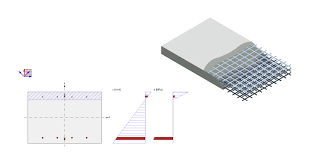
Introduction to Reinforced Concrete Slab Design
A reinforced concrete slab is a horizontal structural element made of concrete and steel reinforcement. It is designed to carry live loads, dead loads, and other imposed loads safely to supporting members.
Concrete is strong in compression but weak in tension. Steel reinforcement is therefore added to resist tensile stresses developed in the slab.
The main objectives of slab design include:
- Ensuring structural safety
- Limiting deflection
- Preventing cracking
- Achieving durability
- Reducing construction cost
RCC slabs are widely used in:
- Residential buildings
- Commercial structures
- Bridges
- Industrial facilities
- Parking garages
- Water-retaining structures
Types of Reinforced Concrete Slabs
Understanding slab types is essential before beginning reinforced concrete slab design step by step.
One-Way Slab
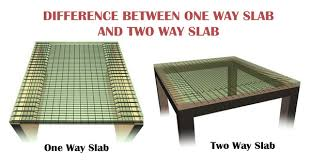
A one-way slab transfers load primarily in one direction. It is supported on two opposite sides.
A slab is considered one-way when:
Where:
- = longer span
- = shorter span
Characteristics of one-way slabs include:
- Main reinforcement in shorter span direction
- Distribution steel in longer span direction
- Simpler reinforcement detailing
Two-Way Slab
A two-way slab transfers load in both directions and is supported on all four sides.
The slab behaves as a two-way slab when:
Characteristics include:
- Main reinforcement provided in both directions
- Better load distribution
- More economical for square panels
Flat Slab
Flat slabs are directly supported by columns without beams. They are commonly used in commercial buildings because they provide architectural flexibility.
Cantilever Slab
Cantilever slabs are fixed at one end and free at the other end. Examples include balconies and sunshades.
Basic Assumptions in RCC Slab Design
Structural engineers make several assumptions while designing slabs.
Plane Sections Remain Plane
Sections before bending remain plane after bending.
Perfect Bond Exists Between Steel and Concrete
Steel and concrete deform together without slipping.
Concrete Resists Compression
Concrete effectively carries compressive stresses.
Steel Reinforcement Resists Tension
Steel bars are placed in tension zones to resist tensile forces.
Materials Used in Reinforced Concrete Slab Design
Concrete Grade
Common concrete grades used in slab construction include:
- M20
- M25
- M30
Higher grades provide greater strength and durability.
Steel Reinforcement
Typical reinforcement grades include:
- Fe415
- Fe500
- Fe550
Fe500 is widely used due to its high yield strength.
Concrete Cover
Nominal cover protects reinforcement from corrosion and fire exposure.
Typical slab cover:
- 15 mm to 25 mm
Durability Considerations
Durability depends on:
- Water-cement ratio
- Exposure condition
- Quality of materials
- Adequate curing
You can explore more concrete technology concepts on Structotag Civil Engineering Resources.
Loads Considered in Reinforced Concrete Slab Design
Load calculation is one of the most important parts of reinforced concrete slab design step by step.
Dead Load
Dead load includes:
- Self-weight of slab
- Floor finishes
- Ceiling load
- Permanent fixtures
Self-weight of slab:
Where:
- = slab thickness in meters
- 25 kN/m³ = unit weight of reinforced concrete
Live Load
Live load depends on building occupancy.
Examples:
- Residential rooms: 2 kN/m²
- Offices: 3–5 kN/m²
- Corridors: 4–5 kN/m²
Wind Load
Wind loads become important in high-rise buildings.
Seismic Load
Earthquake forces are considered in seismic zones.
Factored Load
Ultimate load is calculated using load factors.
For limit state design:
Reinforced Concrete Slab Design Step by Step
This section explains the complete slab design workflow.
Step 1: Determine Slab Type
Check support conditions and span ratio to determine whether the slab behaves as one-way or two-way.
Step 2: Calculate Effective Span
Effective span is the lesser of:
- Center-to-center distance of supports
- Clear span + effective depth
Step 3: Assume Slab Thickness
Preliminary slab thickness depends on span and deflection requirements.
Typical thickness:
- One-way slab: span/20 to span/25
- Two-way slab: span/30 to span/35
Step 4: Calculate Loads
Determine:
- Dead load
- Floor finish load
- Live load
Step 5: Compute Factored Load
Apply load factors according to IS 456.
Step 6: Determine Bending Moment
For simply supported one-way slab:
For continuous slabs, moment coefficients from IS 456 are used.
Step 7: Calculate Effective Depth
Effective depth is obtained using:
Step 8: Calculate Steel Reinforcement
Area of steel reinforcement:
Step 9: Check for Shear
Nominal shear stress:
Step 10: Check Deflection
Deflection control ensures serviceability.
Step 11: Check Development Length
Development length ensures proper anchorage of reinforcement.
Step 12: Prepare Reinforcement Detailing
Prepare:
- Bar arrangement
- Spacing
- Anchorage
- Crank details
One-Way Slab Design Example
Let us design a one-way slab step by step.
Given Data
- Span = 4 m
- Live load = 3 kN/m²
- Floor finish = 1 kN/m²
- Concrete grade = M20
- Steel grade = Fe500
Step 1: Assume Thickness
Assume slab thickness = 150 mm.
Step 2: Calculate Dead Load
Self-weight:
0.15 \times 25 = 3.75 \text{ kN/m²}
Total dead load:
3.75 + 1 = 4.75 \text{ kN/m²}
Step 3: Total Load
4.75 + 3 = 7.75 \text{ kN/m²}
Step 4: Factored Load
1.5 \times 7.75 = 11.625 \text{ kN/m²}
Step 5: Bending Moment
M_u = \frac{11.625 \times 4^2}{8}
M_u = 23.25 \text{ kNm}
Step 6: Calculate Reinforcement
Use design formulas to determine steel area.
Provide:
- 10 mm bars @ 150 mm c/c
Step 7: Check Deflection
Ensure span-to-depth ratio satisfies IS code requirements.
Two-Way Slab Design Example
Two-way slab design differs because loads are distributed in both directions.
Panel Dimensions
- Short span = 4 m
- Long span = 5 m
Aspect ratio:
\frac{5}{4} = 1.25
Hence, it is a two-way slab.
Moment Coefficients
Moment coefficients are obtained from IS 456 tables.
Reinforcement Design
Main steel is provided in:
- Short span direction
- Long span direction
Corner Reinforcement
Torsional reinforcement is provided at restrained corners.
You can also study beam design procedures on Structotag RCC Design Guides for related structural concepts.
Reinforcement Detailing Rules for RCC Slabs
Proper detailing is critical for structural performance.
Minimum Reinforcement
As per IS 456:
- Mild steel: 0.15%
- HYSD bars: 0.12%
Maximum Bar Spacing
- Main bars: lesser of 3d or 300 mm
- Distribution bars: lesser of 5d or 450 mm
Distribution Reinforcement
Distribution steel controls temperature and shrinkage cracks.
Concrete Cover
Minimum slab cover:
- 15 mm to 20 mm
Development Length
Bars must extend adequately beyond supports.
IS 456 Provisions for Slab Design
IS 456 provides guidelines for:
- Flexural design
- Shear design
- Deflection control
- Reinforcement detailing
Span-to-Depth Ratio
Typical basic ratios:
- Simply supported: 20
- Continuous: 26
- Cantilever: 7
Deflection Limits
Deflection should remain within permissible serviceability limits.
Shear Stress Limits
Nominal shear stress should not exceed permissible values.
Common Mistakes in Reinforced Concrete Slab Design
Incorrect Load Calculation
Underestimating loads can cause unsafe designs.
Ignoring Deflection
Deflection problems lead to:
- Cracks
- Ponding
- Serviceability issues
Poor Reinforcement Detailing
Improper detailing causes:
- Congestion
- Cracking
- Construction difficulty
Insufficient Cover
Low concrete cover exposes reinforcement to corrosion.
Practical Tips for Safe and Economical Slab Design
Optimize Slab Thickness
Avoid unnecessary slab thickness to reduce dead load.
Use Appropriate Bar Diameter
Choose practical bar diameters for easier placement.
Coordinate With Architectural Layout
Good coordination reduces beam depth conflicts and service clashes.
Follow Code Requirements
Always design according to relevant standards.
Software Used for Reinforced Concrete Slab Design
Modern structural engineers use software tools for analysis and design.
ETABS
Widely used for building analysis and slab design.
Visit ETABS Official Website.
SAFE
SAFE is excellent for slab and foundation design.
STAAD.Pro
Used for structural analysis and design.
Visit STAAD.Pro Official Website.
AutoCAD
AutoCAD is used for reinforcement detailing drawings.
Difference Between One-Way and Two-Way Slabs
| Feature | One-Way Slab | Two-Way Slab |
|---|---|---|
| Load Transfer | One direction | Two directions |
| Reinforcement | One main direction | Both directions |
| Economy | Suitable for narrow panels | Suitable for square panels |
| Deflection | Higher | Lower |
FAQs on Reinforced Concrete Slab Design
What is the minimum thickness of an RCC slab?
Typical minimum thickness ranges from 100 mm to 150 mm depending on span and loading.
How do you identify one-way and two-way slabs?
By checking the aspect ratio of longer span to shorter span.
Why is reinforcement required in slabs?
Reinforcement resists tensile stresses developed in concrete slabs.
Which code is used for slab design in India?
IS 456:2000 is commonly used.
What is effective depth in slab design?
Effective depth is the distance from the compression face to the centroid of tension reinforcement.
Why is deflection check important?
Deflection control prevents excessive sagging and cracking.
What software is best for slab design?
ETABS, SAFE, and STAAD.Pro are widely used.
Understanding reinforced concrete slab design step by step is essential for every civil and structural engineer. Proper slab design ensures safety, durability, economy, and long-term structural performance.
The design process involves:
- Load calculation
- Bending moment analysis
- Depth selection
- Reinforcement calculation
- Shear and deflection checks
- Proper detailing
Whether you are designing one-way slabs, two-way slabs, or cantilever slabs, following IS code provisions and practical detailing principles is critical.
At Structotag, you can explore more structural engineering tutorials, RCC design guides, and practical civil engineering resources to improve your technical knowledge and professional skills.