
Concrete slabs are one of the most important structural elements used in modern construction. From residential buildings to skyscrapers, slabs provide flat horizontal surfaces that transfer loads safely to beams, columns, and foundations. Understanding the different types of concrete slabs in construction is essential for civil engineers, architects, contractors, and even homeowners involved in building projects.
The choice of slab directly affects structural stability, construction cost, durability, span capability, and architectural flexibility. Some slab systems are suitable for residential buildings, while others are ideal for commercial complexes, bridges, parking garages, and industrial structures.
In this comprehensive guide, you will learn the major types of concrete slabs in construction, their advantages, disadvantages, applications, and structural behavior. You will also discover how to choose the right slab system for your building project.
If you are new to structural engineering, you may also find this guide on What Does a Structural Plan Consist Of useful for understanding building structural layouts.
What Is a Concrete Slab?
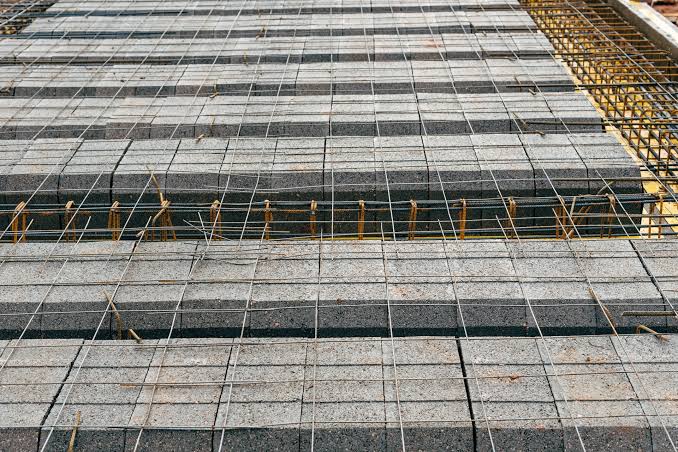
A concrete slab is a flat horizontal structural member made of reinforced concrete. It is primarily used to create floors, roofs, ceilings, and bridge decks in buildings and infrastructure projects.
Concrete slabs are designed to transfer loads from occupants, furniture, equipment, and other structural components to supporting beams, walls, columns, and foundations. Since concrete is weak in tension but strong in compression, reinforcement bars are embedded within the slab to resist tensile stresses.
Concrete slabs are commonly classified based on:
- Structural behavior
- Reinforcement arrangement
- Construction technique
- Load transfer mechanism
In reinforced concrete construction, slab design is one of the most critical aspects of structural engineering because improper slab selection can lead to cracking, excessive deflection, punching shear failure, and durability issues.
To understand how structural loads interact with building systems, read Materials Suitable for Construction of Load-Bearing Structures.
Classification of Concrete Slabs
Concrete slabs can be grouped into several categories depending on their structural behavior and construction method.
Based on Structural Behavior
- One-way slabs
- Two-way slabs
- Flat slabs
- Cantilever slabs
Based on Construction Method
- Cast-in-situ slabs
- Precast slabs
- Post-tensioned slabs
Based on Reinforcement System
- Reinforced concrete slabs
- Prestressed slabs
- Composite slabs
Based on Load Distribution
- Ribbed slabs
- Waffle slabs
- Hollow core slabs
Each slab type offers unique advantages depending on span length, load intensity, budget, and architectural requirements.
One-Way Slab
A one-way slab is a slab supported on two opposite sides where loads are transferred mainly in one direction.
Structural Behavior of One-Way Slabs
When the ratio of the longer span to the shorter span is greater than 2, the slab behaves as a one-way slab. The load is transferred to the supporting beams in the shorter direction.
Reinforcement Arrangement
Main reinforcement is provided along the shorter span, while distribution reinforcement is placed along the longer span.
Advantages of One-Way Slabs
- Simple to design and construct
- Economical for short spans
- Requires less complex formwork
- Suitable for residential buildings
Disadvantages
- Not ideal for long spans
- Greater slab thickness may be required
- Less architectural flexibility
Applications
- Residential buildings
- Corridors
- Verandas
- Small office structures
Two-Way Slab
A two-way slab transfers loads in both directions and is supported on all four sides.
How Two-Way Slabs Work
When the ratio of the longer span to the shorter span is less than 2, the slab bends in both directions. Reinforcement is therefore provided in both directions.
Advantages of Two-Way Slabs
- Better load distribution
- Reduced slab thickness
- More economical for square panels
- Higher structural efficiency
Disadvantages
- More complicated reinforcement detailing
- Requires skilled labor
- Complex shuttering
Applications
- Commercial buildings
- Multi-storey structures
- Office floors
- Shopping malls
Many engineers prefer two-way slabs because of their superior structural performance in medium and large-span buildings.
Flat Slab
A flat slab is a reinforced concrete slab directly supported by columns without beams.
Characteristics of Flat Slabs
- Uniform slab thickness
- Direct load transfer to columns
- Drop panels may be used
- Column capitals may be provided
Advantages of Flat Slabs
- Faster construction
- Reduced floor-to-floor height
- Improved architectural flexibility
- Easier installation of mechanical services
Disadvantages
- Punching shear risk around columns
- Not suitable for extremely heavy loads
- Requires careful structural analysis
Applications
- Hotels
- Hospitals
- Parking garages
- Commercial buildings
Flat slabs are commonly used in modern buildings because they create open floor spaces and improve aesthetics.
Flat Plate Slab
Flat plate slabs are similar to flat slabs but do not include drop panels or column capitals.
Benefits
- Simplified formwork
- Faster construction
- Smooth ceiling appearance
Limitations
- Lower load-carrying capacity
- Higher punching shear vulnerability
Applications
- Apartments
- Hotels
- Residential towers
Waffle Slab
A waffle slab is a reinforced concrete slab containing a grid of ribs running in perpendicular directions.
Why Waffle Slabs Are Used
Waffle slabs reduce the dead load of the structure while maintaining high strength and stiffness.
Advantages
- Excellent for long spans
- Attractive architectural appearance
- Reduced material consumption
- Lower self-weight
Disadvantages
- Expensive formwork
- Complex construction
- Requires skilled workmanship
Applications
- Auditoriums
- Airports
- Large halls
- Exhibition centers
For sustainable structural systems, you may also read Precast Concrete Solutions for Sustainable and Efficient Infrastructure Development.
Ribbed Slab
Ribbed slabs contain narrow ribs running in one direction beneath a thin slab topping.
Advantages
- Reduced dead load
- Efficient material usage
- Good thermal performance
Disadvantages
- More complex reinforcement
- Additional formwork requirements
Applications
- Industrial buildings
- Warehouses
- Educational facilities
Hollow Core Slab
Hollow core slabs are precast prestressed slabs with longitudinal hollow voids.
Advantages
- Lightweight
- Rapid installation
- Long span capability
- Reduced construction time
Disadvantages
- Transportation challenges
- Limited onsite modifications
Applications
- Parking structures
- Office buildings
- Residential apartments
Bubble Deck Slab
Bubble deck slabs use hollow plastic spheres embedded within concrete to reduce self-weight.
Benefits
- Reduced concrete consumption
- Environmentally friendly
- Longer spans possible
Challenges
- Specialized construction technique
- Higher initial cost
Applications
- High-rise buildings
- Green buildings
- Commercial structures
Hardy Slab
Hardy slabs contain hollow blocks made of lightweight materials placed inside the slab.
Advantages
- Reduced dead load
- Improved insulation
- Material savings
Disadvantages
- Labor-intensive installation
- Not suitable for heavy industrial loads
Applications
- Residential buildings
- Low-rise structures
Precast Concrete Slab
Precast slabs are manufactured in factories and transported to construction sites for installation.
Advantages
- High quality control
- Faster construction
- Reduced labor requirements
- Minimal site waste
Disadvantages
- Transportation cost
- Crane requirements
- Joint detailing challenges
Applications
- Bridges
- Commercial buildings
- Industrial facilities
Precast construction continues to gain popularity due to improved construction speed and sustainability.
Post-Tensioned Slab
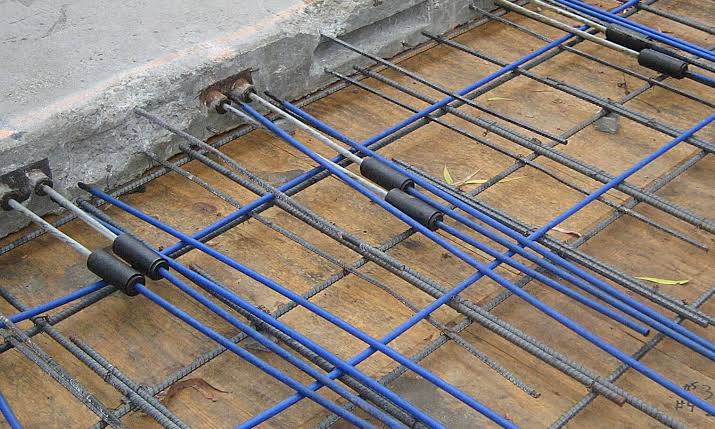
Post-tensioned slabs use high-strength steel tendons tensioned after concrete hardens.
How Post-Tensioning Works
Steel tendons are stressed after concrete curing to introduce compressive forces into the slab.
Advantages
- Longer spans
- Reduced slab thickness
- Fewer columns required
- Better crack resistance
Disadvantages
- Specialized expertise required
- Higher construction cost
- Complex maintenance
Applications
- High-rise towers
- Parking structures
- Bridges
- Shopping malls
Conventional Slab
Conventional slabs are beam-supported slabs cast monolithically with beams and columns.
Advantages
- Simple construction
- Widely used
- Reliable performance
Disadvantages
- Increased beam depth
- Reduced ceiling aesthetics
Applications
- Residential buildings
- Schools
- Office structures
Composite Slab
Composite slabs combine concrete with steel decking systems.
Advantages
- Faster construction
- Reduced formwork
- Lightweight structure
Applications
- Steel-framed buildings
- Commercial complexes
- Industrial buildings
Cantilever Slab
Cantilever slabs extend beyond their supports without external bracing.
Structural Behavior
Cantilever slabs resist bending moments through fixed-end support conditions.
Applications
- Balconies
- Sunshades
- Canopies
Advantages
- Architectural elegance
- Space optimization
Disadvantages
- High bending stresses
- Deflection sensitivity
Comparison of Different Types of Concrete Slabs
| Slab Type | Best For | Span Capacity | Construction Speed | Cost |
|---|---|---|---|---|
| One-Way Slab | Residential buildings | Short | Fast | Low |
| Two-Way Slab | Commercial floors | Medium | Moderate | Moderate |
| Flat Slab | Offices and hotels | Medium | Fast | Moderate |
| Waffle Slab | Large halls | Long | Slow | High |
| Hollow Core Slab | Precast projects | Long | Very Fast | Moderate |
| Post-Tensioned Slab | High-rise buildings | Very Long | Moderate | High |
| Composite Slab | Steel structures | Medium | Fast | Moderate |
Factors to Consider When Choosing a Concrete Slab
Selecting the right slab system depends on several engineering and economic factors.
Span Length
Longer spans may require post-tensioned or waffle slabs.
Load Requirements
Industrial buildings need stronger slab systems than residential buildings.
Construction Budget
Conventional slabs are usually cheaper than advanced slab systems.
Architectural Requirements
Flat slabs provide more flexible interior layouts.
Construction Speed
Precast slabs offer faster project completion.
Soil Conditions
Foundation movement influences slab performance.
For foundation-related structural considerations, check Types of Deep Foundations: A Comprehensive Guide.
Common Failures in Concrete Slabs
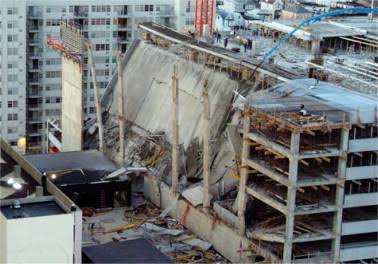
Concrete slabs can fail due to poor design, improper construction, or environmental exposure.
Cracking
Cracks often occur due to shrinkage, overloading, or inadequate reinforcement.
Deflection
Excessive slab deflection can damage finishes and create serviceability issues.
Punching Shear Failure
Flat slabs are vulnerable to punching shear near columns.
Reinforcement Corrosion
Water penetration can corrode embedded steel reinforcement.
Water Leakage
Improper waterproofing leads to moisture problems and durability issues.
Advantages of Concrete Slabs in Construction
Concrete slabs remain widely used because of their numerous benefits.
High Strength
Concrete slabs resist heavy loads effectively.
Durability
Properly designed slabs can last for decades.
Fire Resistance
Concrete provides excellent fire protection.
Thermal Performance
Concrete helps regulate indoor temperatures.
Versatility
Different slab systems suit different construction needs.
Frequently Asked Questions
What are the main types of concrete slabs in construction?
The major slab types include one-way slabs, two-way slabs, flat slabs, waffle slabs, ribbed slabs, hollow core slabs, post-tensioned slabs, and precast slabs.
What is the difference between one-way and two-way slabs?
One-way slabs transfer loads mainly in one direction, while two-way slabs distribute loads in both directions.
Which slab is best for residential buildings?
Conventional one-way and two-way slabs are commonly used for residential buildings because they are economical and easy to construct.
Why are waffle slabs used in large buildings?
Waffle slabs provide high strength with reduced self-weight, making them ideal for large-span structures.
What are the advantages of flat slabs?
Flat slabs provide architectural flexibility, faster construction, and reduced floor height.
Which slab type is most economical?
One-way slabs are generally the most economical for short-span residential buildings.
What is a post-tensioned slab?
A post-tensioned slab uses tensioned steel tendons to improve strength and reduce cracking.
Are precast slabs better than cast-in-situ slabs?
Precast slabs offer faster construction and better quality control, but transportation and installation can increase project cost.
Understanding the different types of concrete slabs in construction is essential for selecting the right structural system for any project. Each slab type has unique structural behavior, advantages, limitations, and applications.
One-way slabs are suitable for small residential structures, while two-way slabs perform better in commercial buildings. Flat slabs offer architectural flexibility, waffle slabs excel in long spans, and post-tensioned slabs are ideal for high-rise construction.
Engineers must carefully evaluate span length, load conditions, budget, construction speed, durability, and architectural requirements before choosing a slab system. Proper slab selection not only improves structural performance but also reduces maintenance costs and enhances building safety.
For more civil engineering and structural design insights, visit Structotag.