
Retaining walls are crucial structures in civil engineering and landscaping, playing a vital role in slope stability projects. These walls are designed to hold back soil and prevent erosion, landslides, and other forms of ground movement that can threaten structures, roads, and landscapes. Choosing the right retaining wall for your specific project is essential to ensure long-term stability, safety, and cost-effectiveness.
This article aims to provide a comprehensive guide on selecting the most appropriate retaining wall for your slope stability project. We will explore various types of retaining walls, factors to consider during the selection process, design and engineering considerations, construction materials and techniques, cost implications, and common mistakes to avoid. By the end of this article, you will have a thorough understanding of the key elements involved in choosing a retaining wall, enabling you to make informed decisions for your project.
Key factors that we will discuss include:
- Understanding slope stability and its importance
- Types of retaining walls and their applications
- Soil characteristics and site conditions
- Load-bearing requirements and structural considerations
- Drainage needs and environmental impact
- Cost considerations and long-term maintenance
- Design and construction best practices
Let’s delve into these topics to help you navigate the complex process of selecting the ideal retaining wall for your slope stability project.
Understanding Slope Stability
What is slope stability?
Slope stability refers to the condition of a natural or artificial slope to withstand changes in shape and resist failure under various environmental and loading conditions. A stable slope maintains its form and integrity over time, while an unstable slope is prone to movement, erosion, or collapse.
Slope stability is influenced by several factors, including:
- Soil composition and properties
- Slope angle and height
- Groundwater conditions
- Vegetation cover
- External loads (e.g., buildings, traffic)
- Weather conditions and climate
Engineers and geologists assess slope stability through various methods, including field observations, soil testing, and computer modeling. These assessments help determine the need for stabilization measures, such as retaining walls.
Why is slope stability important in construction projects?
Slope stability is a critical consideration in construction projects for several reasons:
- Safety: Unstable slopes can lead to landslides, mudslides, or rockfalls, posing serious risks to human life, property, and infrastructure.
- Structural integrity: Buildings, roads, and other structures built on or near unstable slopes may suffer damage or collapse if the ground beneath them shifts or fails.
- Environmental protection: Slope failures can cause erosion, sedimentation in waterways, and damage to ecosystems.
- Cost implications: Addressing slope stability issues proactively is often more cost-effective than dealing with the consequences of slope failure.
- Legal and regulatory compliance: Many jurisdictions have specific regulations and building codes related to slope stability and retaining wall construction.
- Long-term sustainability: Ensuring slope stability contributes to the longevity and durability of construction projects and surrounding landscapes.
Given the importance of slope stability, retaining walls are often employed as a key solution to stabilize slopes and prevent potential hazards. Let’s explore the various types of retaining walls commonly used in slope stability projects.
Types of Retaining Walls
Gravity Retaining Walls
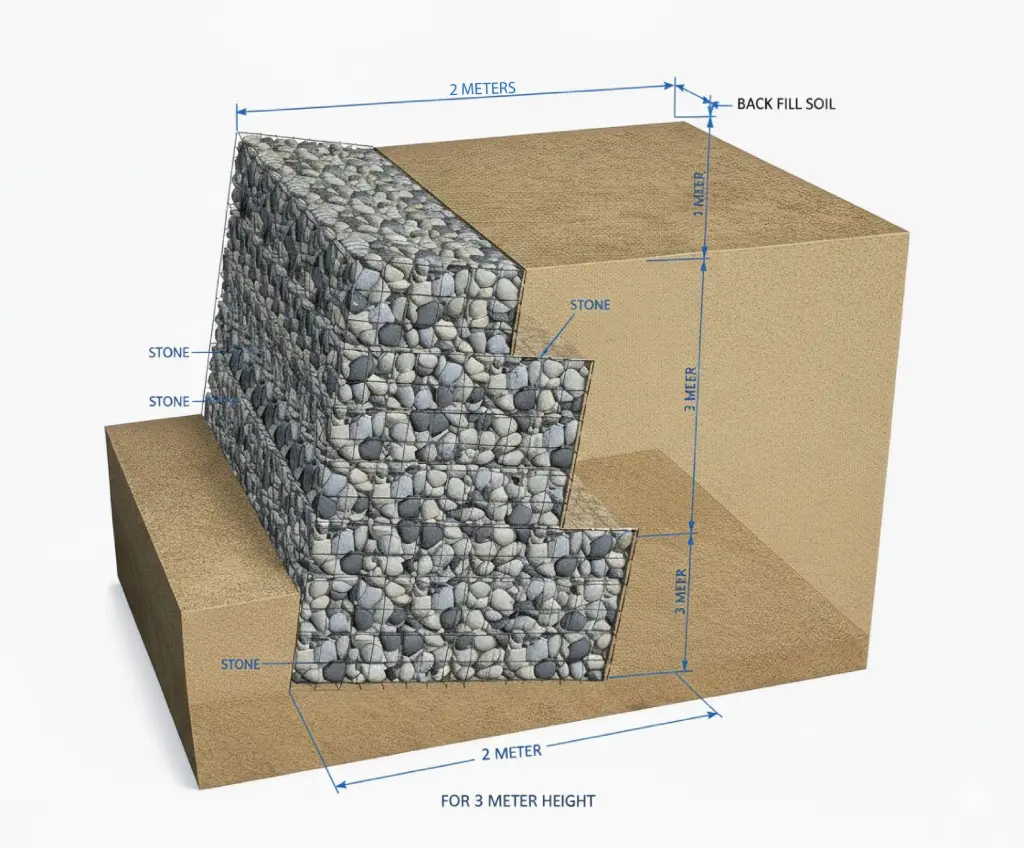
Gravity retaining walls are the simplest form of retaining structures. They rely on their own weight and sometimes the weight of a portion of the soil behind them to resist lateral earth pressures and maintain stability. These walls are typically thick at the base and taper towards the top, creating a trapezoidal cross-section.
The principle behind gravity walls is straightforward: the wall’s mass creates a large enough force to counteract the lateral pressure exerted by the retained soil. This design allows the wall to remain stable without the need for additional reinforcement or anchoring systems.
Suitable applications:
- Low to medium-height retaining needs (typically up to 3-4 meters)
- Residential landscaping and garden terracing
- Small-scale erosion control projects
- Areas where simplicity in design and construction is preferred
- Locations with stable foundation soils
Advantages:
- Simple design and construction
- Minimal excavation required
- Can be built with various materials (concrete, stone, brick)
- Low maintenance requirements
Disadvantages:
- Limited height capacity
- Requires significant base width, which may not be suitable for all sites
- Can be more expensive for taller walls due to material requirements
Cantilever Retaining Walls
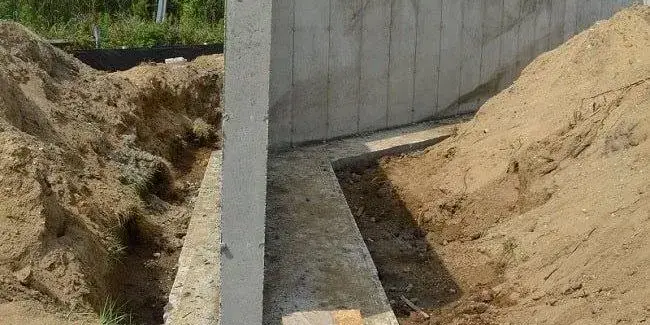
Cantilever retaining walls are reinforced concrete structures consisting of a thin stem and a base slab. The stem extends vertically from the base, forming an inverted T-shape. These walls utilize the weight of the backfill soil on top of the base slab to enhance stability.
The design of cantilever walls allows them to resist overturning and sliding through a combination of their own weight, the weight of the soil above the heel (back portion of the base), and the cantilever action of the stem. Reinforcing steel within the concrete provides additional strength and helps distribute loads.
When to use cantilever walls:
- Medium to tall retaining requirements (typically 3-8 meters)
- Sites with limited horizontal space
- Projects requiring a vertical or near-vertical face
- Areas with good foundation conditions
- Commercial and industrial applications
Advantages:
- Efficient use of materials compared to gravity walls
- Can accommodate greater heights
- Relatively slim profile, saving space
- Versatile in terms of height adjustments
Disadvantages:
- More complex design and construction compared to gravity walls
- Requires careful engineering and reinforcement detailing
- May need deeper foundations
- Higher initial costs due to reinforced concrete construction
Sheet Pile Retaining Walls
Sheet pile retaining walls consist of interlocking sheets of steel, vinyl, or wood driven vertically into the ground. These walls gain their stability from the embedment depth of the sheets and sometimes from additional anchoring systems.
The construction process involves driving the sheets into the ground using specialized equipment such as vibratory hammers or impact hammers. The interlocking nature of the sheets creates a continuous barrier capable of retaining soil and water.
Ideal scenarios for sheet pile walls:
- Waterfront structures and marine applications
- Temporary excavation support
- Areas with high water tables or poor soil conditions
- Limited access sites where minimal excavation is preferred
- Projects requiring quick installation
Advantages:
- Rapid installation compared to other wall types
- Effective in areas with high groundwater
- Can be installed in tight spaces
- Suitable for both permanent and temporary applications
- Minimal site disturbance during installation
Disadvantages:
- Limited to moderate heights unless additional support is provided
- May not be aesthetically pleasing in some settings
- Potential for corrosion in certain environments (especially for steel sheets)
- Can be noisy during installation
Anchored Retaining Walls
Anchored retaining walls are structures that gain additional stability through the use of anchors or tiebacks. These anchors, typically made of high-strength steel cables or rods, are installed into the soil behind the wall face and secured to a stable layer of soil or rock.
The anchors work by transferring tensile forces from the wall into the soil mass behind it, effectively creating a larger, more stable structure. This allows anchored walls to resist much higher lateral earth pressures compared to non-anchored alternatives.
Best uses for anchored walls:
- Tall retaining structures (can exceed 20 meters in some cases)
- Areas with limited space for conventional gravity or cantilever walls
- Sites with poor soil conditions or high lateral pressures
- Stabilization of existing retaining walls
- Cut slopes in mountainous terrain or urban environments
Advantages:
- Can achieve significant heights
- Requires less material than conventional walls of similar height
- Adaptable to various soil and site conditions
- Can be used to reinforce existing structures
Disadvantages:
- More complex design and construction process
- Requires specialized equipment and expertise for anchor installation
- Higher initial costs due to anchoring system
- May require periodic inspection and maintenance of anchors
Segmental Retaining Walls
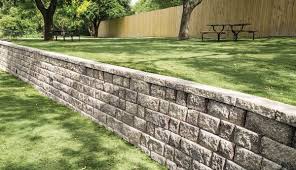
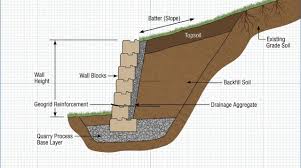
Segmental retaining walls (SRWs) are constructed using interlocking concrete units or blocks. These modular systems often incorporate geosynthetic reinforcement layers within the backfill soil to create a composite gravity mass.
Key features of SRWs include:
- Dry-stacked installation (no mortar required)
- Flexible design allowing for curves and corners
- Variety of textures, colors, and styles available
- Ability to incorporate steps, terraces, and other landscape features
Advantages:
- Relatively easy and quick to install
- Can be built without heavy equipment in some cases
- Aesthetically pleasing with numerous design options
- Good drainage capabilities due to granular backfill
- Can accommodate settlement without cracking
Common uses in slope stability:
- Residential and commercial landscaping
- Highway and road embankments
- Bridge abutments
- Shoreline protection
- Terracing of steep slopes for erosion control
Segmental retaining walls are particularly popular for their versatility and aesthetic appeal. They can be used in a wide range of applications, from small garden walls to large-scale engineering projects.
Factors to Consider When Choosing a Retaining Wall
Soil Type and Characteristics
Understanding the properties of the soil at your project site is crucial for selecting an appropriate retaining wall system. Soil characteristics significantly influence the wall’s design, stability, and long-term performance. A thorough soil analysis should be conducted by a geotechnical engineer to determine:
- Soil classification (e.g., clay, silt, sand, gravel)
- Soil strength parameters (cohesion and friction angle)
- Soil unit weight
- Moisture content and drainage characteristics
- Presence of expansive or collapsible soils
- Depth to bedrock or competent bearing strata
How soil type influences wall selection:
Different soil types present unique challenges and requirements for retaining wall design:
- Cohesive soils (e.g., clay): May require special drainage considerations to prevent water pressure buildup. Walls in clay soils often need deeper foundations to address potential shrink-swell behavior.
- Granular soils (e.g., sand, gravel): Generally provide good drainage but may require reinforcement to prevent internal erosion. These soils typically allow for more economical wall designs due to their favorable strength characteristics.
- Mixed or layered soils: May require more complex analysis and design to account for varying soil properties at different depths.
- Expansive soils: Pose significant challenges due to their tendency to swell when wet and shrink when dry. Special design considerations, such as moisture barriers or soil replacement, may be necessary.
- Organic soils: Generally unsuitable for supporting retaining walls and may need to be removed and replaced with engineered fill.
Slope Angle and Height
The angle of the slope to be retained is a critical factor in wall selection and design. Steeper slopes generally exert higher lateral pressures on the wall, requiring more robust retaining systems. Slope angle assessment involves:
- Accurate topographic surveying
- Consideration of both global and local slope stability
- Evaluation of potential failure modes (e.g., circular slip, wedge failure)
Impact of slope height on wall choice:
The height of the slope directly affects the choice of retaining wall type:
- Low heights (up to 3 meters): Gravity walls, segmental retaining walls, or small cantilever walls are often suitable and cost-effective.
- Medium heights (3-6 meters): Cantilever walls, reinforced soil walls, or anchored walls may be more appropriate, depending on site conditions.
- Tall slopes (over 6 meters): Often require more sophisticated solutions such as tiered walls, heavily reinforced cantilever walls, or anchored walls.
- Very tall slopes (over 10 meters): May necessitate specialized solutions like soil nailing, mechanically stabilized earth (MSE) walls, or a combination of techniques.
As the wall height increases, so does the complexity of design and the importance of professional engineering input.
Drainage Requirements
Adequate drainage is crucial for the long-term stability and performance of any retaining wall. Poor drainage can lead to:
- Increased hydrostatic pressure behind the wall
- Soil saturation and loss of strength
- Erosion of backfill material
- Frost heave in cold climates
- Premature deterioration of wall materials
Drainage solutions for retaining walls:
Effective drainage systems typically include a combination of the following elements:
- Weep holes or drainage pipes: Allow water to escape from behind the wall
- Granular backfill: Promotes water movement and prevents soil clogging of drainage systems
- Geotextile filters: Prevent fine soil particles from entering the drainage system
- Surface water management: Diversion of runoff away from the top of the wall
- Subsurface drains: Intercept groundwater before it reaches the wall
The specific drainage solution will depend on the wall type, soil conditions, and site hydrology. For example:
- Gravity and cantilever walls often incorporate a combination of weep holes and backfill drains.
- Segmental retaining walls typically rely on free-draining granular backfill and may include additional drainage pipes.
- Sheet pile walls in waterfront applications may require more sophisticated dewatering systems.
Load-Bearing Requirements
Retaining walls must be designed to withstand various loads, including:
- Lateral earth pressure from retained soil
- Surcharge loads from structures, vehicles, or stored materials near the wall
- Dynamic loads from earthquakes or machinery vibrations
- Hydrostatic pressure from groundwater
Accurate assessment of these loads requires consideration of:
- Soil properties and groundwater conditions
- Site usage and potential future developments
- Local seismic activity
- Climate factors (e.g., freeze-thaw cycles)
How load affects wall type selection:
The anticipated loads significantly influence the choice of retaining wall type:
- Low to moderate loads: Gravity walls, segmental retaining walls, or cantilever walls may be sufficient.
- High lateral loads: May require reinforced concrete cantilever walls, anchored walls, or MSE structures.
- Significant surcharge loads: Often necessitate the use of pile-supported or anchored wall systems.
- Seismic considerations: May favor more flexible systems like reinforced soil walls or require special design provisions for rigid walls.
Aesthetics and Environmental Impact
The appearance of a retaining wall can significantly impact the overall aesthetics of a site. Factors to consider include:
- Wall face texture and color
- Ability to incorporate vegetation or decorative elements
- Alignment with existing architectural styles
- Visual impact on the surrounding landscape
Different wall types offer varying aesthetic options:
- Segmental retaining walls provide a wide range of textures and colors.
- Concrete walls can be formed with patterns or veneered with stone or brick.
- Timber walls offer a natural look suitable for rustic settings.
- Sheet pile walls may be less visually appealing but can be concealed with vegetation or facing materials.
Environmental sustainability:
Retaining wall projects should consider environmental impacts and sustainability:
- Use of recycled or locally sourced materials
- Incorporation of native vegetation for erosion control
- Minimization of site disturbance during construction
- Long-term durability to reduce replacement needs
- Potential for habitat creation (e.g., living walls)
Some wall types, such as vegetated reinforced soil slopes or timber crib walls, can provide enhanced environmental benefits by supporting plant growth and creating wildlife habitats.
Design and Engineering Considerations
Structural Analysis
Proper structural analysis is critical to ensure the safety, stability, and longevity of a retaining wall. This process involves:
- Evaluating external stability (sliding, overturning, bearing capacity)
- Assessing internal stability (structural integrity of wall components)
- Analyzing global stability (overall slope stability including the wall)
- Considering short-term (construction) and long-term conditions
Tools and methods for analysis:
Modern retaining wall design relies on various analytical tools and methods:
- Limit equilibrium methods: Used for evaluating overall stability and simple wall designs
- Finite element analysis (FEA): Provides detailed stress and deformation analysis for complex geometries and soil-structure interaction
- Computer software: Specialized programs for retaining wall design and slope stability analysis
- Physical modeling: Scale models or centrifuge tests for complex or unusual situations
The choice of analysis method depends on the wall complexity, site conditions, and project requirements. For critical or large-scale projects, a combination of methods may be employed to ensure comprehensive analysis.
Foundation and Footing Design
The foundation is crucial for transferring loads from the wall to the underlying soil or rock. Key considerations include:
- Bearing capacity of the foundation soil
- Settlement potential (both total and differential)
- Depth of embedment for frost protection and stability
- Presence of weak or compressible layers
- Groundwater conditions and potential for erosion
Footing requirements for different wall types:
Each retaining wall type has specific footing design considerations:
- Gravity walls: Typically have wide, shallow footings to distribute the wall’s weight
- Cantilever walls: Require careful design of the base slab, including proper steel reinforcement
- Sheet pile walls: Rely on sufficient embedment depth rather than a traditional footing
- Anchored walls: May have smaller footings due to the load distribution provided by anchors
- Segmental retaining walls: Often use a leveling pad of compacted gravel or lean concrete instead of a conventional footing
Proper foundation design is essential for preventing differential settlement, which can lead to wall distress or failure over time.
Geotechnical Engineering Input
Geotechnical engineers play a crucial role in retaining wall projects by:
- Conducting site investigations and soil testing
- Interpreting soil data and providing design parameters
- Assessing slope stability and potential failure modes
- Recommending appropriate wall types and foundation designs
- Evaluating drainage requirements and groundwater conditions
- Providing construction recommendations and quality control
Importance of professional input:
Professional geotechnical input is vital for several reasons:
- Ensures proper characterization of site conditions
- Helps optimize wall design for safety and cost-effectiveness
- Identifies potential geohazards that may affect wall performance
- Provides expert testimony for regulatory approvals if required
- Reduces the risk of wall failure and associated liabilities
For all but the simplest retaining wall projects, involvement of a qualified geotechnical engineer is highly recommended and often required by building codes and regulations.
Construction Materials and Techniques
Common Construction Materials
Concrete
Concrete is widely used in retaining wall construction due to its versatility, strength, and durability.
Pros:
- High compressive strength
- Can be reinforced with steel for added tensile strength
- Moldable into various shapes and textures
- Long lifespan with proper design and maintenance
Cons:
- Potential for cracking due to shrinkage or settlement
- Relatively high carbon footprint
- Can be aesthetically plain unless specially treated or faced
Stone
Natural stone retaining walls offer a classic, rustic appearance and can be suitable for various settings.
Pros:
- Aesthetically pleasing and natural look
- Durable and long-lasting
- Can be dry-stacked or mortared
- Good for smaller-scale projects
Cons:
- Labor-intensive installation
- Limited to lower heights unless reinforced
- Can be expensive, especially for high-quality stone
Timber
Timber retaining walls are popular for their natural appearance and ease of construction.
Pros:
- Relatively inexpensive
- Easy to work with and modify
- Suits rustic or natural settings
- Can be locally sourced in some areas
Cons:
- Limited lifespan due to decay and insect damage
- Requires treatment with potentially harmful chemicals for longevity
- Generally limited to lower heights
Steel
Steel is commonly used in sheet pile walls and as reinforcement in concrete structures.
Pros:
- High strength-to-weight ratio
- Rapid installation for sheet pile walls
- Can be combined with concrete for reinforced structures
Cons:
- Susceptibility to corrosion, especially in marine environments
- May require protective coatings or cathodic protection
- Can be visually unappealing unless concealed
Geosynthetics
Geosynthetic materials, including geotextiles and geogrids, are often used in modern retaining wall systems.
Pros:
- Lightweight and easy to install
- Enhances soil reinforcement in MSE walls
- Improves drainage and filtration
Cons:
- Requires careful installation to ensure proper function
- Long-term durability can be affected by UV exposure and chemical degradation
- Not suitable as a standalone retaining material
Construction Techniques
The construction method varies depending on the wall type and site conditions:
- Cast-in-place concrete walls: Involve forming, reinforcing, and pouring concrete on-site
- Precast concrete panels: Factory-made panels are transported and assembled on-site
- Segmental retaining walls: Dry-stacked blocks are placed and often combined with geogrid reinforcement
- Sheet pile installation: Sheets are driven into the ground using vibratory or impact hammers
- Anchored walls: Combine facing elements with drilled and grouted anchors
- Mechanically Stabilized Earth (MSE) walls: Alternating layers of compacted soil and reinforcement create a composite structure
Best practices for building retaining walls:
Site preparation:
- Clear and grade the area
- Establish proper drainage systems
- Prepare a stable foundation or subgrade
Material handling and quality control:
- Ensure materials meet specifications
- Properly store and handle materials to prevent damage
- Conduct regular quality checks during construction
Wall construction:
- Follow engineer-approved plans and specifications
- Maintain proper alignment and leveling
- Install drainage features as designed
- Compact backfill in lifts to achieve required density
Reinforcement installation (if applicable):
- Place and secure reinforcement as specified
- Ensure proper overlap and connection of geosynthetics
Facing installation:
- Install facing elements according to manufacturer guidelines
- Maintain proper joint spacing and alignment
Drainage system implementation:
- Install weep holes, pipes, or other drainage elements as designed
- Place filter fabric and drainage aggregate properly
Backfilling and compaction:
- Use specified backfill material
- Compact in layers to achieve required density
- Avoid over-compaction near facing elements
Final grading and site restoration:
- Grade the area behind the wall to ensure proper drainage
- Install erosion control measures as needed
- Restore vegetation or apply final surface treatment
Adhering to these best practices helps ensure the structural integrity and longevity of the retaining wall.
Cost Considerations
Initial Construction Costs
Estimating costs for different wall types
The initial cost of a retaining wall can vary significantly based on several factors:
- Wall type and complexity
- Wall height and length
- Site accessibility and conditions
- Material costs and availability
- Labor rates in the area
- Excavation and foundation requirements
Approximate cost ranges (as of 2024, subject to regional variations):
- Gravity walls: $20-$30 per square foot
- Cantilever walls: $30-$50 per square foot
- Sheet pile walls: $15-$40 per square foot
- Anchored walls: $40-$100 per square foot
- Segmental retaining walls: $15-$40 per square foot
Factors affecting initial costs:
- Site preparation: Costs increase with difficult terrain, poor soil conditions, or extensive excavation needs.
- Materials: Premium materials or custom finishes can significantly increase costs.
- Wall height: Taller walls require more materials and often more complex designs, increasing costs exponentially.
- Engineering and design: More complex projects require more extensive engineering, adding to overall costs.
- Permits and inspections: Regulatory requirements can add to project expenses.
- Accessibility: Remote or difficult-to-access sites may incur higher transportation and equipment costs.
- Drainage systems: Proper drainage is crucial but can add substantial costs to the project.
- Soil reinforcement: Geogrid or other reinforcement methods can increase material costs but may reduce overall wall dimensions.
Maintenance and Long-Term Costs
Importance of maintenance
Regular maintenance is crucial for ensuring the longevity and performance of retaining walls. Proper maintenance can prevent minor issues from becoming major problems, ultimately saving money in the long run.
Key maintenance activities include:
- Regular inspections for signs of movement, cracking, or distress
- Clearing of drainage systems to ensure proper function
- Repair of minor damages before they escalate
- Vegetation management to prevent root intrusion
- Reapplication of protective coatings or sealants as needed
Long-term cost implications
When considering the total cost of ownership for a retaining wall, it’s important to factor in long-term expenses:
- Routine maintenance: Annual or bi-annual inspections and minor repairs.
- Periodic rehabilitation: More substantial repairs or component replacements every 15-30 years, depending on the wall type and conditions.
- Potential failure costs: The risk and potential cost of wall failure should be considered, especially for critical structures.
- Life cycle comparisons: Some wall types may have higher initial costs but lower long-term maintenance requirements, potentially resulting in lower total life cycle costs.
- Replacement costs: The expected lifespan of different wall types varies, affecting long-term budget planning.
- Environmental remediation: Some wall types may require special consideration for eventual demolition or environmental impact.
By considering both initial and long-term costs, project owners can make more informed decisions about retaining wall selection and budgeting.
Common Mistakes to Avoid
Poor Planning and Design
Consequences of inadequate planning:
Insufficient planning and design can lead to numerous problems, including:
- Structural failure or instability
- Excessive settlement or movement
- Poor drainage leading to water damage
- Inadequate capacity to handle actual loads
- Premature deterioration of materials
- Non-compliance with local codes and regulations
- Increased long-term maintenance costs
Tips for effective planning:
- Conduct thorough site investigations: Understand soil conditions, groundwater levels, and potential geohazards.
- Consider all relevant factors: Account for soil properties, loads, drainage, and environmental conditions in the design.
- Engage qualified professionals: Work with experienced geotechnical and structural engineers for complex projects.
- Plan for future conditions: Consider potential changes in land use, climate, or adjacent developments.
- Review and verify designs: Implement a rigorous design review process to catch potential issues early.
- Obtain necessary permits: Ensure compliance with local building codes and regulations.
- Develop detailed construction specifications: Provide clear guidelines for contractors to follow during construction.
Ignoring Drainage Needs
Impact of poor drainage:
Neglecting proper drainage is one of the most common and serious mistakes in retaining wall construction. Poor drainage can lead to:
- Increased hydrostatic pressure behind the wall
- Soil saturation and loss of strength
- Erosion of backfill material
- Frost heave in cold climates
- Wall tilting or failure
- Staining and deterioration of wall materials
Solutions to prevent drainage issues:
- Install proper drainage systems: Use a combination of weep holes, drainage pipes, and granular backfill.
- Use filter fabrics: Prevent clogging of drainage systems with fine soil particles.
- Grade for surface runoff: Ensure the area behind the wall is graded to direct water away from the structure.
- Consider subsurface drainage: Install French drains or other systems to intercept groundwater.
- Maintain drainage systems: Regularly inspect and clean drainage features to ensure continued functionality.
- Use free-draining backfill: Employ granular materials that allow water to move freely behind the wall.
- Incorporate waterproofing measures: For below-grade walls, use appropriate waterproofing membranes or coatings.
Underestimating Load Requirements
Risks of underestimating load:
Failing to accurately assess and account for all potential loads can result in:
- Wall deformation or tilting
- Cracking or structural damage
- Complete wall failure
- Safety hazards for nearby people and property
- Costly repairs or complete reconstruction
Ensuring adequate load-bearing capacity:
- Conduct thorough site analysis: Understand soil conditions, slope geometry, and potential surcharge loads.
- Consider all load types: Account for soil pressure, surcharge loads, hydrostatic pressure, and seismic forces.
- Use appropriate safety factors: Apply conservative design approaches, especially for critical structures.
- Plan for future conditions: Consider potential changes in land use or adjacent developments that could affect loading.
- Employ advanced analysis techniques: Use finite element analysis or other sophisticated methods for complex scenarios.
- Conduct load tests: For large or critical projects, consider in-situ load testing to verify design assumptions.
- Monitor wall performance: Implement instrumentation and monitoring programs for important structures to detect any developing issues.
By avoiding these common mistakes and following best practices in planning, drainage, and load consideration, the likelihood of successful retaining wall projects is greatly increased.
Case Studies and Real-Life Examples
Successful Retaining Wall Projects
Example 1: Highway Embankment Stabilization
Location: Colorado, USA
Challenge: Stabilize a steep highway embankment in mountainous terrain
Solution: Mechanically Stabilized Earth (MSE) wall with precast concrete facing panels
Key features:
- 20-meter high wall
- Geogrid reinforcement
- Designed for high seismic loads
- Incorporated drainage systems and erosion control measures
Outcome: Successfully stabilized the slope, allowing for highway widening while minimizing environmental impact
Example 2: Waterfront Development
Location: Singapore
Challenge: Create usable land area along the coastline while protecting against tidal forces
Solution: Anchored sheet pile wall with concrete facing
Key features:
- 15-meter retained height
- Corrosion-protected tie-back anchors
- Cathodic protection system for sheet piles
- Wave deflection features incorporated into wall design
Outcome: Expanded usable land area while providing long-term protection against coastal erosion and tidal forces
Lessons learned from successful projects:
- Thorough site investigation is crucial for proper design
- Innovative solutions can address complex challenges
- Consideration of long-term durability is essential, especially in harsh environments
- Integration of multiple engineering disciplines leads to comprehensive solutions
- Proactive maintenance planning contributes to long-term success
Failures and Lessons Learned
Example 1: Residential Retaining Wall Collapse
Location: California, USA
Issue: Failure of a 6-meter high segmental retaining wall in a residential area
Causes:
- Inadequate drainage provisions
- Underestimated soil pressures
- Poor construction quality control
Consequences: - Wall collapse during heavy rains
- Damage to adjacent properties
- Costly litigation and reconstruction
Lessons learned
- Importance of proper drainage design and implementation
- Need for qualified engineering input even for “standard” wall systems
- Critical role of construction inspection and quality control
Example 2: Ancient Wall Restoration Failure
Location: Italy
Issue: Collapse of a section of ancient stone retaining wall during restoration efforts
Causes:
- Insufficient understanding of original construction techniques
- Inappropriate modern materials used in restoration
- Alteration of original drainage pathways
Consequences: - Loss of historically significant structure
- Safety hazards in tourist area
- Negative impact on local tourism
Lessons learned: - Importance of understanding historical construction methods
- Need for compatibility between original and repair materials
- Careful consideration of how modifications might affect overall system behavior
Common reasons for retaining wall failures:
- Poor drainage leading to increased hydrostatic pressure
- Inadequate foundation preparation or bearing capacity
- Underestimation of soil pressures or surcharge loads
- Use of inappropriate backfill materials or compaction techniques
- Lack of proper engineering design or oversight
- Failure to account for global stability issues
- Neglect of long-term maintenance needs
How to avoid these pitfalls:
- Engage qualified professionals for design and construction oversight
- Conduct thorough site investigations and soil testing
- Implement robust quality control measures during construction
- Prioritize drainage design and implementation
- Use appropriate materials and construction techniques
- Consider long-term maintenance requirements in the initial design
- Regularly inspect and maintain retaining walls throughout their lifespan
By learning from both successful projects and failures, engineers and property owners can improve the design, construction, and maintenance of retaining walls, leading to safer and more durable structures.
FAQs about Choosing Retaining Walls for Slope Stability
- What is the best type of retaining wall for steep slopes?
The best type of retaining wall for steep slopes depends on several factors, including the height of the slope, soil conditions, and available space. Generally, for steep slopes:
- Anchored walls or soil nail walls are effective for very steep or high slopes
- Mechanically Stabilized Earth (MSE) walls work well for moderately steep slopes
- Cantilever walls can be suitable for moderate heights and slopes
- Terraced or stepped walls using segmental blocks can be both effective and aesthetically pleasing
Always consult with a geotechnical engineer to determine the most appropriate solution for your specific site conditions.
- How do I determine the height of my retaining wall?
Determining the correct height for a retaining wall involves several steps:
- Measure the total elevation difference between the lower and upper levels.
- Consider any additional height needed for aesthetics or to account for slope at the top of the wall.
- Factor in the depth of the wall that will be below grade for stability and frost protection.
- Account for any terracing or step-backs in the wall design.
- Consider local building codes, which may limit wall heights or require permits for walls over a certain height.
For precise height determination, especially for walls over 4 feet (1.2 meters) high, it’s best to consult with a professional engineer who can account for all relevant factors.
- Can I build a retaining wall without professional help?
While it’s possible to build small retaining walls (typically under 3 feet or 0.9 meters high) as a DIY project, it’s generally recommended to seek professional help for several reasons:
- Safety: Improperly built walls can fail, posing risks to people and property.
- Complexity: Factors like soil conditions, drainage, and structural requirements can be complex.
- Regulations: Many jurisdictions require permits and professional design for walls over a certain height.
- Long-term stability: Professional design and construction can ensure the wall lasts longer with fewer issues.
If you decide to build a small wall yourself, thoroughly research proper techniques, use appropriate materials, and prioritize drainage and foundation preparation.
- What permits are required for building retaining walls?
Permit requirements vary by location but generally:
- Walls under 3-4 feet (0.9-1.2 meters) high often don’t require permits in residential areas.
- Taller walls typically require building permits and may need engineered designs.
- Walls near property lines or public rights-of-way may need special approvals.
- Some areas require permits for any wall, regardless of height.
- Environmental permits may be needed in sensitive areas or near water bodies.
Always check with your local building department or planning office for specific requirements in your area.
- How long do retaining walls typically last?
The lifespan of a retaining wall depends on various factors:
- Material: Concrete and stone walls can last 50-100 years or more. Timber walls typically last 20-30 years.
- Design and construction quality: Properly designed and built walls last longer.
- Maintenance: Regular upkeep can significantly extend a wall’s life.
- Environmental conditions: Harsh climates or soil conditions can reduce longevity.
- Wall type: Gravity walls often have shorter lifespans than reinforced concrete or MSE walls.
With proper design, construction, and maintenance, many retaining walls can last 50-100 years or more.
Choosing the right retaining wall for your slope stability project is a critical decision that impacts safety, functionality, aesthetics, and long-term costs. Key points to remember include:
- Understand your site conditions, including soil properties, slope characteristics, and drainage needs.
- Consider the various types of retaining walls and their suitability for your specific project.
- Factor in both initial construction costs and long-term maintenance requirements.
- Prioritize proper drainage design and implementation.
- Ensure adequate load-bearing capacity through thorough analysis and design.
- Avoid common mistakes such as poor planning, ignoring drainage, or underestimating loads.
- Learn from successful projects and past failures to improve design and construction practices.
While this article provides a comprehensive overview, it’s crucial to consult with qualified professionals for your specific project. Geotechnical and structural engineers can provide invaluable expertise in designing and implementing the most appropriate retaining wall solution for your needs.
Remember that a well-designed and properly constructed retaining wall not only stabilizes slopes but can also enhance the aesthetic appeal and functionality of your property. By taking the time to carefully consider all aspects of your retaining wall project, you can ensure a safe, durable, and attractive solution that will stand the test of time.
Final tips for choosing the right retaining wall:
- Start with a thorough site assessment and geotechnical investigation.
- Consider both immediate needs and long-term site development plans.
- Balance functional requirements with aesthetic preferences.
- Don’t compromise on quality to save on initial costs – invest in proper design and materials.
- Plan for future maintenance and potential modifications.
- Stay informed about local regulations and obtain necessary permits.
- Document the design and construction process for future reference.
By following these guidelines and working with experienced professionals, you can confidently select and implement the ideal retaining wall solution for your slope stability project.
Retaining wall construction requires expertise to ensure structural integrity and aesthetic appeal. The right builder can make all the difference in creating a lasting structure. What qualifications should one look for in a retaining wall builder?
When choosing a builder for a retaining wall, look for:
Licensing: Ensure they have the proper contractor license.
Experience: At least 3-5 years in retaining wall construction.
Certifications: Relevant certifications, like from Allan Block.
Local Knowledge: Familiarity with local building codes and regulations.