Concrete is one of the most widely used construction materials in the world. From residential buildings to massive bridges and flyovers, concrete plays a major role in modern infrastructure. However, not all concrete structures behave the same way. Two of the most important structural concrete systems used in engineering today are reinforced concrete and prestressed concrete.
Understanding the prestressed concrete vs reinforced concrete key differences is essential for civil engineers, architects, contractors, and construction students. While both systems combine steel and concrete to resist structural loads, they differ greatly in design philosophy, load behavior, cracking resistance, durability, cost, and applications.
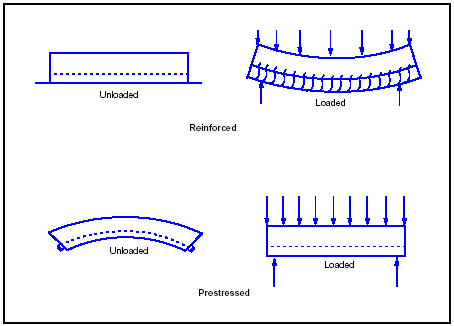
Reinforced concrete relies on steel reinforcement bars to resist tensile stresses after the concrete begins to crack. Prestressed concrete, on the other hand, introduces compressive stresses into the member before external loads are applied, significantly improving structural efficiency and reducing cracking.
If you are new to concrete technology, you may also want to read this guide on Types of Concrete Used in Construction:
https://structotag.com.ng/types-of-concrete-used-in-construction/
In this comprehensive guide, you will learn the major differences between prestressed concrete and reinforced concrete, their advantages and disadvantages, applications, cost implications, and which one is better for different construction projects.
What is Reinforced Concrete?
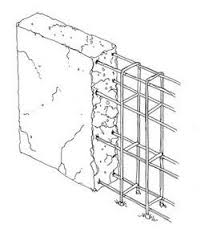
Reinforced concrete, commonly called RCC (Reinforced Cement Concrete), is a composite material in which steel reinforcement bars are embedded within concrete to improve its tensile strength.
Concrete is naturally strong in compression but weak in tension. When a structural member such as a beam or slab bends under loading, tensile stresses develop. Since concrete alone cannot resist large tensile forces effectively, steel reinforcement is added to carry these tensile stresses.
The combination of steel and concrete works extremely well because both materials have nearly similar thermal expansion properties. This allows them to expand and contract together without causing significant internal stress.
Components of Reinforced Concrete
The major components of reinforced concrete include:
- Cement
- Fine aggregates
- Coarse aggregates
- Water
- Steel reinforcement bars
Each material contributes to the overall structural performance of the member.
For deeper understanding of reinforcement detailing and steel arrangement, read:
https://structotag.com.ng/reinforcement-detailing-in-rcc-structures/
How Reinforced Concrete Works
In reinforced concrete structures:
- Concrete resists compressive stresses
- Steel reinforcement resists tensile stresses
When loads are applied to an RCC beam, the bottom section usually experiences tension while the upper section experiences compression. Reinforcement bars are therefore placed in tensile zones to improve structural resistance.
Common Applications of Reinforced Concrete
Reinforced concrete is widely used in:
- Residential buildings
- Columns
- Slabs
- Foundations
- Retaining walls
- Water tanks
- Staircases
Its simplicity and relatively low cost make it one of the most popular construction systems globally.
What is Prestressed Concrete?
Prestressed concrete is a type of concrete in which internal compressive stresses are deliberately introduced before external loads are applied. This process improves the structural behavior of the member by reducing tensile stresses and minimizing cracking.
The concept behind prestressing is simple but highly effective. Since concrete performs well under compression, engineers intentionally compress the concrete member before service loading begins.
The prestressing force is usually introduced using high-strength steel tendons or cables.
Principle of Prestressing
The basic principle of prestressed concrete can be summarized as follows:
- External loads create tensile stresses
- Prestressing introduces compressive stresses
- The compressive stress counteracts tensile stress
- Cracking and deflection are minimized
This creates stronger and more efficient structural members capable of spanning longer distances.
Types of Prestressing
Pre-Tensioning
In pre-tensioning:
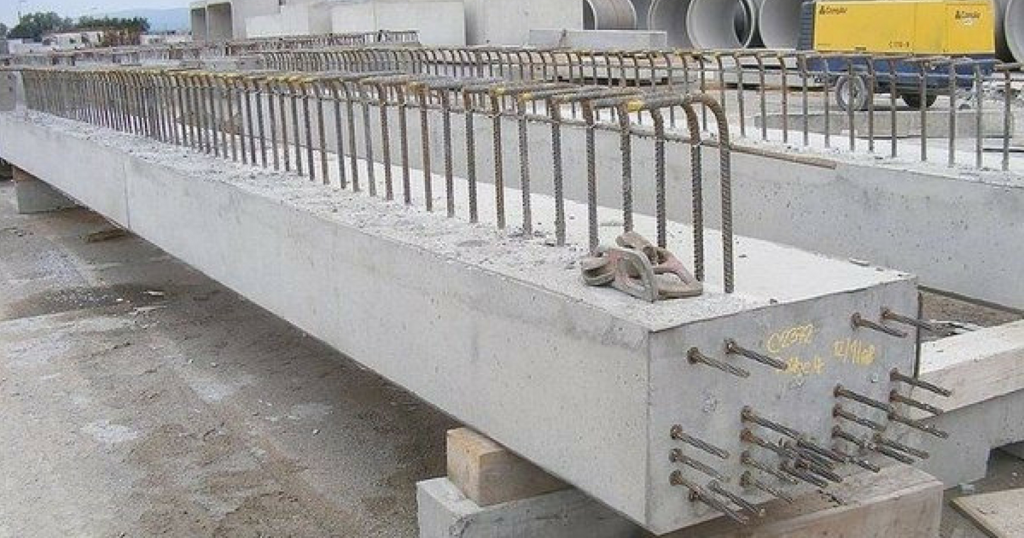
- Steel tendons are stretched before concrete casting
- Concrete is cast around the stressed tendons
- After hardening, the tendons are released
- Compressive stresses transfer into the concrete
Pre-tensioning is commonly used in factories for precast concrete production.
Post-Tensioning
In post-tensioning:
- Concrete is cast first
- Ducts are placed inside the member
- Tendons are tensioned after concrete hardens
- Anchors lock the prestressing force in place
Post-tensioning is common in bridges, parking garages, and large-span buildings.
You can also explore Methods of Prestressing in Concrete Structures:
https://structotag.com.ng/methods-of-prestressing-in-concrete-structures/
Common Applications of Prestressed Concrete
Prestressed concrete is commonly used in:
- Long-span bridges
- Flyovers
- Railway sleepers
- Industrial buildings
- Parking structures
- Stadiums
- High-rise floors
Its superior strength and crack resistance make it ideal for large infrastructure projects.
Prestressed Concrete vs Reinforced Concrete: Key Differences
Understanding the prestressed concrete vs reinforced concrete key differences is important when selecting the right structural system for a project.
Difference in Structural Behavior
The biggest difference lies in how each system handles tensile stresses.
In reinforced concrete:
- Tensile stresses are resisted after cracking occurs
In prestressed concrete:
- Tensile stresses are minimized before loading occurs
Prestressed concrete therefore experiences significantly less cracking.
Difference in Load Carrying Capacity
Prestressed concrete members can carry heavier loads than reinforced concrete members of the same size.
This is because prestressing improves:
- Structural efficiency
- Flexural strength
- Crack resistance
RCC structures may require larger cross-sections to carry equivalent loads.
Difference in Span Length
Prestressed concrete performs much better for long spans.
Typical RCC spans:
- 4 m to 12 m
Typical prestressed spans:
- 15 m to 40 m or more
This is why bridges and flyovers often use prestressed systems.
Difference in Cracking Resistance
Cracking is one of the major concerns in reinforced concrete structures.
Prestressed concrete greatly reduces cracking because compressive stresses counteract tension before service loads act.
This improves:
- Durability
- Waterproofing
- Structural lifespan
Difference in Deflection
Deflection refers to structural bending under load.
Prestressed concrete experiences:
- Lower deflection
- Better stiffness
- Improved serviceability
RCC members usually experience higher long-term deflection.
Difference in Durability
Prestressed concrete structures are often more durable because reduced cracking prevents moisture penetration and steel corrosion.
In RCC structures:
- Cracks may allow water entry
- Reinforcement corrosion can occur
- Maintenance may increase over time
To understand durability issues better, check:
https://structotag.com.ng/causes-of-concrete-failure-and-prevention-methods/
Difference in Construction Cost
Reinforced concrete generally has:
- Lower initial cost
- Simpler construction process
Prestressed concrete typically has:
- Higher material cost
- Specialized equipment requirements
- Skilled labor demands
However, prestressed systems may become economical for large-span projects because they reduce material usage and structural depth.
Difference in Construction Complexity
RCC construction is relatively straightforward and widely practiced.
Prestressed concrete construction requires:
- Hydraulic jacks
- Anchorage systems
- Prestressing cables
- Specialized supervision
This increases technical complexity.
Difference in Material Usage
Prestressed concrete often uses:
- High-strength steel
- High-grade concrete
RCC structures usually use:
- Mild steel reinforcement
- Conventional concrete grades
Prestressed systems generally require better quality control.
Difference in Dead Load
Prestressed concrete structures are usually lighter because smaller member sizes can carry higher loads.
Reduced dead load improves:
- Foundation economy
- Structural efficiency
- Seismic performance
Difference in Maintenance
Prestressed concrete often requires less maintenance due to reduced cracking and improved durability.
RCC structures may need:
- Crack repairs
- Corrosion treatment
- Waterproofing maintenance
Difference in Construction Speed
Precast prestressed elements can significantly speed up construction.
Factory production allows:
- Faster installation
- Better quality control
- Reduced site work
RCC construction may take longer due to:
- Formwork
- Curing
- Reinforcement fixing
Comparison Table: Prestressed Concrete vs Reinforced Concrete
| Parameter | Reinforced Concrete | Prestressed Concrete |
|---|---|---|
| Tensile Resistance | Achieved after cracking | Achieved before loading |
| Crack Resistance | Moderate | Excellent |
| Span Length | Short to medium | Long |
| Structural Depth | Larger | Smaller |
| Deflection | Higher | Lower |
| Durability | Good | Very Good |
| Initial Cost | Lower | Higher |
| Construction Complexity | Simple | Complex |
| Maintenance | Higher | Lower |
| Dead Load | Higher | Lower |
| Construction Speed | Moderate | Faster in precast systems |
Advantages of Reinforced Concrete
Reinforced concrete offers several benefits including:
Low Initial Cost
RCC structures are economical for small and medium-scale construction projects.
Easy Construction
Construction methods are simple and familiar to most contractors.
Good Fire Resistance
Concrete naturally provides excellent fire protection to reinforcement bars.
Versatility
RCC can be molded into various architectural shapes.
Advantages of Prestressed Concrete
Prestressed concrete offers superior structural performance.
Longer Span Capability
Prestressed members can span much greater distances without intermediate supports.
Reduced Cracking
Crack-free structures improve durability and aesthetics.
Higher Load Capacity
Prestressed systems can support heavier loads efficiently.
Reduced Structural Depth
Slimmer members improve architectural flexibility.
Disadvantages of Reinforced Concrete
Despite its popularity, RCC has limitations.
Higher Deflection
Long-term deflection may affect serviceability.
Cracking Problems
Shrinkage and tensile stresses may cause cracking.
Heavier Sections
Larger member sizes increase dead loads.
Disadvantages of Prestressed Concrete
Prestressed concrete also has drawbacks.
High Initial Cost
Prestressing equipment and high-strength materials increase costs.
Specialized Construction
Skilled labor and technical expertise are required.
Difficult Repairs
Repairing prestressed members can be challenging.
Which is Better: Prestressed Concrete or Reinforced Concrete?
There is no universal answer because the best option depends on project requirements.
Use Reinforced Concrete When:
- Spans are short
- Budget is limited
- Construction is simple
- Skilled prestressing labor is unavailable
Use Prestressed Concrete When:
- Long spans are required
- Crack control is important
- Heavy loads are expected
- Structural depth must be minimized
Prestressed Concrete vs RCC in Bridges
Prestressed concrete dominates modern bridge construction because it offers:
- Long-span capability
- Reduced cracking
- Lower maintenance
- Better durability
RCC bridges are more suitable for shorter spans and smaller projects.
Prestressed Concrete vs RCC in Buildings
RCC is widely used in residential and commercial buildings due to its affordability and simplicity.
Prestressed systems are preferred in:
- Parking garages
- High-rise floors
- Industrial buildings
- Large auditoriums
Environmental Impact and Sustainability Comparison
Prestressed concrete may reduce material consumption due to smaller member sizes.
Advantages include:
- Reduced concrete volume
- Lower steel consumption
- Improved service life
However, prestressing materials and equipment may increase manufacturing energy requirements.
Design Codes Used for Prestressed and Reinforced Concrete
ACI Codes
The American Concrete Institute provides standards for both RCC and prestressed concrete design.
Eurocodes
Eurocode 2 governs concrete structure design across Europe.
IS Codes
In India:
- IS 456 covers RCC
- IS 1343 covers prestressed concrete
You can also study Limit State Design Method in RCC Structures:
https://structotag.com.ng/limit-state-design-method-in-rcc-structures/
Future Trends in Concrete Construction
Modern construction is increasingly adopting advanced concrete systems including:
- Ultra-high-performance concrete
- Smart concrete
- Self-healing concrete
- Precast prestressed systems
Prestressed technology is expected to grow rapidly due to increasing infrastructure demands worldwide.
Frequently Asked Questions
Is prestressed concrete stronger than reinforced concrete?
Yes. Prestressed concrete generally has higher load-carrying capacity and better crack resistance than reinforced concrete.
Why is prestressing done in concrete?
Prestressing introduces compressive stresses that counteract tensile stresses caused by external loading.
What are the disadvantages of prestressed concrete?
Major disadvantages include higher initial cost, specialized construction requirements, and difficult repairs.
Which is more economical, RCC or prestressed concrete?
RCC is more economical for small structures, while prestressed concrete may become economical for long-span and heavy-load projects.
Why is prestressed concrete used in bridges?
Prestressed concrete allows bridges to span longer distances with fewer supports and reduced cracking.
Can prestressed concrete crack?
Yes, but cracking is significantly reduced compared to reinforced concrete structures.
Understanding the prestressed concrete vs reinforced concrete key differences is essential for selecting the right structural system in modern construction. Reinforced concrete remains the preferred choice for conventional buildings due to its simplicity and lower cost. Prestressed concrete, however, offers superior performance for long spans, heavy loads, and crack-sensitive structures.
Both systems have unique strengths and limitations. The final choice depends on structural requirements, budget, durability expectations, construction expertise, and project scale.
As infrastructure demands continue to grow globally, prestressed concrete technology will likely become even more important in bridge engineering, high-rise construction, and large-scale industrial projects.
For more civil engineering guides, structural design tutorials, and construction resources, visit Structotag:
https://structotag.com.ng/