Freshly poured concrete looks solid the moment it hits the formwork, but it’s actually full of trapped air and uneven pockets that, left alone, will set permanently into the structure as weaknesses. A concrete vibrator is the tool that fixes this before it becomes a problem — and the difference between concrete that’s been properly vibrated and concrete that hasn’t shows up for decades afterward, in strength, durability, and how well the structure resists water and weather. This guide explains what a concrete vibrator does, the types available, and how to use one correctly on a Nigerian building site.
What a Concrete Vibrator Does and Why It Matters
When concrete is mixed, poured, and placed into formwork, it inevitably traps air bubbles and doesn’t fully flow into every corner, especially around reinforcement bars, corners, and tight sections. A concrete vibrator applies rapid mechanical vibration to the freshly placed concrete, temporarily reducing its internal friction so it behaves almost like a liquid for a few seconds — long enough for trapped air to rise out, for the mix to settle fully around reinforcement, and for the concrete to completely fill every part of the formwork before it starts to set.
The Problem: Honeycombing and Entrapped Air
Without proper vibration, concrete typically develops two visible defects. Honeycombing is a rough, gap-filled surface texture — usually seen after formwork is stripped — caused by coarse aggregate that never got properly surrounded by cement paste, leaving voids that look like a honeycomb pattern. Entrapped air voids are smaller trapped air pockets distributed through the concrete mass, invisible from outside but reducing the effective solid cross-section of the member. Both defects reduce strength at the exact locations they occur, and both create easy pathways for water and air to penetrate the concrete — which is where the durability problem starts, since trapped moisture eventually corrodes reinforcement steel from the inside.
Types of Concrete Vibrators
| Type | How It Works | Best For |
|---|---|---|
| Immersion (poker) vibrator | A vibrating head/poker inserted directly into the wet concrete | Columns, beams, walls, footings — the most common type on residential sites |
| External (shutter/form) vibrator | Clamped to the outside of the formwork, vibrating through the shutter | Thin sections or heavily reinforced members where an immersion poker can’t easily reach |
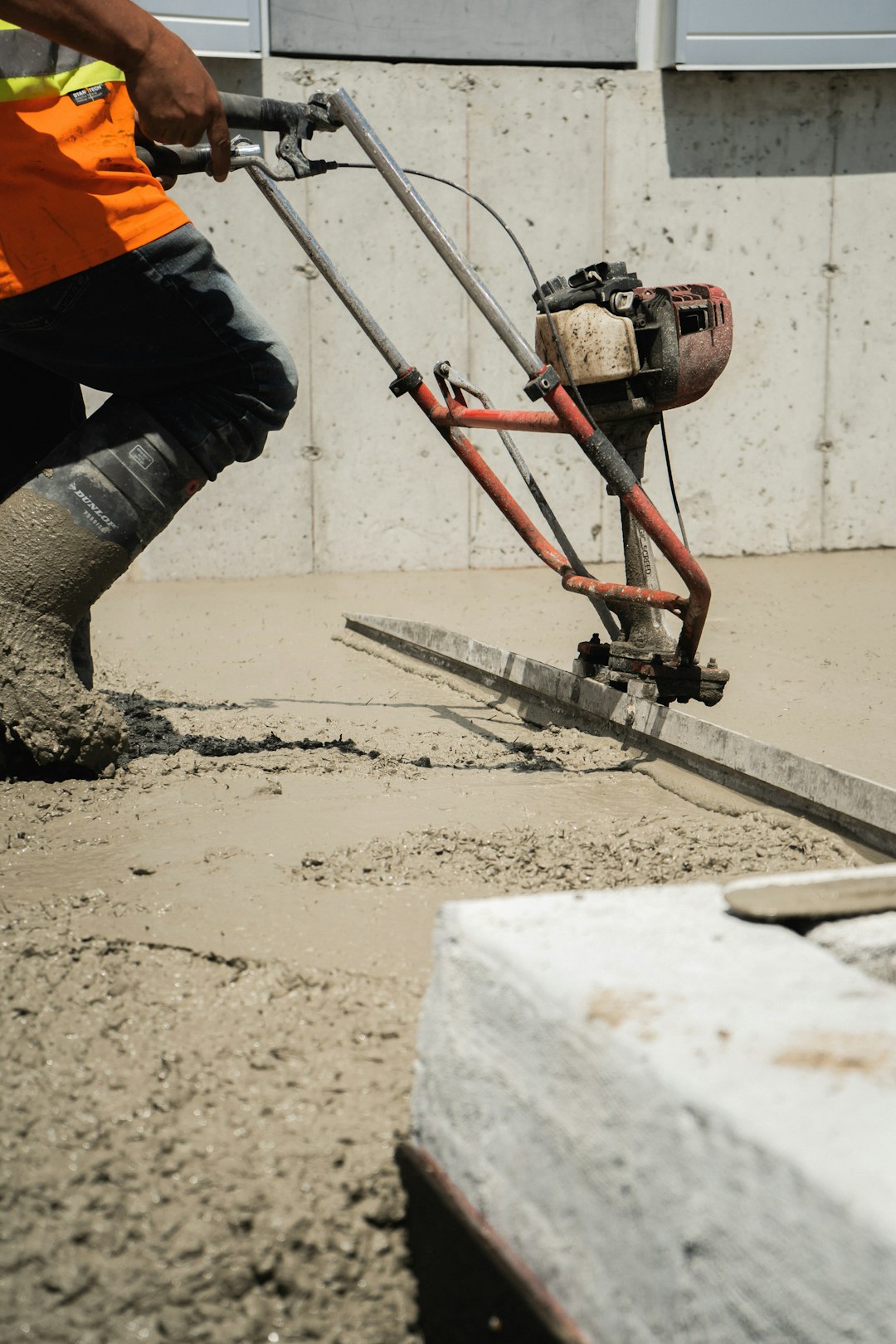
| Vibrating screed / surface vibrator | Vibrates the top surface of a poured slab | Floor slabs, roads, and other flat horizontal surfaces |
| Vibrating table | The formwork/mould itself sits on a vibrating table | Precast elements — blocks, kerbs, small precast units — produced off-site or in a yard |
For most Nigerian residential and small commercial building sites, the immersion (poker) vibrator is the workhorse — it’s the one you’ll reach for on columns, beams, foundation footings, and reinforced concrete walls, which is why it’s typically the first (and often only) vibrator a small contractor owns.
How Vibration Improves Concrete Strength
Concrete’s compressive strength depends heavily on how dense and void-free the hardened material actually is — the design strength stated in a mix specification assumes the concrete is fully consolidated, not full of trapped air. Every percentage point of entrapped air left in the mix reduces effective strength measurably, and poorly consolidated concrete around reinforcement also weakens the bond between steel and concrete, which is what allows the two materials to act together structurally in the first place. Proper vibration closes this gap between the concrete’s theoretical design strength and what actually gets built — it’s one of the few site practices that directly determines whether a structural member achieves the strength it was designed for.
How Vibration Improves Durability
Beyond immediate strength, vibration has a long-term durability payoff. Well-consolidated concrete has a denser, less permeable surface and interior, which slows the penetration of water, chlorides, and carbon dioxide — all of which drive reinforcement corrosion and concrete deterioration over a building’s lifetime. In Nigeria’s humid, rain-heavy climate in many regions, this matters more than it might elsewhere: concrete with honeycombing or entrapped voids near the surface gives moisture an easy path to the reinforcement, accelerating rust, cracking, and spalling years before it would otherwise occur in properly vibrated concrete.
Step-by-Step: How to Use an Immersion Vibrator Correctly
- Insert vertically, not at an angle. Lower the poker straight down into the fresh concrete rather than at a slant, to get even vibration radiating outward in all directions.
- Insert at regular intervals. Space insertion points evenly across the pour area — as a rule of thumb, the spacing should be roughly 1.5 times the vibrator’s radius of action, close enough that each insertion overlaps the influence zone of the last.
- Penetrate into the previous layer. When pouring in layers (lifts), push the poker down through the current layer and slightly into the previously placed layer below, to properly bond the two together rather than leaving a weak “cold joint” plane between them.
- Hold for the right duration. Leave the poker in each position until large air bubbles stop rising to the surface and the surface takes on a glistening, mortar-rich appearance — typically a matter of seconds per insertion, not minutes.
- Withdraw slowly. Pull the poker straight back out slowly enough that the hole it leaves closes up behind it, rather than yanking it out quickly, which can leave a void.
- Never use the vibrator to move concrete horizontally. The vibrator consolidates concrete in place — it should never be used as a tool to push or drag wet concrete across the formwork, which causes segregation instead of consolidation.
Common Mistakes: Over-Vibration and Under-Vibration
Under-vibration is the more common problem on small sites — operators pull the poker out too early or space insertions too far apart, leaving honeycombing and voids exactly where reinforcement is most congested. Over-vibration is less common but equally damaging: leaving the poker in one spot too long, or over-vibrating, can cause segregation — heavier aggregate sinking while lighter cement paste and water rise to the surface, weakening the mix and sometimes causing excess “bleed water” to pool on top. The visual cue for correctly finished vibration is a smooth, glistening surface with large air bubbles no longer breaking through — once you see that, it’s time to move to the next insertion point rather than continuing to vibrate the same spot.
Vibrator Frequency and Poker Size: Matching to Your Job
| Poker Diameter | Typical Use |
|---|---|
| 25–35mm | Heavily reinforced, narrow sections — thin columns, tightly spaced rebar |
| 40–50mm | General residential use — columns, beams, walls, most footings |
| 60mm and above | Mass concrete, large footings, foundations with lower reinforcement density |
Using a poker that’s too large for a heavily congested reinforcement cage makes it physically difficult to reach every part of the section, while a poker that’s too small for a large mass pour means far more insertion points and time to properly consolidate the same volume of concrete. Matching poker size to the section you’re pouring makes the job faster and more thorough at the same time.
Concrete Vibrators vs Manual Tamping/Rodding
On very small pours, some sites still rely on manual rodding or tamping — pushing a steel rod or length of timber into the wet concrete by hand to try to release trapped air. This can work adequately for a very shallow, simply reinforced pour, but it’s far less effective than mechanical vibration at reaching deep into a section or working properly around congested reinforcement, and it’s much slower for any pour of meaningful size. For anything beyond the smallest, simplest concrete elements, a mechanical vibrator isn’t a luxury upgrade — it’s the difference between concrete that reliably meets its design strength and concrete that might not.
Cost and Availability in Nigeria
Immersion vibrators are widely available for rent or purchase in Nigeria, typically sold as a petrol-engine or electric drive unit paired with a flexible shaft and poker head, with poker heads often available separately so one drive unit can be matched to different section sizes. For a single small residential project, renting for the specific days concrete is being poured is usually more cost-effective than buying outright, while a contractor pouring concrete regularly across multiple projects will generally recover the cost of owning one fairly quickly through the time saved and defects avoided.
Checking Your Results After Formwork Removal
The real test of whether vibration was done properly only becomes visible once formwork is stripped, usually several days after the pour. A well-vibrated member shows a smooth, closed surface with minimal blemishes, sharp, crisp corners and edges (a strong sign the mix fully filled the formwork rather than settling short), and no visible honeycombing or exposed aggregate pockets, especially around construction joints and near the base of columns where entrapped air tends to collect if vibration was rushed. If you do find honeycombing after strip, don’t just patch over it cosmetically — have it assessed to judge whether it’s a surface-only blemish or something that affects the structural section, since the right repair approach differs significantly between the two.
Safety Notes When Operating a Vibrator
Concrete vibrators are generally safe tools, but a few basic precautions matter on site: keep the flexible drive shaft away from sharp formwork edges and reinforcement that could damage its casing, avoid running an electric vibrator with a damaged cable in wet, muddy pour conditions, and make sure whoever operates it wears appropriate gloves and boots, since prolonged hand-arm exposure to vibration over a full working day is a recognised occupational health consideration on any site running one continuously. Petrol-powered units also need the same basic fuel-handling care as any other small engine tool on site — no refuelling near an open flame, and always switched off before refuelling.
Getting the Right Equipment for Your Project
Whether you need guidance on poker size for a specific pour or want help planning equipment needs across your build, StructoTag can help you think through it alongside your Bill of Quantities and site plan — vibration is one of those line items that’s easy to under-budget for but expensive to skip, much like proper soil compaction before you even reach the concrete stage.
Frequently Asked Questions
How long should you vibrate concrete in one spot?
Typically a matter of seconds — until large air bubbles stop rising and the surface takes on a glistening appearance. Leaving the poker in one spot much longer risks segregation rather than better consolidation.
Can you over-vibrate concrete?
Yes. Over-vibration can cause segregation, where heavier aggregate sinks and cement paste and water rise to the surface, weakening the mix rather than strengthening it.
What size poker vibrator do I need for a residential column?
For most residential columns and beams, a 40–50mm poker is a reasonable general-purpose size, though heavily congested reinforcement may call for a smaller 25–35mm poker to properly reach between bars.
Do I need to vibrate every concrete pour?
For any structural element with reinforcement — columns, beams, footings, reinforced slabs — yes, mechanical vibration is strongly recommended. Very small, shallow, unreinforced pours are the main exception where manual tamping might be adequate.
What does honeycombing in concrete look like, and can it be fixed?
Honeycombing looks like a rough, gap-filled, stony surface texture, usually visible after formwork is removed. Minor surface honeycombing can sometimes be patched, but honeycombing that extends deep into a structural member — especially around reinforcement — is a more serious defect that should be assessed by an engineer before deciding on a repair approach.
Should the vibrator poker touch the reinforcement bars?
Brief, incidental contact is generally not a problem, but the poker shouldn’t be used to deliberately vibrate against reinforcement or formwork for extended periods, which can disturb bar position or damage formwork over repeated contact.
A concrete vibrator closes the gap between the strength a mix is designed to achieve on paper and the strength it actually achieves once poured — and that gap shows up as real, expensive problems years later if it’s skipped. Insert vertically at regular intervals, hold each position just long enough for air to escape, and withdraw slowly, and you’ll get concrete that matches its design strength and resists Nigeria’s climate far better over the life of the building.