
Reinforcement bars—commonly known as rebar—are the backbone of modern concrete construction. Without them, concrete structures would crumble under stress, unable to withstand tension, bending, or seismic forces. The types of reinforcement bars in concrete and their uses vary significantly based on material composition, surface texture, strength grade, and application requirements. From high-rise buildings to bridges, dams, and underground tunnels, the right choice of rebar ensures durability, safety, and long-term structural integrity. This comprehensive guide dives deep into the different categories of reinforcement bars, their mechanical properties, real-world applications, and how engineers select the most suitable type for specific projects.
Concrete is strong in compression but weak in tension. Reinforcement bars bridge this gap by absorbing tensile forces, preventing cracks, and enhancing load-bearing capacity. Over the decades, advancements in metallurgy and construction technology have led to a diverse range of rebar options. These include mild steel bars, deformed bars, epoxy-coated bars, stainless steel bars, galvanized bars, and even fiber-reinforced polymer (FRP) bars. Each type offers unique advantages depending on environmental conditions, structural demands, and cost considerations. Understanding these differences is crucial for architects, civil engineers, contractors, and even DIY builders working on reinforced concrete projects.
This article explores the full spectrum of reinforcement bar types, detailing their manufacturing processes, physical characteristics, performance under stress, corrosion resistance, and suitability for various construction scenarios. Whether you’re designing a residential foundation or a coastal infrastructure project exposed to saltwater, knowing which rebar to use can mean the difference between a lasting structure and a costly failure. We’ll also examine industry standards, sustainability trends, and future innovations shaping the evolution of rebar technology.
Why Reinforcement Bars Are Essential in Concrete Structures
Concrete alone cannot handle the complex forces acting on modern structures. While it excels at resisting compressive loads—like the weight of a building—it fails quickly when subjected to tension, such as bending or pulling forces. This is where reinforcement bars come into play. By embedding steel (or alternative materials) within the concrete matrix, engineers create a composite material that leverages the best properties of both components: concrete handles compression, while rebar manages tension.
The integration of rebar transforms brittle concrete into a ductile, resilient system capable of withstanding dynamic loads like wind, earthquakes, and traffic vibrations. Without proper reinforcement, concrete slabs, beams, columns, and foundations would develop cracks, deform excessively, or collapse prematurely. In fact, studies show that unreinforced concrete structures have a significantly higher risk of failure during seismic events compared to their reinforced counterparts.
Beyond structural performance, rebar contributes to crack control. Even with reinforcement, micro-cracks may form due to shrinkage or thermal expansion. However, properly spaced and sized bars limit crack width, maintaining water tightness and preventing corrosion ingress. This is especially critical in environments with high humidity, chemical exposure, or freeze-thaw cycles.
Moreover, reinforcement bars allow for slimmer, more efficient designs. Engineers can reduce cross-sectional dimensions of beams and columns without compromising strength, leading to material savings, reduced dead load, and greater architectural flexibility. In high-rise construction, this translates to more usable floor space and lower foundation costs.
Ultimately, the strategic use of rebar is not just about strength—it’s about resilience, longevity, and safety. The selection of the right type of reinforcement bar directly impacts a structure’s service life, maintenance needs, and ability to adapt to changing loads over time.
Types of Reinforcement Bars in Concrete: A Detailed Breakdown
Mild Steel Reinforcement Bars (Plain Bars)
Mild steel bars, also known as plain bars, are among the earliest forms of concrete reinforcement. Made from low-carbon steel, these bars have a smooth surface and relatively low yield strength—typically around 250 MPa. Due to their simplicity and affordability, they were widely used in early 20th-century construction, particularly in non-critical applications like small residential slabs and footings.
However, mild steel bars have significant limitations. Their smooth surface provides poor bond strength with concrete, meaning they can slip under load unless anchored properly with hooks or mechanical devices. This makes them unsuitable for high-stress applications such as beams, columns, or seismic zones. Additionally, they are more prone to corrosion due to the absence of surface deformations that help trap protective concrete cover.
Today, mild steel bars are rarely used in new construction except in temporary structures or non-structural elements. Most international building codes, including ACI 318 and Eurocode 2, recommend deformed bars for primary reinforcement due to superior performance. Still, understanding mild steel bars provides historical context and highlights the evolution of rebar technology.
Deformed Steel Reinforcement Bars
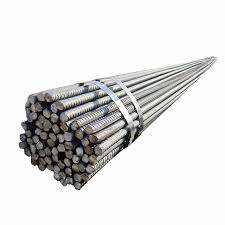
Deformed bars are the most common type of reinforcement used globally. Unlike plain bars, they feature ribs, lugs, or indentations along their surface, which significantly enhance the bond with surrounding concrete. This mechanical interlock prevents slippage and ensures efficient transfer of stresses between the steel and concrete.
Manufactured from carbon steel, deformed bars come in various grades based on yield strength. Common grades include:
- Grade 40 (280 MPa): Used in light residential construction and non-seismic areas.
- Grade 60 (420 MPa): The standard for most modern buildings, offering a balance of strength and ductility.
- Grade 75 (520 MPa): Employed in high-rise structures and heavy-load applications.
The deformation pattern—whether chevron, crescent, or rolled ribs—is carefully designed to maximize grip without compromising ductility. Deformed bars are available in diameters ranging from 6 mm to 50 mm, allowing flexibility in design. They are also compatible with welding and bending, making them ideal for complex reinforcement layouts.
One key advantage of deformed bars is their compliance with international standards such as ASTM A615 (USA), BS 4449 (UK), and IS 1786 (India). These standards ensure consistency in chemical composition, mechanical properties, and dimensional tolerances, enabling reliable performance across projects.
High-Strength Deformed Bars (HYSD)
High-Yield Strength Deformed (HYSD) bars represent an advancement over traditional deformed bars. Produced through a thermo-mechanical treatment process, HYSD bars achieve higher strength levels—often exceeding 500 MPa—while maintaining good ductility. This allows engineers to use fewer bars or smaller diameters to achieve the same structural performance, reducing congestion in heavily reinforced sections.
HYSD bars are particularly valuable in urban construction where space is limited and load demands are high. For example, in multi-story parking garages or industrial floors, using HYSD bars can reduce the number of reinforcement layers, improving concrete placement and compaction. They are also favored in seismic-resistant designs, where high energy absorption is critical.
The manufacturing process involves controlled rolling and quenching, which refines the grain structure and increases hardness. However, this also makes HYSD bars more susceptible to brittle fracture if not handled properly during cutting and bending. Special care must be taken to avoid overheating or excessive deformation during fabrication.
Despite their higher cost compared to Grade 60 bars, HYSD bars often result in overall savings due to reduced material usage and labor. Their adoption has grown rapidly in countries like India, China, and the Middle East, where rapid urbanization demands efficient and durable construction solutions.
Epoxy-Coated Reinforcement Bars
Epoxy-coated rebar is designed specifically for environments prone to corrosion, such as marine structures, bridges, parking decks, and chemical plants. The bars are first cleaned and blasted to remove mill scale, then coated with a fusion-bonded epoxy resin—typically green in color for easy identification.
The epoxy layer acts as a barrier, preventing moisture and chlorides from reaching the steel surface. This is crucial in coastal areas where salt spray accelerates rust formation, or in de-icing salt-exposed roadways. Studies by the Federal Highway Administration (FHWA) show that epoxy-coated rebar can extend the service life of bridges by 10–15 years compared to uncoated bars.
However, epoxy coating is not without drawbacks. The coating can be damaged during transportation, handling, or placement, creating localized corrosion points. To mitigate this, strict quality control measures are required, including holiday detection (electrical testing for pinholes) and proper storage protocols.
Additionally, epoxy-coated bars have reduced bond strength compared to uncoated deformed bars. Engineers must account for this by increasing development lengths or using mechanical anchorage. Despite these challenges, epoxy-coated rebar remains a popular choice for infrastructure projects where durability outweighs initial cost increases.
Galvanized Reinforcement Bars
Galvanized rebar is coated with a layer of zinc through hot-dip galvanizing. This process provides cathodic protection—zinc corrodes preferentially, sacrificing itself to protect the underlying steel. As a result, galvanized bars offer excellent resistance to atmospheric corrosion and are often used in outdoor structures, water treatment facilities, and agricultural buildings.
Compared to epoxy coating, galvanizing provides better impact resistance and longer-lasting protection, especially in abrasive environments. The zinc layer also bonds well with concrete, maintaining adequate bond strength. However, galvanized rebar is heavier and more expensive than standard deformed bars, which can affect project economics.
One concern with galvanized bars is hydrogen embrittlement, which can occur if moisture becomes trapped beneath the coating during concrete curing. This risk is minimized by ensuring proper surface preparation and avoiding excessive coating thickness. When correctly applied, galvanized rebar can last over 75 years in moderate environments, according to the American Galvanizers Association.
Stainless Steel Reinforcement Bars
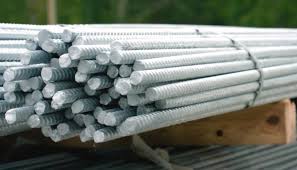
Stainless steel rebar represents the premium tier of reinforcement options. Made from corrosion-resistant alloys containing chromium, nickel, and molybdenum, these bars offer unparalleled durability in aggressive environments. They are commonly used in offshore platforms, desalination plants, chemical processing units, and historic restoration projects where longevity is paramount.
Stainless steel bars maintain their strength and appearance even after decades of exposure to saltwater, acids, or high humidity. They do not require additional coatings or cathodic protection systems, simplifying maintenance. However, their high cost—often 8 to 10 times that of carbon steel rebar—limits their use to critical applications.
Recent innovations include duplex stainless steels, which combine high strength with excellent corrosion resistance. These are increasingly used in bridge decks and tunnel linings where traditional coatings fail prematurely. While stainless steel rebar is not yet mainstream, its role in sustainable infrastructure is growing as lifecycle cost analysis gains prominence.
Fiber-Reinforced Polymer (FRP) Bars
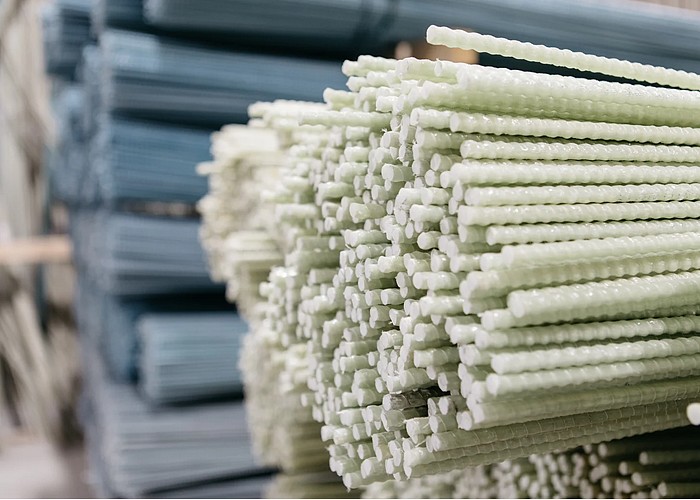
FRP bars are a revolutionary alternative to steel reinforcement, made from composite materials such as glass fiber (GFRP), carbon fiber (CFRP), or aramid fiber (AFRP) embedded in a polymer matrix. These bars are lightweight, non-conductive, and completely immune to electrochemical corrosion.
FRP bars are ideal for applications where electromagnetic transparency is required, such as MRI facilities, radar stations, or smart highways with embedded sensors. They are also used in marine structures and chemical plants where steel corrosion is a persistent issue. Their high strength-to-weight ratio allows for easy handling and reduced labor costs.
However, FRP bars have limitations. They exhibit linear elastic behavior up to failure, meaning they lack the ductility of steel. This can lead to sudden, brittle failures if not properly designed. Additionally, their long-term performance under sustained loads (creep) and UV exposure requires careful consideration.
Despite these challenges, FRP reinforcement is gaining traction in niche markets. Research institutions and governments are investing in standards development (e.g., ACI 440) to expand its use. As manufacturing costs decrease, FRP bars may become a viable option for broader construction applications.
Selection Criteria: Choosing the Right Reinforcement Bar
Selecting the appropriate type of reinforcement bar involves evaluating multiple factors beyond just strength. Engineers must consider environmental exposure, structural function, cost constraints, and long-term maintenance. For instance, a residential basement in a dry climate may only require standard deformed bars, while a coastal bridge demands epoxy-coated or stainless steel reinforcement.
Corrosion risk is a primary driver in material selection. In chloride-rich environments, uncoated carbon steel bars will corrode rapidly, leading to spalling and reduced load capacity. Here, protective coatings or alternative materials become essential. Similarly, in areas with high sulfate content in soil or water, special cements and reinforcement may be needed to prevent chemical degradation.
Structural requirements also influence bar choice. Beams and columns subjected to dynamic loads benefit from high-ductility bars like Grade 60 or HYSD. Foundations and retaining walls may prioritize cost-effectiveness, favoring standard deformed bars. In seismic zones, code mandates often specify minimum ductility and elongation values, ruling out brittle materials.
Cost is another critical factor. While stainless steel and FRP bars offer superior performance, their high upfront cost may not be justified for low-risk applications. Life-cycle cost analysis (LCCA) helps balance initial investment with long-term savings from reduced maintenance and extended service life.
Finally, availability and constructability matter. Some specialty bars may not be readily available in certain regions, causing delays. Fabrication requirements—such as bending radius or welding compatibility—must also align with on-site capabilities.
Installation Best Practices for Reinforcement Bars
Proper installation is just as important as selecting the right bar type. Even the highest-grade rebar will underperform if not placed correctly. Key practices include maintaining adequate concrete cover, ensuring proper spacing, and avoiding contact with formwork or soil.
Concrete cover—the distance between the rebar and the concrete surface—protects against corrosion and fire. Minimum cover thicknesses are specified by building codes based on exposure conditions. For example, interior slabs may require 20 mm, while marine structures need 75 mm or more.
Spacing between bars must allow concrete to flow freely during pouring, preventing honeycombing. Maximum spacing is typically limited to three times the slab thickness or 450 mm, whichever is smaller. Overlapping (lapping) bars requires sufficient length to transfer stresses—usually 40 times the bar diameter for tension laps.
Tying bars with wire ensures they stay in position during concrete placement. Modern techniques include using plastic spacers and chairs to maintain alignment. Welding should be done by certified personnel to avoid weakening the steel.
Inspection before concreting is crucial. Engineers verify bar size, placement, cover, and laps against design drawings. Any deviations can compromise structural integrity and lead to costly repairs.
Future Trends and Innovations in Reinforcement Technology
The future of reinforcement bars lies in sustainability, smart materials, and digital integration. Researchers are developing self-healing concrete systems that incorporate microcapsules or bacteria to repair cracks autonomously. When combined with corrosion-resistant rebar, these systems could drastically reduce maintenance needs.
Smart rebar embedded with fiber optic sensors is being tested to monitor strain, temperature, and corrosion in real time. This enables predictive maintenance and early detection of structural issues, enhancing safety and extending service life.
Recycled steel rebar is gaining attention as the construction industry seeks to reduce carbon emissions. Using scrap metal in rebar production cuts energy consumption by up to 75% compared to virgin steel. Companies are also exploring bio-based coatings and eco-friendly alternatives to epoxy.
3D printing of reinforced concrete is another frontier. Robotic systems can place rebar and concrete simultaneously, enabling complex geometries with minimal waste. While still in experimental stages, this technology promises faster construction and improved precision.
As climate change intensifies, the demand for resilient infrastructure will drive innovation in reinforcement materials. Engineers and manufacturers must collaborate to develop solutions that are not only strong and durable but also sustainable and adaptable to future challenges.
Key Takeaways
- Reinforcement bars are essential for providing tensile strength to concrete, preventing failure under stress.
- The main types include mild steel, deformed, HYSD, epoxy-coated, galvanized, stainless steel, and FRP bars—each suited to specific conditions.
- Selection depends on environmental exposure, structural demands, cost, and long-term performance.
- Proper installation, including cover, spacing, and tying, is critical for optimal performance.
- Emerging technologies like smart sensors, self-healing concrete, and recycled materials are shaping the future of rebar.
FAQ
What is the most commonly used type of reinforcement bar in construction?
The most commonly used type is the deformed steel reinforcement bar, particularly Grade 60 (420 MPa). Its high bond strength, availability, and cost-effectiveness make it ideal for a wide range of structural applications, from residential buildings to commercial complexes.
Can I use epoxy-coated rebar in all types of concrete structures?
Epoxy-coated rebar is best suited for environments with high corrosion risk, such as bridges, parking garages, and coastal structures. It is not necessary for interior or dry environments where standard deformed bars perform adequately and at a lower cost.
Are FRP bars stronger than steel rebar?
FRP bars can have higher tensile strength than steel, especially carbon FRP. However, they lack ductility and behave linearly until failure, making them less suitable for seismic zones. Their use is currently limited to specialized applications where corrosion resistance or electromagnetic neutrality is required.