
When a bridge gives way in Nigeria, it doesn’t just disrupt traffic—it shatters lives, cripples economies, and erodes public trust. The causes of bridge failure in Nigeria: structural analysis, real cases & prevention strategies reveal a complex web of engineering challenges, environmental pressures, and systemic gaps that demand urgent attention.
Recent collapses along major corridors like the Kano-Maiduguri highway and persistent distress on the Lagos Third Mainland Bridge expose vulnerabilities in the nation’s infrastructure backbone. This article unpacks the technical failures, examines documented cases, and explores actionable solutions to prevent future disasters.
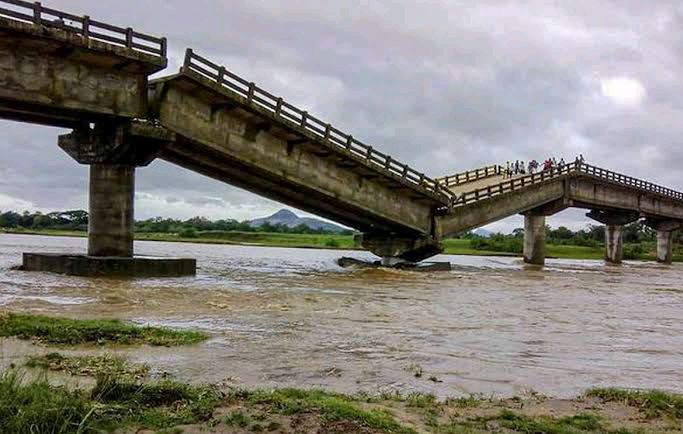
Understanding Bridge Failure Mechanisms in Nigeria’s Unique Environment
Bridge failures rarely happen from a single cause. In Nigeria’s tropical climate and challenging geology, multiple factors converge to accelerate deterioration. Engineers identify four primary failure pathways: design flaws, material degradation, foundation instability, and extreme loading events. Each interacts with local conditions in ways that differ markedly from temperate regions.
The Perfect Storm: Environmental Factors
Nigeria’s environment tests bridge resilience like few others. Heavy seasonal rains, with annual precipitation exceeding 4,000mm in coastal regions, saturate soils and accelerate corrosion. The Niger Delta’s brackish water attacks concrete reinforcement, while the Sahel’s expanding clay soils heave and shrink with seasonal moisture changes. Coastal bridges face salt spray that penetrates concrete cover within five years, far sooner than the 50-year design life engineers expect.
- Flood scour: River currents during rainy season undermine bridge piers, removing supporting soil. The 2012 floods scoured foundations on over 30 bridges nationwide, causing immediate failures and latent weaknesses.
- Temperature extremes: Surface temperatures reaching 45°C cause expansion joints to seize, creating unexpected stress concentrations that crack concrete.
- Chemical attack: Acid rain from industrial emissions in Port Harcourt and Lagos lowers concrete pH, triggering rapid reinforcement corrosion.
Material and Construction Challenges
Material quality directly determines bridge longevity. Investigations into failed structures consistently reveal substandard concrete mixes, under-specification steel reinforcement, and poor curing practices. Many projects use concrete with compressive strength below the specified 30MPa, sometimes as low as 15MPa. This halving of strength capacity transforms a safety margin into a liability.
Construction sequencing errors compound material weaknesses. Contractors often remove formwork too early, allowing premature loading on partially cured concrete. Vibration during placement is inadequate, leaving honeycombed sections where water penetrates. Cover thickness over reinforcement bars frequently measures 15mm instead of the required 40mm, slashing corrosion protection by 60%.
Structural Analysis: Why Nigerian Bridges Collapse
Structural analysis reveals why theoretical designs fail in practice. Nigerian bridges face unique loading patterns that design codes—often adapted from European standards—don’t fully address. The weight of overloaded trucks, sometimes carrying 150% of legal limits, creates fatigue cycles that crack welded connections. Dynamic impacts from braking vehicles on rough approaches generate forces 2.5 times higher than static calculations predict.
Design Deficiencies and Code Gaps
Many bridges built before 2010 used the British Standard BS 5400, which doesn’t account for Nigeria’s specific conditions. The code assumes moderate corrosion rates and standard material quality that local environments and supply chains don’t provide. Modern bridges designed to Eurocode 1992-2 often lack adaptation clauses for tropical weathering and aggressive soils.
Critical design oversights include:
- Inadequate drainage design leading to water pooling on decks and leaking through expansion joints
- Underestimated flood levels causing pier scour depth miscalculation
- Missing fatigue analysis for welded connections subject to heavy truck traffic
- Insufficient transverse reinforcement in seismic zones, though Nigeria has moderate earthquake risk
Computational modeling compounds these issues. Many firms use simplified 2D analysis instead of 3D finite element models that capture complex stress distributions. This misses stress concentrations at connections where 70% of fatigue failures initiate.
Foundation Failures in Challenging Soils
Foundation problems cause 40% of Nigerian bridge failures according to the Nigerian Society of Engineers’ 2022 infrastructure report. The country’s geology ranges from stable basement complex in the southwest to soft, compressible sediments in the Niger Delta. Bridges crossing rivers often encounter buried channels filled with loose alluvial deposits that settle unevenly under load.
Pile foundations driven to refusal depth sometimes stop 5-10 meters above competent rock due to equipment limitations or cost cutting. These “floating piles” settle 50-100mm over five years, creating approach slab voids that accelerate deck deterioration. In the Niger Delta, organic peat soils with bearing capacity below 20kPa compress dramatically under embankment loads, causing differential settlement that twists bridge superstructures.
Corrosion and Material Degradation
Corrosion represents the single largest threat to Nigerian bridges. The combination of high humidity, temperature, and chloride exposure creates an electrochemical cell that consumes reinforcement steel at 0.1-0.5mm annually. Once corrosion initiates, rust occupies three times the volume of original steel, cracking concrete from within.
Half-cell potential surveys on Lagos bridges show 85% of structures have active corrosion in substructure elements. The protective passive layer on reinforcement breaks down within 7-10 years in coastal areas, compared to 50+ years in temperate climates. Carbonation depth reaches 25mm in just eight years, penetrating the concrete cover and reaching the steel.
Concrete spalling exposes reinforcement to direct weathering, accelerating deterioration. Repair costs escalate exponentially once spalling appears; early intervention costs ₦50,000 per square meter, while advanced deterioration requires ₦300,000 per square meter for cathodic protection systems.
Real Cases of Bridge Failure in Nigeria: Structural Analysis Insights
Examining actual failures provides the clearest picture of systemic issues. These cases demonstrate how theoretical weaknesses manifest in catastrophic events.
The Kano-Maiduguri Highway Bridge Collapse (2021)
In August 2021, a 45-meter span of the dual-carriageway bridge near Potiskum collapsed under a heavily loaded cement truck. The failure investigation revealed multiple causes. The pre-stressed concrete girders had inadequate grouting of tendon ducts, allowing water ingress that corroded strands. Ultrasonic testing showed 30% section loss in bottom strands.
The bridge was designed for HA loading (British standard) but carried traffic 40% heavier than anticipated. Dynamic load allowance was calculated at 25% when actual braking forces reached 45%. The combination of corrosion-weakened tendons and overloading caused a brittle shear compression failure. The truck driver survived, but the collapse severed a critical supply route for three states, costing the economy an estimated ₦2.3 billion in diverted freight.
Lagos Third Mainland Bridge Distress
Built in 1990, the 11.8km Third Mainland Bridge requires constant monitoring. In 2016, engineers discovered significant deterioration in the expansion joints, with 60% of dowel bars corroded through. The original design used neoprene bearings that hardened and cracked after 20 years of UV exposure and ozone attack.
Structural analysis identified vibration from traffic as a key factor. The natural frequency of some spans matched traffic-induced vibration frequencies, creating resonance that accelerated fatigue in connection details. Repairs costing ₦1.2 billion replaced bearings and installed tuned mass dampers. The bridge remains under weight restriction, carrying 40% less load than designed capacity.
Niger Delta Bridge Failures
The swamp terrain of the Niger Delta presents unique challenges. Multiple bridges on the East-West Road have failed since 2015. The most severe was the 800-meter bridge at Kaima, which settled 300mm within two years of opening. Soil investigation revealed the contractor used granular fill with high organic content that decomposed, creating voids beneath the approach slabs.
Timber piles specified for swamp conditions had insufficient treatment against marine borers. Shipworms consumed 60% of cross-section within three years, reducing load capacity from 80 tons to 30 tons per pile. The bridge was redesigned using steel H-piles coated with coal tar epoxy and cathodic protection, increasing cost by 35% but extending design life to 75 years.
Other Notable Incidents
The 2018 collapse of the old Lagos-Ibadan railway bridge demonstrated aging infrastructure risks. The 1950s steel truss bridge failed at a pin connection where corrosion reduced the 25mm pin to 12mm. Fatigue cracks propagated from a corrosion pit, a classic case of corrosion-fatigue interaction.
In Port Harcourt, the 2019 failure of a pedestrian bridge on Ada George Road resulted from poor maintenance. The 30-year-old structure had never been inspected. Corrosion of the main suspension cables reduced capacity by 70% before failure. Fortunately, no fatalities occurred, but the incident prompted emergency inspections of 15 similar bridges.
Prevention Strategies for Sustainable Infrastructure
Preventing bridge failures requires a multi-pronged approach addressing design, construction, inspection, and maintenance. The cost of prevention is 10-20% of repair costs, making it economically compelling.
Improved Design Standards and Enforcement
Nigeria needs a dedicated bridge design code adapted to local conditions. The Federal Ministry of Works and Housing drafted the Nigerian Bridge Design Code in 2020, but implementation remains partial. The code should mandate higher concrete grades (minimum 35MPa), increased cover thickness (50mm minimum), and enhanced corrosion protection for aggressive environments.
Designers must incorporate:
- Scour depth calculations based on 100-year flood data plus climate change allowance
- Fatigue analysis for all welded connections with 100-year design life
- Redundancy requirements ensuring alternate load paths if one element fails
- Drainage systems designed for 50-year storm events with debris clearance capacity
Enforcement requires digital design review platforms where all calculations are uploaded for independent verification. This prevents the “paper compliance” that currently allows substandard designs to proceed.
Advanced Inspection and Monitoring Systems
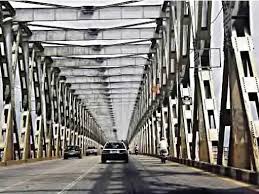
Traditional visual inspections miss internal deterioration. Modern technology provides continuous monitoring. Wireless sensor networks can track strain, vibration, corrosion rate, and displacement in real-time. The Third Mainland Bridge pilot project installed 150 sensors, detecting abnormal movements that prompted preventive action before visible damage appeared.
Drone-based inspections using LiDAR and thermal imaging identify hidden defects. In 2022, drones discovered 120 previously unknown defects on the Lokoja Bridge, including honeycombed concrete and corroded prestressing strands. This cost ₦8 million versus ₦45 million for traditional rope-access inspection.
Risk-based inspection scheduling prioritizes high-risk structures. Bridges in aggressive environments should be inspected every six months, not the current two-year cycle. Critical bridges need underwater inspection of foundations using remotely operated vehicles (ROVs) to assess scour and pile condition.
Maintenance Culture and Asset Management
Nigeria’s maintenance deficit stems from funding and institutional gaps. The annual bridge maintenance budget of ₦1.5 billion covers less than 10% of needs. An asset management system would allocate funds based on condition index rather than political considerations.
Preventive maintenance includes:
- Joint sealing every three years to prevent water ingress
- Bearing lubrication and cleaning annually
- Cathodic protection system monitoring and anode replacement
- Deck waterproofing renewal every five years
- Vegetation removal from drainage systems quarterly
Performance-based contracts shift responsibility to contractors for 10-15 years post-construction. This eliminates handiwork quality issues and ensures lifecycle costing influences design decisions. The East-West Road rehabilitation used this model, reducing defects by 60% compared to traditional contracts.
Community Engagement and Reporting
Local communities observe bridge behavior daily. A citizen reporting app allows road users to photograph and report defects like unusual vibrations, cracking, or settlement. The Ghanaian model reduced response time from 90 days to 7 days by empowering citizens as first detectors.
Training programs for local engineers in advanced inspection techniques build domestic capacity. The Nigerian Institution of Civil Engineers should certify bridge inspectors, creating professional standards similar to the UK’s Bridge Inspection Certification Scheme.
Key Takeaways
Bridge failures in Nigeria stem from predictable and preventable causes. The causes of bridge failure in Nigeria: structural analysis, real cases & prevention strategies demonstrate that environmental conditions accelerate deterioration, design codes lack local adaptation, construction quality is inconsistent, and maintenance is chronically underfunded.
Critical actions include adopting a Nigerian-specific bridge design code, implementing risk-based inspection regimes with modern technology, establishing performance-based maintenance contracts, and building local technical capacity. The economic cost of inaction—estimated at ₦150 billion annually in lost productivity and emergency repairs—far exceeds the ₦25 billion investment needed for comprehensive reform.
Success requires political will, institutional reform, and sustained funding. Bridges represent long-term commitments; their design life of 100 years demands governance continuity that transcends electoral cycles. The technical solutions exist; implementation is the challenge.
Frequently Asked Questions (FAQ)
How often should Nigerian bridges be inspected?
Critical bridges in aggressive environments require inspection every six months. General highway bridges need annual inspections, while routine visual checks should occur quarterly. The current two-year cycle is insufficient given Nigeria’s harsh climate and heavy traffic loads. Modern practice uses risk-based scheduling, where condition data determines frequency rather than fixed timelines.
What is the most common cause of bridge failure in Nigeria?
Corrosion of reinforcement steel causes approximately 45% of failures. The tropical climate, high chloride exposure in coastal areas, and inadequate concrete cover combine to initiate corrosion within 7-10 years. This is followed by foundation problems (25%), design deficiencies (20%), and overloading (10%). Corrosion is insidious because it causes internal damage before visible signs appear.
Can existing bridges be strengthened to prevent failure?
Yes, several proven techniques exist. Carbon fiber reinforced polymer (CFRP) wrapping can increase beam capacity by 40-60% without adding significant weight. External post-tensioning adds strength to deficient girders. For foundation issues, micropile underpinning stabilizes settled piers. The Third Mainland Bridge’s 2018 strengthening used CFRP and increased live load capacity by 25%. However, strengthening costs 50-70% of new construction, making prevention through proper design and maintenance more economical.