
Concrete structures are designed to withstand heavy loads, harsh weather conditions, fire exposure, and long-term environmental effects. However, the strength and durability of reinforced concrete depend heavily on one critical factor that is often overlooked on construction sites: rebar cover in concrete.
Rebar cover, also known as concrete cover, plays a major role in protecting reinforcement bars from corrosion, fire, moisture penetration, and structural deterioration. Without adequate cover, reinforced concrete structures can fail prematurely due to rusting steel, cracking, and spalling.
Whether you are designing a beam, slab, column, footing, retaining wall, or water-retaining structure, understanding the correct concrete cover requirements is essential for long-term structural performance.
If you are new to reinforced concrete construction, you can also read this detailed guide on Reinforced Concrete vs Concrete vs Steel to better understand how reinforcement improves structural behavior.
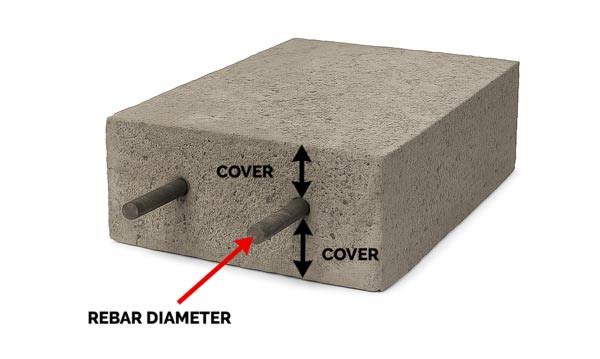
Introduction to Rebar Cover in Concrete
What Does Rebar Cover Mean?
Rebar cover in concrete refers to the minimum distance between the surface of the concrete and the outer surface of the reinforcing steel embedded inside it. This protective layer of concrete surrounds the reinforcement bars and shields them from environmental exposure.
The cover may appear small, but it performs several important structural and durability functions.
In reinforced concrete structures, steel reinforcement provides tensile strength while concrete provides compressive strength. Because steel is vulnerable to corrosion when exposed to moisture and oxygen, adequate concrete cover becomes necessary to preserve the integrity of the reinforcement.
Definition of Concrete Cover
Concrete cover is commonly defined as:
The shortest distance between the exposed concrete surface and the nearest surface of embedded reinforcement.
This cover can vary depending on:
- Structural element type
- Environmental exposure
- Fire resistance requirements
- Concrete grade
- Bar diameter
- Building code provisions
Why Reinforcement Needs Protection
Steel reinforcement can corrode rapidly when exposed to:
- Water
- Chlorides
- Sulfates
- Carbon dioxide
- Marine environments
- Industrial chemicals
Once corrosion begins, the steel expands internally, causing cracks and concrete spalling. This reduces the structural capacity of the member and increases maintenance costs.
That is why modern structural design procedures place strong emphasis on durability and concrete protection. You can learn more about structural planning in this guide on Stages of Structural Design.
Why Rebar Cover Is Important in Reinforced Concrete Structures
Protection Against Corrosion
One of the primary purposes of concrete cover is corrosion prevention.
Concrete naturally creates an alkaline environment around the steel reinforcement. This alkalinity forms a passive protective layer that prevents rusting. However, when moisture and aggressive chemicals penetrate the concrete, corrosion can begin.
Adequate rebar cover slows down this penetration and significantly extends the lifespan of the structure.
Structures exposed to:
- Coastal environments
- Marine conditions
- Industrial pollution
- De-icing salts
- High groundwater levels
usually require thicker concrete cover.
Fire Resistance and Structural Safety
Concrete acts as a thermal barrier during fire exposure. Reinforcement bars lose strength rapidly at high temperatures, but sufficient concrete cover delays heat transfer to the steel.
This helps structures maintain stability during fire incidents.
The thicker the cover:
- The longer the reinforcement remains protected
- The higher the fire resistance rating
- The better the structural performance under extreme heat
Bond Strength Between Steel and Concrete
Concrete cover contributes to the bond between reinforcement and concrete.
When loads are applied to reinforced concrete members, stresses are transferred between steel and concrete through bond action. Insufficient cover can lead to:
- Bond failure
- Splitting cracks
- Anchorage problems
- Reduced load capacity
Durability of Reinforced Concrete
Durability is one of the biggest reasons why concrete cover matters.
A properly protected reinforcement system can allow a structure to remain serviceable for decades with minimal maintenance.
This is especially important in:
- Bridges
- Foundations
- Water tanks
- Marine structures
- Underground structures
- Industrial facilities
If you want to understand how reinforced systems improve durability, this article on Materials Suitable for Load-Bearing Structures provides additional insights.
Types of Concrete Cover Used in Construction
Nominal Cover
Nominal cover is the distance specified in design drawings and building codes to achieve durability and fire resistance requirements.
It usually includes allowances for construction tolerances.
Clear Cover
Clear cover refers to the actual distance from the concrete surface to the outer face of the reinforcement bar.
This is the most commonly referenced cover dimension on construction sites.
Effective Cover
Effective cover is measured from the concrete surface to the centroid of the reinforcement.
Structural engineers use effective cover during design calculations because it affects:
- Lever arm
- Bending resistance
- Structural capacity
Side Cover vs Bottom Cover
Different parts of structural members require different cover thicknesses.
Examples include:
- Bottom cover in slabs
- Side cover in beams
- Cover in columns
- Top cover in foundations
Each serves a different structural and durability purpose.
Minimum Rebar Cover Requirements According to Building Codes
Different structural codes specify minimum concrete cover values based on environmental exposure and structural conditions.
Typical Concrete Cover Requirements
| Structural Element | Minimum Cover |
|---|---|
| Slabs | 20–25 mm |
| Beams | 25–40 mm |
| Columns | 40 mm |
| Footings | 50–75 mm |
| Water-retaining structures | 40–50 mm |
| Marine structures | 50–75 mm |
ACI Code Requirements
American Concrete Institute recommends minimum concrete cover values in ACI 318 depending on:
- Exposure category
- Bar size
- Structural element
- Environmental severity
Eurocode Recommendations
Eurocode also specifies durability-based cover requirements to ensure long service life.
Engineers must always follow the governing code applicable in their region.
Recommended Concrete Cover for Different Structural Elements
Cover for Slabs
Slabs typically require smaller cover because they are thinner structural members.
However, slabs exposed to weather conditions may require increased protection.
Cover for Beams
Beam reinforcement requires adequate side and bottom cover to:
- Protect tension reinforcement
- Prevent corrosion
- Improve fire resistance
Cover for Columns
Columns often require larger cover values because they carry significant axial loads and are critical structural elements.
Cover for Foundations
Footings and foundations usually require larger concrete cover due to direct soil contact and moisture exposure.
If you are working on foundation systems, this article on Types of Deep Foundations explains how foundation types influence reinforcement detailing and durability.
Factors Affecting Rebar Cover Thickness
Several factors determine the required concrete cover thickness.
Environmental Conditions
Structures in aggressive environments need more cover.
Examples include:
- Coastal buildings
- Wastewater facilities
- Chemical plants
- Marine structures
Concrete Grade and Quality
Higher-quality concrete has lower permeability, improving protection against corrosion.
Poor-quality concrete can allow moisture penetration even with adequate cover.
Bar Diameter
Larger reinforcement bars often require greater cover for proper bond and durability.
Exposure Conditions
Structures exposed to rain, humidity, groundwater, or seawater need thicker protection layers.
Type of Structural Element
Columns, slabs, beams, walls, and foundations all have different exposure and loading conditions.
What Happens When Rebar Cover Is Insufficient?
Corrosion of Reinforcement
Insufficient cover allows moisture and oxygen to reach the steel quickly.
This leads to rust formation and deterioration of the reinforcement.
Concrete Spalling
Corroded reinforcement expands internally, creating pressure inside the concrete.
This eventually causes:
- Cracks
- Delamination
- Spalling
Reduced Fire Resistance
Thin concrete cover exposes reinforcement to high temperatures during fire incidents.
This weakens structural performance.
Premature Structural Failure
Over time, inadequate concrete cover can lead to severe structural deterioration and expensive repairs.
Problems Caused by Excessive Rebar Cover
Too much concrete cover can also create structural issues.
Increased Crack Width
Excessive cover may increase crack widths due to shrinkage and thermal movement.
Reduced Structural Efficiency
Large cover thickness can reduce the effective depth of structural members.
Poor Bond Performance
Very thick cover can reduce effective bond interaction between steel and concrete.
Proper balance is therefore necessary.
How to Maintain Proper Rebar Cover on Site
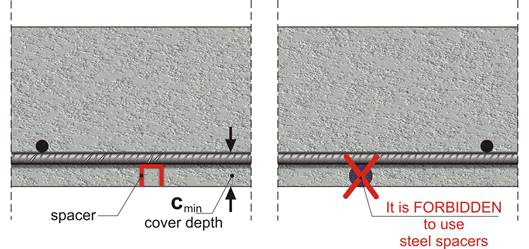
Use of Cover Blocks
Cover blocks are spacers used to maintain the specified reinforcement position during concrete placement.
They ensure uniform cover thickness.
Spacer Bars and Chairs
Spacer bars and reinforcement chairs help maintain proper reinforcement alignment.
Proper Reinforcement Placement
Incorrectly placed reinforcement is one of the most common site problems.
Steel bars should never touch:
- Formwork
- Soil
- Adjacent reinforcement unintentionally
Site Inspection and Quality Control
Engineers and inspectors should verify:
- Cover thickness
- Spacer placement
- Reinforcement alignment
- Bar spacing
before concrete pouring begins.
Materials Used for Cover Blocks
Concrete Cover Blocks
Concrete cover blocks are durable and commonly used in reinforced concrete structures.
Plastic Cover Blocks
Plastic spacers are lightweight and easy to install but may not be suitable for all structural applications.
Fiber-Reinforced Spacers
Modern construction increasingly uses fiber-reinforced spacers for improved durability and strength.
You can also explore innovative reinforcement systems in this guide on Applications of FRP Reinforcement in Concrete Structures.
Common Mistakes Contractors Make With Rebar Cover
Using Stones Instead of Cover Blocks
Some contractors improperly use broken stones or wood pieces as spacers.
This creates inconsistent cover thickness.
Improper Reinforcement Alignment
Rebars can shift during concrete pouring if not properly secured.
Ignoring Design Specifications
Failure to follow structural drawings can compromise durability and safety.
Poor Concrete Compaction
Honeycombing near reinforcement reduces protective cover effectiveness.
Difference Between Rebar Cover and Clear Spacing
Many people confuse concrete cover with bar spacing.
Rebar Cover
Distance between concrete surface and reinforcement.
Clear Spacing
Distance between adjacent reinforcement bars.
Both are essential for:
- Proper compaction
- Durability
- Structural performance
Best Practices for Concrete Cover in Modern Construction
Modern construction practices now emphasize:
- Durability design
- Corrosion prevention
- Advanced reinforcement detailing
- Digital quality control systems
In steel-reinforced structures, proper detailing remains essential. This article on Function of Steel Structures in Construction explains how steel contributes to structural performance and why protection is necessary.
Frequently Asked Questions About Rebar Cover
What is the minimum rebar cover in concrete?
The minimum cover depends on the structural element and environmental exposure, but slabs commonly use 20–25 mm while footings may require 50–75 mm.
Why is concrete cover necessary?
Concrete cover protects reinforcement from corrosion, moisture, chemicals, and fire exposure.
What happens if rebar is exposed?
Exposed reinforcement can corrode rapidly, causing cracking, spalling, and structural weakening.
How is concrete cover measured?
Concrete cover is measured from the concrete surface to the nearest reinforcement surface.
What is clear cover in RCC?
Clear cover refers to the shortest distance between reinforcement and the outer concrete surface.
Can excessive cover weaken concrete?
Yes. Excessive cover can increase cracking and reduce structural efficiency
Rebar cover in concrete is one of the most important factors affecting the durability, safety, and lifespan of reinforced concrete structures. Although it may appear to be a small detailing requirement, inadequate concrete cover can lead to severe corrosion, structural cracking, fire vulnerability, and costly repairs.
Proper concrete cover protects reinforcement bars from environmental exposure while improving bond strength, fire resistance, and long-term structural performance.
Whether you are designing beams, slabs, columns, foundations, or retaining walls, ensuring the correct rebar cover is essential for achieving durable and safe construction.
As reinforced concrete technology continues to evolve, engineers and contractors must prioritize proper detailing, quality control, and code compliance to ensure long-lasting structural performance.