
Concrete volume calculation is one of the most important tasks in building construction. Whether you are a civil engineering student, contractor, quantity surveyor, or site engineer, understanding how to calculate concrete volume for slab, beam, and column helps you estimate materials accurately, reduce waste, and control construction costs.
In reinforced concrete structures, slabs, beams, and columns form the major structural framework. Wrong concrete estimates can lead to material shortages, project delays, and unnecessary expenses. That is why engineers always perform proper RCC quantity estimation before construction begins.
In this guide, you will learn the formulas used for concrete volume calculation, practical examples, unit conversions, common mistakes to avoid, and professional tips used on construction sites.
For more structural engineering tutorials and estimation guides, visit Structotag.
What Is Concrete Volume?
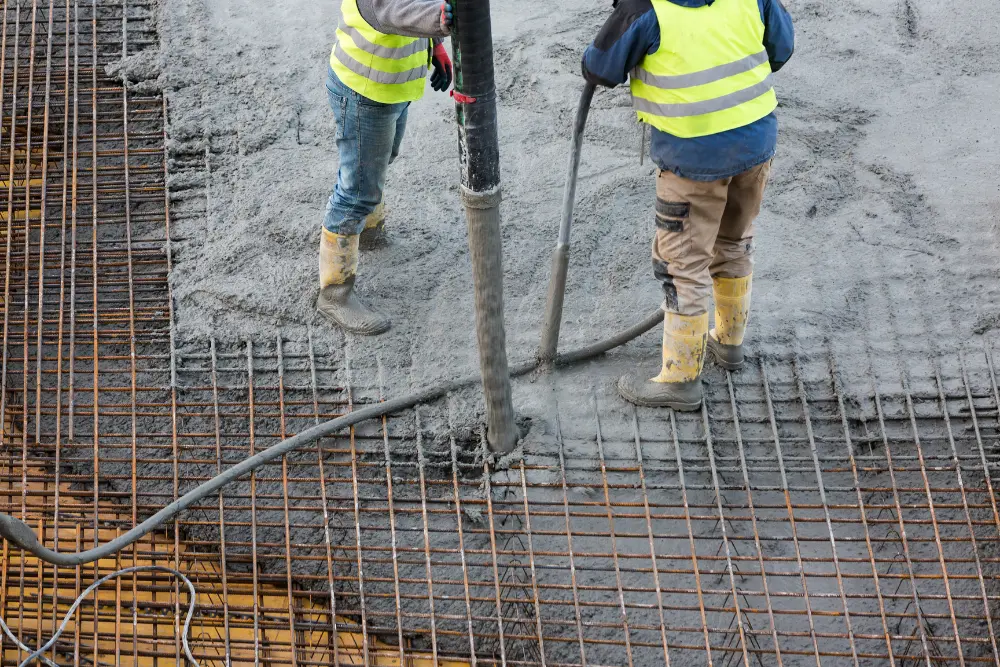
Concrete volume refers to the total space occupied by concrete in a structural member. It is usually measured in the following:
- Cubic meters (m³)
- Cubic feet (ft³)
Concrete volume is calculated for:
- Slabs
- Beams
- Columns
- Footings
- Staircases
- Retaining walls
The standard formula for concrete volume calculation is:
\text{Concrete Volume} = \text{Length} \times \text{Width} \times \text{Depth}
All dimensions must be in the same unit before calculation.
Units Used in Concrete Calculation
| Unit | Meaning |
|---|---|
| m³ | Cubic meter |
| ft³ | Cubic feet |
| mm | Millimeters |
| m | Meter |
| ft | Feet |
In Nigeria and most countries, concrete quantity is commonly measured in cubic meters.
Why Concrete Volume Calculation Is Important
Proper concrete quantity estimation helps in:
- Accurate material ordering
- Cost estimation
- Preventing wastage
- Construction planning
- Project budgeting
- Reducing delays
Concrete estimation is also essential for preparing a Bill of Quantities (BOQ).
Read more construction estimation tutorials on Structotag Construction Guides.
Basic Formula for Concrete Volume Calculation
The general formula is:
V = L \times B \times H
Where:
- V = Volume
- L = Length
- B = Breadth or Width
- H = Height or Thickness
This formula works for most rectangular structural elements.
How to Calculate Concrete Volume for Slab
A slab is a flat horizontal structural member used for floors and roofs.
Formula for Slab Concrete Volume
V = L \times B \times t
Where:
- L = Length of slab
- B = Width of slab
- t = Thickness of slab
Example of Slab Concrete Volume Calculation
Assume the slab dimensions are:
- Length = 6 m
- Width = 4 m
- Thickness = 0.15 m
Calculation:
V = 6 \times 4 \times 0.15
Volume = 3.6 m³
Therefore, the slab requires 3.6 cubic meters of concrete.
Common Slab Thickness in Buildings
| Type of Slab | Thickness |
|---|---|
| Residential slab | 100mm – 150mm |
| Commercial slab | 150mm – 200mm |
| Roof slab | 125mm – 150mm |
Types of Slabs
One-Way Slab
Load is transferred in one direction.
Two-Way Slab
Load is transferred in both directions.
Learn more about slab reinforcement and detailing from Structotag Structural Engineering Tutorials.
How to Calculate Concrete Volume for Beam
A beam is a horizontal structural member that transfers loads from slabs to columns.
Formula for Beam Concrete Volume
V = L \times b \times h
Where:
- L = Length of beam
- b = Width of beam
- h = Depth of beam
Beam Calculation Example
Assume:
- Length = 5 m
- Width = 0.25 m
- Depth = 0.45 m
Calculation:
V = 5 \times 0.25 \times 0.45
Volume = 0.5625 m³
Therefore, the beam requires 0.5625 cubic meters of concrete.
Types of Beams
- Rectangular beam
- T-beam
- L-beam
Beam Estimation Tips
- Exclude overlapping slab volume when required
- Confirm dimensions from structural drawings
- Check reinforcement congestion before concreting
How to Calculate Concrete Volume for Column
Columns are vertical compression members that transfer loads to the foundation.
Formula for Rectangular Column
V = L \times B \times H
Example of Column Calculation
Assume:
- Length = 0.3 m
- Width = 0.3 m
- Height = 3 m
Calculation:
V = 0.3 \times 0.3 \times 3
Volume = 0.27 m³
Therefore, the column requires 0.27 cubic meters of concrete.
Formula for Circular Column
genui{“math_block_widget_always_prefetch_v2”:{“content”:”V = \pi r^2 h”}}
Where:
- r = Radius
- h = Height
Types of Columns
- Square columns
- Rectangular columns
- Circular columns
- Spiral columns
Combined Concrete Volume Calculation for Slab, Beam, and Column
In real construction projects, engineers calculate total concrete quantity by summing all structural members.
Example
| Structural Element | Volume |
|---|---|
| Slab | 3.6 m³ |
| Beam | 0.5625 m³ |
| Column | 0.27 m³ |
Total concrete volume:
3.6 + 0.5625 + 0.27
Total = 4.4325 m³
Wet Volume vs Dry Volume of Concrete
Many beginners calculate only wet volume, but dry volume is usually higher because aggregates and sand contain voids.
Dry Volume Formula
\text{Dry Volume} = 1.54 \times \text{Wet Volume}
Example
If wet volume is 4.43 m³:
1.54 \times 4.43
Dry volume = 6.82 m³ approximately
This helps estimate cement, sand, and aggregate quantities correctly.
Concrete Mix Ratio Calculation
The concrete mix ratio determines concrete strength.
Common Concrete Mix Ratios
| Mix Ratio | Usage |
|---|---|
| 1:2:4 | General construction |
| 1:1.5:3 | RCC works |
| 1:3:6 | Mass concrete |
Material Estimation for 1m³ Concrete
For 1:2:4 concrete:
- Cement = 6 bags approximately
- Sand = 0.44 m³
- Aggregate = 0.88 m³
Read more mix design tutorials on Structotag Concrete Mix Design Articles.
Concrete Volume Calculation in Cubic Feet
Some projects use feet instead of meters.
Formula
V = L \times B \times H
Conversion Formula
1\ m^3 = 35.3147\ ft^3
Example
Convert 3.6 m³ to cubic feet:
3.6 \times 35.3147
Result = 127.13 ft³
Common Mistakes in Concrete Quantity Estimation
Using Wrong Units
Always maintain consistent units.
Ignoring Openings
Door and window openings reduce concrete quantity.
Incorrect Slab Thickness
Small errors in thickness can significantly affect volume.
Not Checking Structural Drawings
Always verify dimensions before estimation.
Ignoring Beam-Slab Intersections
Overlapping volumes can lead to overestimation.
Professional Tips for Accurate Concrete Estimation
- Double-check dimensions
- Use standard units consistently
- Prepare estimation sheets
- Verify structural drawings
- Include wastage allowance
- Use software for quantity estimation
Popular estimation tools include the following:
Difference Between PCC and RCC Concrete Calculation
PCC (Plain Cement Concrete)
PCC contains no reinforcement and is used for the following:
- Pavements
- Floor bases
- Foundations
RCC (Reinforced Cement Concrete)
RCC contains steel reinforcement and is used for:
- Slabs
- Beams
- Columns
RCC calculations usually include reinforcement estimation.
Real-Life Site Example
Suppose a residential building contains:
- Slab = 25 m³
- Beams = 8 m³
- Columns = 5 m³
Total concrete volume:
25 + 8 + 5
Total = 38 m³
Adding 5% wastage:
38 \times 1.05
Final concrete requirement = 39.9 m³
This is how practical site estimation is performed.
FAQs About Concrete Volume Calculation
How do you calculate concrete volume for a slab?
Multiply slab length, width, and thickness.
What is the formula for beam concrete calculation?
Length × Width × Depth.
How much concrete is required for a column?
Multiply column length, breadth, and height.
Why is dry volume greater than wet volume?
Because sand and aggregates contain voids that increase material quantity.
How do I convert cubic feet to cubic meters?
Divide cubic feet by 35.3147.
Which software is best for concrete estimation?
Excel, Revit, AutoCAD, and quantity surveying software are commonly used.
What is the standard slab thickness for residential buildings?
Usually between 100mm and 150mm.
Why is accurate concrete estimation important?
It helps reduce wastage, control cost, and improve project planning.
Understanding how to calculate concrete volume for slab, beam, and column is essential for every construction professional. Accurate quantity estimation improves budgeting, material planning, and construction efficiency.
Once you understand the formulas and apply correct dimensions, concrete estimation becomes straightforward. Whether calculating slab concrete, beam volume, or column quantity, always verify dimensions from structural drawings and maintain consistent units throughout the calculation.
For more civil engineering tutorials, quantity estimation guides, structural design tips, and construction knowledge, visit Structotag Official Website.