
Concrete curing methods and their importance in construction cannot be overlooked in modern building projects. Whether you are constructing a residential building, bridge, pavement, retaining wall, or water tank, proper curing plays a major role in achieving durable and high-strength concrete.
Many construction failures are linked to poor curing practices. Even if high-quality cement, aggregates, and reinforcement are used, concrete may still crack or lose strength if curing is ignored. Proper curing ensures that concrete gains the required compressive strength, resists weather conditions, and lasts for decades.
In this detailed guide, you will learn everything about concrete curing methods, their importance, types, best practices, common mistakes, and recommended curing durations for construction projects.
What Is Concrete Curing?
Concrete curing is the process of maintaining adequate moisture, temperature, and time conditions after concrete placement so that cement hydration can continue properly. During hydration, cement reacts with water to form strong bonding compounds that give concrete its strength and durability.
Without proper curing, the hydration process stops prematurely, causing weak and brittle concrete.
Freshly placed concrete loses moisture rapidly due to evaporation caused by sunlight, wind, and high temperature. Curing helps retain enough moisture inside the concrete to allow complete hydration.
In simple terms, curing keeps concrete moist and protected until it develops sufficient strength.
Concrete curing is different from drying. Drying involves moisture loss, while curing focuses on retaining moisture for strength development.
If you want to understand concrete properties better, you can also read about types of concrete used in construction.
Why Concrete Curing Is Important in Construction
Concrete curing is one of the most critical activities after concreting work. Proper curing provides several structural and durability benefits.
Improves Concrete Strength
Concrete gains strength gradually through hydration. Adequate curing ensures that hydration continues effectively, allowing concrete to achieve its design strength.
Properly cured concrete can achieve up to 50% higher strength compared to uncured concrete.
Prevents Cracking
Rapid moisture loss causes plastic shrinkage cracks and surface cracks. Curing reduces evaporation and prevents early-age cracking.
Enhances Durability
Durability refers to the ability of concrete to resist weathering, chemicals, abrasion, and environmental attack. Proper curing produces denser concrete with lower permeability.
Improves Water Tightness
Well-cured concrete has fewer pores and capillaries, making it more resistant to water penetration. This is essential for water-retaining structures like tanks and dams.
Reduces Shrinkage
Concrete naturally shrinks as water evaporates. Controlled curing minimizes excessive shrinkage and reduces cracking risks.
Increases Resistance to Harsh Weather
Cured concrete performs better in freeze-thaw cycles, hot climates, and chemically aggressive environments.
Extends Service Life of Structures
Proper curing contributes to the long-term performance of structures by preventing premature deterioration.
For more insight into concrete performance, you can also read factors affecting concrete strength.
What Happens If Concrete Is Not Properly Cured?
Improper curing can lead to severe structural and durability problems.
Reduced Compressive Strength
Concrete may fail to achieve the required design strength if hydration stops early.
Surface Dusting
The concrete surface becomes weak and powdery due to poor cement bonding.
Plastic Shrinkage Cracks
Rapid evaporation causes cracks to form before concrete hardens properly.
Higher Permeability
Uncured concrete becomes porous and allows water and chemicals to penetrate easily.
Poor Abrasion Resistance
Concrete surfaces wear out faster under traffic and mechanical loads.
Shortened Structural Life
Buildings and infrastructure may deteriorate prematurely due to poor curing practices.
Factors Affecting Concrete Curing
Several environmental and material factors influence curing effectiveness.
Temperature
High temperatures accelerate evaporation, while low temperatures slow hydration.
Humidity
Low humidity increases moisture loss from concrete surfaces.
Wind Speed
Strong winds increase evaporation rates significantly.
Type of Cement
Different cement types require different curing durations.
Water-Cement Ratio
Concrete with low water-cement ratios may require additional curing attention.
Size of Structural Member
Large concrete sections retain moisture longer than thin sections.
Types of Concrete Curing Methods
Different curing methods are used depending on project requirements, weather conditions, and available resources.
Water Curing Method
Water curing is the most common and effective curing method used in construction.
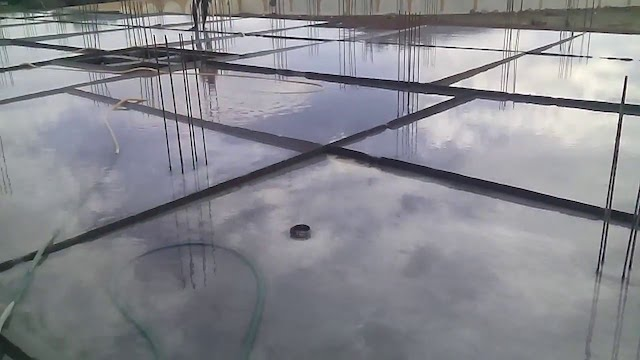
Ponding
In ponding, small bunds are formed around slabs and surfaces are flooded with water continuously.
This method is suitable for:
- Concrete slabs
- Pavements
- Flat surfaces
Sprinkling
Water is sprayed continuously on concrete surfaces to maintain moisture.
Fogging
Fogging produces fine water mist around concrete surfaces to reduce evaporation.
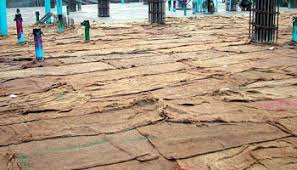
Wet Covering
Wet materials such as hessian cloth, burlap, or sand are placed on concrete surfaces and kept continuously wet.
Advantages of Water Curing
- Excellent hydration
- Improved strength
- Better durability
- Low cost
Disadvantages of Water Curing
- Requires constant water supply
- Labor intensive
- Difficult in water-scarce regions
Membrane Curing Method
Membrane curing prevents moisture loss by sealing the concrete surface.
Plastic Sheet Curing
Concrete is covered with polyethylene sheets to trap moisture.
Curing Compounds
Liquid curing compounds are sprayed on concrete surfaces to form protective membranes.
Advantages of Membrane Curing
- Conserves water
- Easy application
- Suitable for remote sites
Disadvantages
- Less effective than water curing
- Surface damage may reduce efficiency
Steam Curing Method
Steam curing accelerates strength gain using heat and moisture.
Low-Pressure Steam Curing
Used in precast concrete production plants.
High-Pressure Steam Curing
Also called autoclaving, this method is used for specialized concrete products.
Benefits of Steam Curing
- Rapid strength development
- Faster production cycles
- Early formwork removal
Heat Curing Method
Heat curing uses external heat sources to speed up hydration.
Infrared Curing
Infrared heaters are used to warm concrete surfaces.
Electrical Curing
Electric current passes through embedded conductors to heat concrete internally.
This method is mainly used in cold weather concreting.
Internal Curing Method
Internal curing provides moisture from inside the concrete itself.
Lightweight Aggregate Internal Curing
Pre-wetted lightweight aggregates release water gradually into concrete.
Self-Curing Concrete
Special admixtures help retain internal moisture for hydration.
Internal curing improves:
- Durability
- Crack resistance
- Hydration efficiency
Best Concrete Curing Method for Different Construction Projects
Different structures require different curing techniques.
Residential Buildings
Water curing using wet coverings is commonly used.
Roads and Pavements
Ponding and membrane curing are suitable.
Bridges
Continuous water curing ensures long-term durability.
Water Tanks
Extended water curing improves water tightness.
Mass Concrete Structures
Internal curing and temperature-controlled curing are preferred.
Precast Concrete
Steam curing is widely used for rapid production.
Recommended Concrete Curing Time
Curing duration depends on cement type, weather conditions, and project requirements.
| Concrete Type | Recommended Curing Duration |
|---|---|
| Ordinary Portland Cement | Minimum 7 Days |
| Blended Cement | 10–14 Days |
| Hot Weather Concrete | More than 10 Days |
| Cold Weather Concrete | Controlled Duration |
According to IS 456 recommendations:
- OPC concrete should be cured for at least 7 days
- Mineral admixture concrete should be cured for at least 10 days
Longer curing durations generally produce stronger and more durable concrete.
If you want to understand concrete testing better, read compressive strength test of concrete.
Concrete Curing Methods According to IS Codes
Indian Standards and international codes provide guidelines for curing practices.
IS 456 Recommendations
IS 456 emphasizes continuous curing to maintain concrete moisture.
ACI Guidelines
The American Concrete Institute recommends maintaining favorable moisture and temperature conditions during hydration.
ASTM Standards
ASTM standards specify curing requirements for testing and field applications.
You can also explore more technical construction standards from American Concrete Institute (ACI).
Equipment Used for Concrete Curing
Several tools and materials are used during curing operations.
Water Sprayers
Used for sprinkling and fogging.
Hessian Cloth
Retains moisture effectively on vertical and horizontal surfaces.
Plastic Sheets
Prevent evaporation in membrane curing.
Steam Chambers
Used in precast concrete manufacturing plants.
Curing Compounds
Chemical membranes sprayed on concrete surfaces.
Common Mistakes in Concrete Curing
Many site engineers and workers make curing mistakes that affect concrete quality.
Starting Curing Too Late
Delayed curing allows rapid moisture loss before hydration develops sufficiently.
Insufficient Water Application
Inconsistent watering leads to uneven strength development.
Ignoring Weather Conditions
Hot and windy weather requires additional curing measures.
Removing Formwork Too Early
Premature formwork removal exposes concrete to drying.
Stopping Curing Prematurely
Concrete needs adequate curing duration to achieve target strength.
Best Practices for Effective Concrete Curing
Following best practices ensures high-quality concrete construction.
Start Curing Early
Begin curing immediately after concrete hardens sufficiently.
Maintain Continuous Moisture
Avoid intermittent drying during curing periods.
Protect Concrete from Sunlight
Use covers or shades in hot weather.
Monitor Environmental Conditions
Adjust curing methods according to weather conditions.
Use Suitable Curing Methods
Select curing methods based on project type and available resources.
Modern Innovations in Concrete Curing
Technology is improving curing efficiency in modern construction.
Smart Curing Sensors
Sensors monitor temperature and moisture in real time.
Self-Healing Concrete
Special materials help repair microcracks automatically.
Nanotechnology-Based Curing
Nano-materials improve hydration and reduce permeability.
Sustainable Curing Techniques
Modern curing systems aim to reduce water consumption and environmental impact.
Environmental Impact of Concrete Curing
Traditional curing consumes significant water resources.
Water Consumption Concerns
Large projects may require thousands of liters of water daily.
Eco-Friendly Alternatives
Membrane curing and self-curing concrete reduce water demand.
Sustainable Construction Practices
Modern projects aim to balance durability with environmental responsibility.
Comparison of Different Concrete Curing Methods
| Curing Method | Water Requirement | Cost | Effectiveness | Best Application |
|---|---|---|---|---|
| Water Curing | High | Low | Excellent | General Construction |
| Membrane Curing | Low | Moderate | Good | Remote Areas |
| Steam Curing | Moderate | High | Excellent | Precast Concrete |
| Internal Curing | Low | Moderate | Very Good | High-Performance Concrete |
Advantages and Disadvantages of Concrete Curing Methods
Water Curing
Advantages:
- Best hydration
- Improved durability
- Low material cost
Disadvantages:
- Water intensive
- Labor demanding
Membrane Curing
Advantages:
- Conserves water
- Easy application
Disadvantages:
- Less efficient than water curing
Steam Curing
Advantages:
- Rapid strength gain
- Faster construction
Disadvantages:
- High equipment cost
- Requires controlled conditions
Frequently Asked Questions About Concrete Curing
What is the best method of curing concrete?
Water curing is generally considered the best method because it provides continuous moisture for hydration.
How long should concrete be cured?
Concrete should typically be cured for at least 7 days, though longer curing improves strength and durability.
Why is water curing important?
Water curing prevents moisture loss and allows proper hydration.
Can concrete cure without water?
Concrete can partially cure without external water, but strength and durability will be significantly reduced.
What happens if curing is skipped?
Skipping curing may cause cracks, weak concrete, reduced durability, and structural failure.
Which curing method is used for precast concrete?
Steam curing is commonly used for precast concrete production.
What is the difference between curing and drying?
Curing retains moisture for hydration, while drying removes moisture from concrete.
When should curing start after concreting?
Curing should begin as soon as the concrete surface hardens sufficiently to avoid damage.
Concrete curing methods and their importance in construction remain essential for producing durable, strong, and long-lasting structures. Proper curing ensures adequate hydration, minimizes cracking, improves durability, and enhances the overall performance of concrete.
Whether using water curing, membrane curing, steam curing, or modern self-curing techniques, the goal remains the same: maintaining suitable moisture and temperature conditions for concrete strength development.
Ignoring curing can lead to costly repairs, structural weaknesses, and reduced service life. For this reason, curing should never be treated as an optional process on construction sites.
By understanding the right curing methods and following industry best practices, engineers, contractors, and builders can ensure safer and more reliable structures for years to come.