Choosing the right cement is one of the most important decisions in any building project. Whether you are constructing a residential house, commercial property, drainage system, or molding blocks, understanding the difference between OPC and PPC cement in Nigeria can save you money, prevent structural problems, and improve the durability of your building.
Many builders, engineers, and homeowners in Nigeria often ask questions like:
- Which cement is stronger?
- Which cement is better for plastering?
- Is PPC better than OPC?
- Which cement is best for foundations in Nigeria?
The truth is that both cement types have their strengths and weaknesses. Your choice depends on the project type, weather conditions, budget, and expected durability.
If you are planning a building project, you should also read our guide on current cement prices in Nigeria to estimate your construction cost accurately.
In this detailed guide, you will learn everything about OPC and PPC cement, including their differences, advantages, disadvantages, prices, applications, and the best option for Nigerian construction projects.
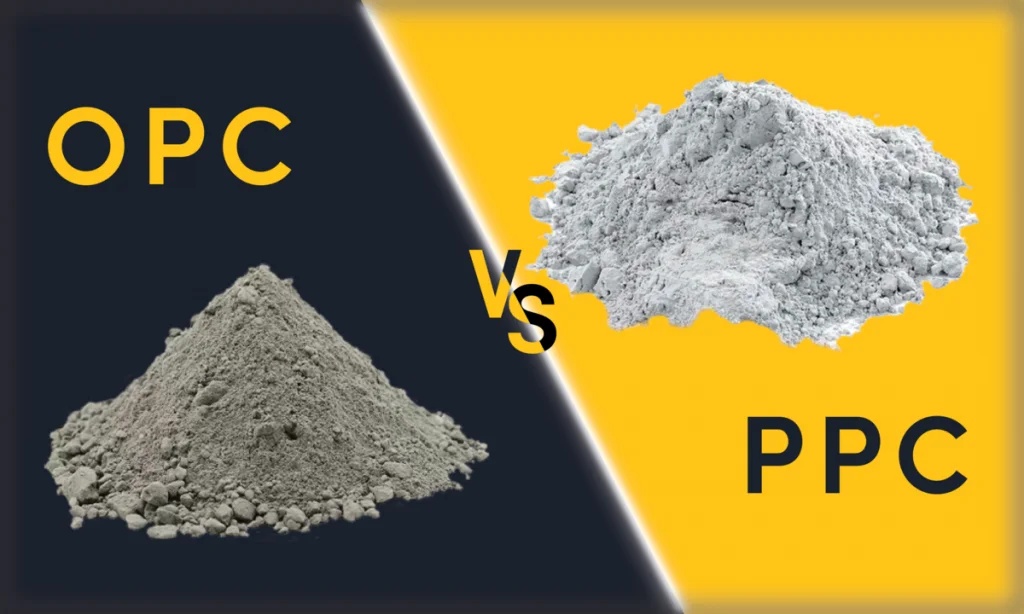
What Is OPC Cement?
OPC means Ordinary Portland Cement. It is one of the most commonly used cement types in Nigeria and across the world.
OPC cement is manufactured by grinding clinker with gypsum. It contains a high percentage of calcium silicates, which makes it gain strength quickly after mixing with water.
Because of its fast-setting and high early strength properties, OPC cement is widely used for heavy construction projects.
Characteristics of OPC Cement
- Gains strength rapidly
- Produces high heat during hydration
- Suitable for structural works
- Has excellent initial setting properties
- Commonly used in foundations and reinforced concrete works
Grades of OPC Cement in Nigeria
OPC 32.5 Grade
This grade is mostly used for plastering and light construction work.
OPC 42.5 Grade
This is the most commonly used grade in Nigeria for building houses and commercial structures.
OPC 52.5 Grade
This grade is used for heavy engineering projects requiring very high strength.
What Is PPC Cement?
PPC means Portland Pozzolana Cement. It is produced by blending ordinary Portland Cement clinker with pozzolanic materials such as fly ash, volcanic ash, or calcined clay.
PPC cement is becoming increasingly popular in Nigeria because it offers better long-term durability and reduced cracking.
Unlike OPC cement, PPC generates less heat during hydration, making it suitable for large concrete structures and hot weather conditions.
Characteristics of PPC Cement
- Lower heat generation
- Better workability
- Improved crack resistance
- Better durability over time
- More environmentally friendly
Major Difference Between OPC and PPC Cement
The primary difference between OPC and PPC cement lies in their composition and performance.
Difference in Composition
OPC contains clinker and gypsum only, while PPC contains clinker, gypsum, and pozzolanic materials.
Difference in Strength Development
OPC gains strength faster during the early days, while PPC develops strength gradually over time.
Difference in Heat Generation
OPC generates more heat during hydration, while PPC produces less heat and reduces thermal cracking.
Difference in Durability
PPC cement generally offers better durability because it is more resistant to chemicals, moisture, and sulphates.
Difference in Crack Resistance
PPC has better crack resistance due to its lower heat generation and improved bonding properties.
Difference in Cost
In many parts of Nigeria, PPC cement may be slightly cheaper than high-grade OPC cement depending on the brand and location.
OPC vs PPC Cement Comparison Table
| Feature | OPC Cement | PPC Cement |
|---|---|---|
| Full Meaning | Ordinary Portland Cement | Portland Pozzolana Cement |
| Strength Gain | Fast early strength | Slow, gradual strength |
| Heat Generation | High | Low |
| Crack Resistance | Lower | Higher |
| Durability | Moderate | High |
| Workability | Moderate | Excellent |
| Eco-Friendly | Less eco-friendly | More eco-friendly |
| Water Resistance | Moderate | Better |
| Best Use | Structural works | Plastering and residential works |
| Setting Time | Faster | Slower |
Advantages of OPC Cement
High Early Strength
One major advantage of OPC cement is its ability to gain strength quickly. This makes construction faster.
Suitable for Heavy Construction
OPC cement is commonly used for:
- Bridges
- High-rise buildings
- Industrial structures
- Reinforced concrete works
Faster Construction Speed
Because OPC sets quickly, builders can complete projects within shorter timelines.
Widely Available in Nigeria
Most Nigerian cement manufacturers produce OPC cement, making it easy to find.
Disadvantages of OPC Cement
Higher Heat of Hydration
OPC generates significant heat during curing, which may lead to cracks in large concrete structures.
Environmental Impact
The production of OPC contributes to higher carbon emissions.
Lower Long-Term Durability
Compared to PPC, OPC may be less resistant to chemicals and moisture over time.
Advantages of PPC Cement
Better Durability
PPC cement performs better in wet and humid environments.
Reduced Cracking
Because it generates less heat, PPC minimizes the chances of cracks.
Excellent Workability
PPC is easier to mix and apply during plastering and block molding.
Environmentally Friendly
PPC contains industrial waste materials such as fly ash, reducing environmental pollution.
Disadvantages of PPC Cement
Slow Strength Gain
PPC takes longer to achieve full strength compared to OPC.
Longer Curing Time
Projects using PPC cement may require extended curing periods.
Not Ideal for Urgent Construction Projects
If rapid strength development is needed, OPC may be a better option.
Which is Stronger — OPC or PPC Cement?
For early strength, OPC cement is stronger. However, for long-term durability and resistance, PPC performs better over time.
Quick Answer for Featured Snippet
OPC cement is stronger during the early curing stage, while PPC cement becomes more durable and crack-resistant over time.
This is why many Nigerian engineers prefer OPC for structural works and PPC for plastering and finishing.
OPC vs PPC Cement Price in Nigeria
Cement prices in Nigeria vary based on:
- Brand
- Location
- Transportation cost
- Government policies
- Inflation
For updated market prices, read our detailed guide on cement prices in Nigeria today.
Average Price Range
- OPC Cement: ₦9,000 – ₦12,000 per bag
- PPC Cement: ₦8,500 – ₦11,500 per bag
Prices may differ across Lagos, Abuja, Port Harcourt, Kano, and other states.
Best Uses of OPC Cement in Nigeria
OPC cement is ideal for:
- Foundations
- Columns and beams
- Bridges
- Road construction
- Heavy structural works
- High-rise buildings
If you are planning a residential project, you should also check our guide on how many blocks it takes to build a 3-bedroom flat in Nigeria.
Best Uses of PPC Cement in Nigeria
PPC cement works best for:
- Block moulding
- Plastering
- Residential buildings
- Marine structures
- Drainage systems
- Waterlogged areas
Because PPC retains moisture better, many block industries in Nigeria prefer it for producing stronger blocks.
Which cement is better for block moulding in Nigeria?
Featured Snippet Answer
PPC cement is generally better for block molding in Nigeria because it offers better workability, improved bonding, and reduced cracking.
Many block manufacturers choose PPC because it helps produce smooth and durable blocks.
Which Cement Is Better for House Construction in Nigeria?
The best cement depends on the specific part of the building.
Best Cement for Foundation
OPC cement is preferred because of its high early strength.
Best Cement for Plastering
PPC cement is better because it offers smooth finishing and reduced cracks.
Best Cement for Residential Buildings
A combination of OPC and PPC is often the best solution.
Popular Cement Brands in Nigeria
Several companies manufacture OPC and PPC cement in Nigeria.
Dangote Cement
Dangote Cement produces high-quality OPC cement widely used across Nigeria.
BUA Cement
BUA Cement manufactures both OPC and PPC cement products.
Lafarge Cement
Lafarge Africa is known for producing durable cement suitable for various construction works.
If you want to compare cement quality further, you should read our article on best cement brands in Nigeria.
OPC vs PPC Cement for Nigerian Weather Conditions
Nigeria’s climate varies across regions, so weather plays an important role when selecting cement.
Rainy Season Performance
PPC performs better in wet environments due to improved moisture resistance.
Northern Nigeria Heat Resistance
PPC is suitable for hot regions because it generates less heat.
Coastal Areas
PPC is ideal for coastal regions because it resists sulphate attacks better.
Environmental Impact of OPC and PPC Cement
PPC cement is considered more eco-friendly because it uses industrial by-products and reduces carbon emissions.
As sustainable construction grows in Nigeria, many builders now prefer PPC for environmentally conscious projects.
Common Mistakes Nigerians Make When Choosing Cement
Buying Based Only on Price
Cheaper cement may not always be suitable for your project.
Ignoring Cement Grade
Always check whether the cement is 32.5, 42.5, or 52.5 grade.
Poor Cement Storage
Improper storage can reduce cement quality.
Using One Cement Type for Everything
Different construction stages may require different cement types.
Expert Tips for Buying Cement in Nigeria
Buy From Trusted Dealers
Avoid fake cement products by purchasing from verified distributors.
Check Manufacturing Date
Fresh cement performs better than old stock.
Inspect Cement Bags
Avoid bags with lumps or moisture signs.
Store Cement Properly
Keep cement in dry environments away from water exposure.
OPC vs. PPC Cement—Which One Should You Choose?
Choose OPC Cement If:
- You need high early strength
- You are constructing heavy structures
- Fast project completion is important
Choose PPC Cement If:
- You want long-term durability
- You need crack resistance
- You are plastering or moulding blocks
- You are building in humid environments
FAQs About OPC and PPC Cement in Nigeria
Which cement is best in Nigeria for building houses?
Both OPC and PPC are good. OPC is ideal for structural works, while PPC is better for plastering and finishing.
Is Dangote cement OPC or PPC?
Dangote mainly produces OPC cement grades suitable for structural construction.
Why is PPC cement cheaper?
PPC uses pozzolanic materials, which reduce clinker content and production costs.
Can PPC cement be used for foundations?
Yes, but many engineers prefer OPC for foundations because of its faster strength development.
Which cement is best for plastering?
PPC cement is better for plastering because it offers smoother finishing and reduced cracking.
Does PPC cement crack less?
Yes. PPC generates less heat during hydration, which minimizes cracking.
Which cement lasts longer?
PPC cement generally offers better long-term durability.
What cement grade is best for block molding?
Most block manufacturers use 32.5 or 42.5 grade cement depending on the desired block strength.
Conclusion
Understanding the difference between OPC and PPC cement in Nigeria is essential before starting any construction project.
OPC cement is best for heavy structural works because it develops strength quickly. On the other hand, PPC cement offers better durability, crack resistance, and workability, making it ideal for plastering, residential buildings, and block molding.
The best option depends on your construction needs, project timeline, weather conditions, and budget.
For more construction guides, cost analysis, and building material updates, visit Structotag and explore our latest building resources.