
The construction sector is one of the largest contributors to greenhouse gas emissions on the planet. From the quarrying of raw materials to the final coat of paint on a finished building, every stage of a construction project leaves a carbon trail. For engineers, contractors, and project owners who want to remain competitive, meet regulatory requirements, and build lasting value, knowing how to reduce carbon emissions in construction is no longer optional — it is a professional obligation.
This guide breaks down the full picture: where construction emissions come from, which low-carbon building materials and sustainable construction practices deliver the best results, and how you can measure, manage, and cut your project’s carbon footprint step by step. Whether you are a site engineer on a housing project in Lagos, a contractor managing a highway expansion in the UK, or a developer planning a net-zero office block in Singapore, the principles and tools covered here apply directly to your work.
By the end of this article, you will understand the science behind construction carbon accounting, the economics of green construction strategies, the regulations that are reshaping procurement, and the actionable checklists that let you start reducing emissions on your next project immediately.
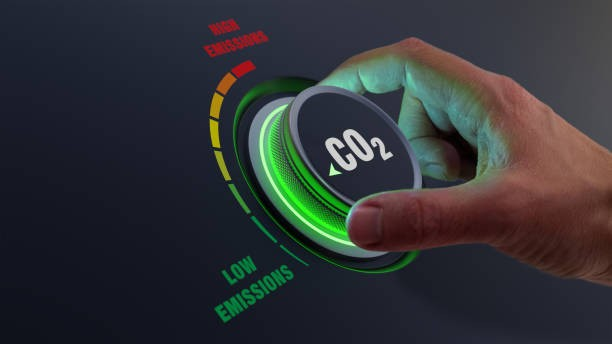
What Are Carbon Emissions in Construction? (Definition & Sources)
What Is a Construction Carbon Footprint?
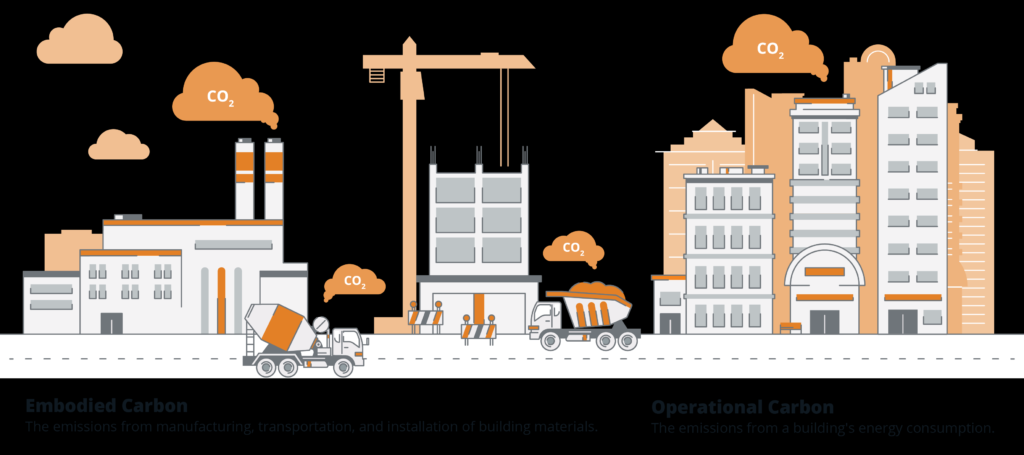
A construction carbon footprint is the total volume of greenhouse gases — measured in tonnes of CO₂ equivalent (tCO₂e) — released during the planning, design, material production, transportation, assembly, and commissioning of a built asset. It covers two distinct phases:
- Embodied carbon: Emissions locked into materials and construction processes before a building is ever occupied — including raw material extraction, manufacturing, transportation, and on-site construction activities.
- Operational carbon: Emissions produced by running a building over its lifetime — heating, cooling, lighting, and ventilation.
Globally, the construction industry accounts for approximately 37% of total energy-related CO₂ emissions when both phases are combined, according to the International Energy Agency (IEA). Embodied carbon alone represents 11% of global energy-related emissions — a figure that carries enormous weight as buildings become more energy-efficient and embodied carbon’s share of total lifecycle emissions rises.
Major Sources of Carbon Emissions in Construction Projects
1. Material Production (Cement and Steel)
Ordinary Portland Cement (OPC) production is responsible for roughly 8% of global CO₂ emissions on its own. Every tonne of clinker — the binding agent in cement — releases approximately 0.83 tonnes of CO₂ through the calcination of limestone. Steel production through basic oxygen furnaces adds another heavy load, generating between 1.8 and 2.1 tonnes of CO₂ per tonne of crude steel.
2. Transportation and Logistics
Moving materials from quarry to manufacturer, then to distributor, then to site consumes significant fuel. A single concrete delivery truck on a 500 km round trip can emit more than 150 kg of CO₂. On large projects with hundreds of daily vehicle movements, transport emissions accumulate fast.
3. On-Site Equipment and Machinery
Excavators, bulldozers, generators, cranes, and compactors run on diesel. A typical mid-size excavator burns 15–25 litres of diesel per hour. On a busy construction site operating multiple machines across a 10-hour shift, direct equipment emissions can exceed 2 tonnes of CO₂ per day.
4. Energy Consumption During Construction
Site offices, temporary lighting, concrete curing equipment, and welding operations all draw energy — and in many developing countries, that energy comes from diesel generators rather than the grid. Even in grid-connected sites, the energy mix matters: a coal-heavy grid multiplies the carbon cost of every kilowatt-hour consumed.
Why Reducing Carbon Emissions Matters (Environmental & Economic Impact)
Climate Change Contribution
Buildings constructed today will stand for 50 to 100 years. The carbon released during their construction and operation shapes climate trajectories for decades. The IPCC’s Sixth Assessment Report (2023) makes it clear that without deep, rapid, and sustained reductions across all sectors — including construction — limiting global warming to 1.5°C is out of reach.
Regulatory Pressure and Compliance
Carbon reporting requirements are tightening across the European Union, United Kingdom, and many Asian markets. The EU’s Carbon Border Adjustment Mechanism (CBAM), which began phasing in during 2023, places a carbon price on imports of carbon-intensive goods including steel and cement. Contractors who fail to track and disclose their carbon data risk losing access to public contracts.
Cost Savings and Efficiency
Reducing carbon is not purely an environmental exercise — it has direct financial returns. Optimised material use cuts procurement costs. Energy-efficient sites lower fuel bills. Waste reduction decreases disposal fees. Projects that score well on green building certifications command higher valuations and attract lower financing costs from ESG-oriented lenders.
Key Statistics and Trends in Construction Emissions (Update)
Global Carbon Emissions from the Construction Industry
The numbers tell a stark story. According to the Global Status Report for Buildings and Construction published by the United Nations Environment Programme (UNEP):
| Metric | Figure | Source |
| Construction & buildings share of global CO₂ emissions | 37% | IEA / UNEP 2024 |
| Embodied carbon as share of all energy-related emissions | 11% | World Green Building Council |
| Cement industry share of global CO₂ | ~8% | IEA 2023 |
| Steel industry share of global CO₂ | ~7% | World Steel Association |
| Annual construction waste generated globally | ~2.5 billion tonnes | UNEP 2023 |
| Projected growth in global floor area by 2060 | +75% (vs 2020) | IEA Buildings Report |
Regional Insights (US, UK, Asia, Africa)
- United States: Buildings account for about 40% of total US energy consumption. The Biden-era Inflation Reduction Act committed over $370 billion to clean energy and climate initiatives, a significant portion of which targets building decarbonisation.
- United Kingdom: The UK Government’s net-zero strategy requires a 68% cut in greenhouse gas emissions by 2030 against a 1990 baseline. The Future Homes Standard, due to come into force by 2025/2026, mandates new homes produce 75–80% less carbon than current regulations permit.
- Asia: China alone accounts for roughly half of all new construction globally. China’s 14th Five-Year Plan set carbon intensity reduction targets for the construction sector, while Japan has committed to net-zero by 2050 with mandatory carbon disclosure for large commercial buildings.
- Africa: With urban populations projected to double by 2050, Africa faces the challenge of meeting enormous housing and infrastructure demand while avoiding the carbon-intensive patterns of earlier industrialisation. Countries like South Africa and Nigeria are beginning to adopt green building standards, though enforcement remains uneven.
Future Projections and Net-Zero Goals
The IEA’s Net Zero by 2050 scenario requires that all new buildings reach net-zero carbon by 2030 in developed economies, and global average building energy intensity improves by 30% over the same period. Embodied carbon must fall by at least 40% by 2030 to stay on track.
Expert Insights on Sustainable Construction
| Expert View “We cannot hit net-zero in the built environment by focusing only on operational energy. Embodied carbon is the elephant in the room. The industry needs to treat low-carbon material choices with the same rigour it applies to structural calculations.” — Dr. Sarah Sayce, Professor of Sustainable Real Estate, Kingston University London |
Low-Carbon Building Materials Engineers Should Prioritise
Alternatives to Traditional Concrete
Green Concrete
Green concrete partially or fully replaces Portland cement clinker with supplementary cementitious materials (SCMs) that carry far lower embodied carbon. When properly designed, green concrete matches the compressive strength and durability of conventional mixes while cutting CO₂ by 30–60%.
Fly Ash and Slag-Based Cement
Fly ash — a byproduct of coal combustion — and Ground Granulated Blast-furnace Slag (GGBS) — a byproduct of iron manufacturing — are two widely available SCMs. Replacing 40% of cement with GGBS reduces embodied carbon by approximately 40%. At 70% replacement, reductions can exceed 60%. Both materials are often cheaper than OPC in markets with established supply chains.
Sustainable Steel and Recycled Materials
Electric Arc Furnace (EAF) steel, produced from recycled scrap metal, emits approximately 0.4 to 0.6 tonnes of CO₂ per tonne — compared to 1.8–2.1 tonnes for virgin blast-furnace steel. Specifying recycled-content steel in structural designs is one of the fastest levers available to a structural engineer. Aluminium, when produced using renewable hydroelectric power, can also achieve significantly lower embodied carbon than conventionally smelted versions.
Timber and Bio-Based Materials (Mass Timber, CLT)
Mass timber — particularly Cross-Laminated Timber (CLT) — has moved from niche innovation to mainstream structural option over the past decade. A typical CLT panel stores approximately 0.9 tonnes of CO₂ per cubic metre in the form of biogenic carbon. When CLT replaces concrete or steel in a building frame, the combined effect of carbon storage and avoided emissions can achieve negative embodied carbon figures at the structural level.
Beyond timber, bio-based materials including hempcrete, mycelium insulation, bamboo composites, and straw bale construction are gaining traction in low-rise and residential applications. Each offers dramatically lower embodied carbon than conventional alternatives.
Lifecycle Assessment of Building Materials
| Material | Embodied Carbon (kgCO₂e/kg) | Notes |
| Ordinary Portland Cement | 0.83 | Per kg of clinker |
| GGBS (50% replacement) | ~0.05 | Byproduct — near zero primary carbon |
| Structural steel (virgin) | 1.77–2.10 | Blast furnace route |
| Structural steel (recycled EAF) | 0.40–0.60 | Electric arc furnace |
| Cross-Laminated Timber (CLT) | Negative (stored ~900 kgCO₂/m³) | Carbon stored in wood |
| Brick (clay, fired) | 0.24–0.31 | Varies by kiln energy source |
| Aluminium (primary) | 8.24 | High — avoid unless recycled |
| Aluminium (recycled) | 0.60 | Significant reduction |
Source: ICE Database v3.0 (University of Bath); EC3 Tool baseline data.
Practical Strategies to Reduce Carbon Emissions on Construction Sites
Optimise Design for Energy Efficiency
Passive Design Strategies
Passive design reduces a building’s dependence on mechanical systems by working with climate rather than against it. Orientation for solar gain, natural ventilation corridors, thermal mass to buffer temperature swings, and high-performance insulation all cut both construction and operational carbon. A building designed with passive principles in mind from day one typically requires 30–50% less energy for heating and cooling over its life.
Building Information Modelling (BIM)
BIM platforms allow design teams to test material quantities, structural alternatives, and energy performance simultaneously before a single tonne of concrete is ordered. Carbon tracking plugins — including those integrated with Autodesk Revit and the EC3 tool — can flag carbon-intensive design choices in real time. Projects using BIM-integrated carbon tracking have reported embodied carbon savings of 10–20% at the design stage alone, with no increase in cost.
Use Energy-Efficient Machinery and Equipment
Equipment choice is one of the most controllable carbon variables on a construction site. Stage 5 emissions-certified engines use up to 20% less fuel than their Stage 3 equivalents. Telematics systems that monitor engine idling can reduce fuel consumption by 10–15% on a typical earthworks project simply by identifying and eliminating unnecessary idling time. Where battery-electric plant equipment is available — small excavators, dumpers, and telehandlers now exist in electric versions from several manufacturers — the lifecycle carbon savings are significant, particularly on grid-connected urban sites.
Reduce Material Waste and Improve Resource Efficiency
Construction waste in the UK alone amounts to over 60 million tonnes per year. Globally, the figure exceeds 2.5 billion tonnes annually. A material waste reduction programme that combines accurate quantity take-offs, just-in-time delivery, standardised cut sizes, and on-site sorting for reuse or recycling can cut material waste by 30–40% on a well-managed project. Every tonne of waste avoided also avoids the embodied carbon embedded in that material.
Implement Smart Construction Technologies (IoT, AI, Automation)
Internet of Things (IoT) sensors placed on fuel tanks, generators, and equipment can feed real-time data into a site carbon dashboard — giving project managers visibility of their emissions in the same way they track programme and cost. AI-driven scheduling tools can reduce vehicle movements by identifying optimal sequencing for material deliveries. Automated concrete batching reduces over-ordering. Drone surveys cut the need for repeat site visits and reduce associated travel emissions.
Reducing Emissions in Construction Logistics and Transportation
Efficient Supply Chain Management
Transportation emissions are often underestimated in project carbon accounts. A structured supply chain analysis identifies the highest-mileage material flows and opens opportunities for redesign. For example, switching aggregate supply from a distant quarry to a local one, or consolidating deliveries to reduce truck movements, can cut logistics-related emissions by 20–35%.
Local Sourcing of Materials
The carbon cost of transporting a tonne of materials drops significantly when the sourcing radius is reduced. Many procurement frameworks now specify a maximum transport distance for bulk materials — 50 km for aggregates is a common threshold in green building specifications. Local sourcing also supports regional economies and reduces supply chain vulnerability.
Use of Electric and Hybrid Vehicles
Electric light commercial vehicles — vans, pick-ups, and site vehicles — are now commercially available and competitive on total cost of ownership over a 5-year fleet cycle. Hybrid heavy trucks are available from several European manufacturers and offer 10–25% fuel savings on mixed-route deliveries. Fleet electrification paired with renewable charging infrastructure at depots and sites represents a clear path to near-zero transport emissions for intra-project logistics.
Route Optimisation and Fleet Management
Telematics and route optimisation software can reduce fleet fuel consumption by 10–20% by eliminating empty-load return trips, minimising idling in traffic, and optimising delivery windows to avoid congestion. Combined with driver behaviour training focused on smooth acceleration and anticipatory braking, these measures compound into meaningful emission reductions at negligible cost.
Sustainable Construction Methods and Techniques
Modular and Prefabricated Construction
Factory-based prefabrication shifts production from an uncontrolled outdoor environment to a quality-managed facility where material use is precise, waste is minimal, and energy is metered and managed. Studies of modular construction projects have found embodied carbon reductions of 20–30% compared to traditional in-situ construction, driven largely by reduced material waste and improved labour efficiency. Build times are shorter, which also reduces the duration of site-based energy consumption.
Lean Construction Principles
Lean construction applies manufacturing efficiency principles to building projects. The Last Planner System, pull scheduling, and continuous improvement cycles all reduce the rework, waiting, and over-processing that generate unnecessary energy use and waste. A lean project team that eliminates rework avoids re-ordering materials, re-mobilising equipment, and repeating energy-intensive processes — directly cutting the project carbon footprint.
Circular Economy in Construction
A circular construction economy keeps materials in productive use for as long as possible. Design for Disassembly (DfD) means specifying bolted rather than welded steel connections, using demountable partition systems, and avoiding composite materials that cannot be separated at end of life. Buildings designed for deconstruction recover 70–90% of structural materials for reuse or recycling, compared to 10–30% from buildings demolished conventionally.
Adaptive Reuse of Existing Structures
Refurbishing an existing building typically generates 50–75% less embodied carbon than demolishing it and building new. Adaptive reuse projects retain the structural frame — often the largest single source of embodied carbon — while upgrading cladding, services, and fit-out to modern performance standards. Several high-profile commercial refurbishments in London and New York have demonstrated that adaptively reused buildings can achieve BREEAM Outstanding or LEED Platinum certification.
Renewable Energy Integration in Construction Projects
On-Site Renewable Energy Solutions (Solar, Wind)
Temporary solar PV arrays mounted on site hoarding or scaffold structures can supply meaningful proportions of a construction site’s electricity demand. On a mid-size residential project, a 50 kWp temporary array can offset 40–60% of grid electricity demand for site offices, lighting, and small power tools. Wind turbines are less common on urban sites due to planning constraints but are viable for large rural infrastructure projects.
Energy Storage Systems
Battery Energy Storage Systems (BESS) paired with renewable generation allow sites to store surplus daytime solar generation and dispatch it during peak demand periods or at night — reducing dependence on diesel backup generators. Mobile BESS units are now available as rental plant items, making them accessible to projects of all sizes without capital commitment.
Transitioning to Net-Zero Construction Sites
A net-zero construction site is achievable through a combination of: renewable energy supply for site power, elimination of diesel plant where electric alternatives exist, procurement of low-carbon materials, avoidance of material waste, and offset of residual emissions through verified carbon credits (as a last resort, not a first step). Contractors achieving net-zero site status are gaining a competitive advantage in public procurement markets where carbon credentials increasingly form part of bid evaluation criteria.
Carbon Measurement Tools and Standards for Engineers
Carbon Accounting and Lifecycle Assessment (LCA)
Lifecycle Assessment (LCA) is the systematic analysis of environmental impacts across a product or system’s entire life — from resource extraction through manufacturing, use, and end-of-life. For construction, a whole-life carbon LCA covers modules A1–A5 (product and construction process), B1–B7 (use stage), and C1–C4 (end-of-life), as defined in EN 15978 and ISO 21931.
Popular Tools and Software
EC3 Tool (Embodied Carbon in Construction Calculator)
Developed by the Carbon Leadership Forum and free to use, EC3 pulls data from Environmental Product Declarations (EPDs) to compare the carbon intensity of specific products — concrete mixes, steel sections, insulation boards — from different manufacturers. It is now widely used on US public procurement projects and is expanding internationally. An engineer can use EC3 to select the lowest-carbon concrete mix available in their region for a given strength class.
One Click LCA
One Click LCA is a cloud-based platform that integrates with BIM software (Revit, ArchiCAD, Tekla) and accepts quantity data directly from design models. It generates whole-life carbon assessments compliant with EN 15978, LEED v4.1, BREEAM, and several national calculation methods. Its database covers over 250,000 products from more than 50 countries, making it one of the most geographically broad LCA platforms available.
Green Building Certifications
| Certification | Origin | Carbon Focus | Recognised In |
| LEED (Leadership in Energy and Environmental Design) | USA (USGBC) | Materials & resources, energy, LCA credits | Global — 180+ countries |
| BREEAM (Building Research Establishment Environmental Assessment Method) | UK (BRE) | Embodied carbon, energy, materials | Widely used across Europe, Middle East, Africa |
| EDGE (Excellence in Design for Greater Efficiencies) | IFC/World Bank | Energy, water, materials | Emerging markets — Africa, Asia, Latin America |
| Green Star | Australia (GBCA) | Emissions, energy, materials | Australia, New Zealand, South Africa |
Regulations and Policies Driving Low-Carbon Construction
Global Climate Policies Affecting Construction
The Paris Agreement’s 1.5°C pathway requires construction sectors globally to reach net-zero embodied carbon by no later than 2050 — with major emitters needing to move faster. The Glasgow Climate Pact (COP26, 2021) and the UAE Consensus (COP28, 2023) both affirmed the need for accelerated action in building decarbonisation. National implementation translates these global commitments into procurement mandates, building codes, and carbon taxes.
Local Regulations Engineers Must Know
- EU Taxonomy for Sustainable Activities: Defines which economic activities — including construction — qualify as environmentally sustainable. Projects that do not meet taxonomy criteria increasingly struggle to access green finance.
- UK Net Zero Carbon Buildings Standard (NZCBS): A voluntary but professionally significant standard developed by a cross-industry coalition to establish what net-zero actually means for buildings at design, construction, and operation stages.
- Nigeria’s National Building Code and NESREA regulations: Engineers in Nigeria should be aware that Nigeria’s National Building Code (2006, revised) and the National Environmental Standards and Regulations Enforcement Agency (NESREA) provide the framework for environmental compliance, with growing attention to energy efficiency in new commercial developments.
- Singapore’s Green Building Masterplan: Targets 80% of all buildings to be green-certified by 2030. New government buildings must achieve Super Low Energy status.
ESG and Corporate Sustainability Goals
Environmental, Social, and Governance (ESG) reporting requirements now extend to construction contractors supplying large corporations and government bodies. International Financial Reporting Standards (IFRS) S2 — Climate-related Disclosures — came into effect for many entities in 2024, requiring disclosure of Scope 1, 2, and 3 emissions. For construction contractors, Scope 3 includes the embodied carbon of materials purchased — a powerful incentive to pressure material suppliers toward lower-carbon products.
Cost vs Benefit: Is Reducing Carbon Emissions Profitable?
Initial Investment vs Long-Term Savings
The upfront cost premium for sustainable construction varies widely by measure. Specifying GGBS cement at 50% replacement typically costs the same or less than OPC. Switching to EAF recycled steel may carry a 5–10% premium depending on market conditions. Installing temporary solar on a large project site has a payback period of 12–24 months against diesel generator costs. BIM-integrated carbon tracking adds design fee cost but recouped through reduced rework and optimised material quantities.
ROI of Sustainable Construction Practices
| Carbon Reduction Measure | Typical Upfront Premium | Typical Saving / ROI |
| 50% GGBS cement replacement | 0–5% on material cost | 30–50% reduction in cement embodied carbon |
| EAF recycled structural steel | 5–10% on steel cost | 65–75% reduction in structural steel carbon |
| Site solar PV (50 kWp) | £25,000–£40,000 capex | Payback in 12–24 months vs diesel |
| BIM carbon tracking plugin | 2–4% design fee increase | 10–20% embodied carbon saving at design |
| Modular/prefabricated structure | 5–15% on structure cost | 20–30% embodied carbon; 30–40% shorter build time |
| Electric site vehicles | 15–25% premium on fleet | Fuel savings of 60–80%; lower maintenance |

Case Studies of Successful Projects
Case Study 1: Vestre Factory, Sundbyberg, Norway
Designed by Snohetta and completed in 2022, the Vestre furniture factory used mass timber structure, recycled steel, and a deep lifecycle assessment from the earliest design stage. The project achieved net-zero embodied carbon, with biogenic carbon storage in the timber structure offsetting residual emissions. Operational energy is supplied entirely from on-site renewable sources.
Case Study 2: Marsh Road, West London (Modular Social Housing)
A volumetric modular housing scheme delivered 50% faster than traditional construction, with a 28% reduction in embodied carbon compared to a traditional concrete-frame equivalent. Factory precision eliminated formwork waste, and structural panel reuse was designed in from the start.
Case Study 3: LafargeHolcim ECOPact Concrete, Multiple Sites
LafargeHolcim’s ECOPact green concrete range — available in markets including the UK, France, and India — uses SCM-rich mixes to deliver 30–100% lower embodied carbon than standard mixes at equivalent structural performance. Multiple infrastructure and commercial clients have adopted it as a standard specification.
Common Challenges in Reducing Construction Emissions (And Solutions)
High Cost of Sustainable Materials
Some low-carbon materials carry genuine price premiums, particularly where supply chains are immature. In markets like Nigeria and parts of West Africa, GGBS is not yet widely manufactured locally, which increases both cost and transport carbon. The solution is to prioritise zero-premium or low-premium measures first (cement replacement, waste reduction, local sourcing), build the business case from those savings, and gradually expand the scope of interventions as confidence and budgets grow.
Lack of Awareness and Training
Many site engineers and project managers have received no formal training in carbon accounting or sustainable construction. A 2023 CIOB survey found that over 55% of construction professionals felt under-equipped to meet their organisations’ sustainability commitments. Addressing this requires structured CPD programmes, industry certification, and leadership that values carbon literacy alongside cost and programme management.
Resistance to Change in Traditional Practices
The construction industry has long cycles of product adoption and a culture that prioritises time-tested methods. Introducing new materials or approaches is perceived as risk — particularly where contractual liability rests with the engineer or contractor. Overcoming this requires demonstration projects, performance guarantees from manufacturers, and procurement frameworks that reward innovation rather than penalise it.
Solutions and Best Practices
- Start with a carbon audit at the project outset to identify the highest-impact opportunities.
- Set measurable carbon targets in the project brief, with the same status as cost and programme targets.
- Include carbon reduction criteria in subcontractor and supplier pre-qualification questionnaires.
- Share carbon data across the supply chain to create collective accountability.
- Celebrate and document successes to build internal confidence and industry visibility.
Actionable Checklist for Engineers and Contractors
Use this checklist at project inception and review it at each design gate and construction phase.
| Action | Stage | Owner | Status |
| Conduct a whole-project carbon audit using LCA tools (EC3, One Click LCA) | RIBA Stage 0–1 | Design Lead / Engineer | |
| Set project carbon target (kgCO₂e/m²) aligned with LETI or RIBA 2030 benchmarks | RIBA Stage 1 | Client / PM | |
| Specify low-carbon cement (50%+ GGBS or fly ash replacement) | RIBA Stage 2 | Structural Engineer | |
| Specify recycled-content or EAF steel for all structural steelwork | RIBA Stage 2 | Structural Engineer | |
| Evaluate mass timber alternatives for structural frame and floors | RIBA Stage 2 | Structural Engineer | |
| Source aggregates and bulk materials within 50 km of site | RIBA Stage 3 | Procurement Manager | |
| Implement just-in-time delivery and digital quantity tracking to cut waste | Construction | Site Manager | |
| Replace diesel generators with grid connection or temporary solar + BESS | Construction | Site Manager | |
| Deploy telematics on all plant to monitor and reduce idling time | Construction | Plant Manager | |
| Sort and record all construction waste for reuse or recycling | Construction | Site Manager | |
| Submit EPDs for all major materials to the project carbon register | Construction | Procurement Manager | |
| Conduct post-completion embodied carbon review against target | Completion | Design Lead |
FAQs (Optimised for Featured Snippets)
What is the fastest way to reduce carbon emissions in construction?
The fastest wins come from design-stage decisions before any material is ordered. Replacing 50% of Portland cement with GGBS in the concrete specification, switching to EAF recycled steel, and eliminating diesel generators through grid connection or temporary solar can collectively cut a project’s embodied and construction-phase carbon by 30–45% with minimal schedule impact. These three measures, applied at design stage, cost less to implement than they save in materials and energy over the project.
Which material has the highest carbon footprint in construction?
Primary aluminium has the highest embodied carbon per kilogram at approximately 8–12 kgCO₂e/kg, though it is used in relatively small quantities on most projects. By total volume of emissions, cement clinker and virgin blast-furnace steel cause the most construction carbon globally because they are used in such enormous quantities. Cement’s calcination process alone releases approximately 0.83 kg of CO₂ per kilogram of clinker — a figure that compounds across the billions of tonnes produced annually worldwide.
Can construction be carbon neutral?
Yes — and several projects have already achieved it. Carbon neutrality requires: using low-carbon materials to minimise embodied carbon, powering construction with renewable energy to eliminate construction-phase operational carbon, avoiding or recycling all material waste, and offsetting any residual emissions through verified, high-quality carbon credits. At the building scale, net-zero whole-life carbon certification under standards like the UK Net Zero Carbon Buildings Standard (NZCBS) or LEED Zero is achievable today with the right design intent and procurement choices from the start.
How do contractors measure carbon emissions on a project?
Carbon measurement starts with a Bill of Quantities (BoQ) or material schedule. Each material quantity is multiplied by its embodied carbon factor — drawn from sources like the ICE Database, manufacturer EPDs, or the EC3 tool — to produce an embodied carbon figure in kgCO₂e. Construction-phase emissions (fuel, energy, transport) are metered directly from fuel consumption records and energy bills, converted using standard emission factors. The sum gives the project’s total construction carbon, which can be benchmarked against targets like the LETI Carbon Target Chart.
What are low-carbon alternatives to cement?
The most proven alternatives include: Ground Granulated Blast-furnace Slag (GGBS), which can replace 40–70% of OPC at near-zero primary embodied carbon; pulverised fly ash (PFA), a coal combustion byproduct used at 20–40% replacement; calcined clay cement (LC3), which has potential in regions like Sub-Saharan Africa and South Asia where both materials are locally available; and geopolymer concrete, which uses no OPC at all and can achieve 40–80% lower embodied carbon depending on the activators used. Each has different workability characteristics and is suitable for different structural applications — structural engineers should review mix design with a specialist when moving beyond standard OPC.
Conclusion: The Future of Low-Carbon Construction
The construction industry stands at a decisive point. The buildings and infrastructure projects begun today will define the carbon story of the built environment for the next half century. The good news is that the tools, materials, technologies, and frameworks needed to build differently already exist — they do not require waiting for a future breakthrough.
For engineers, the shift to low-carbon practice is a professional evolution, not a disruption. Specifying GGBS concrete is as technically straightforward as specifying OPC. Designing for modular construction requires the same engineering rigour as traditional construction, applied from an earlier stage. Using BIM to track carbon in real time sits alongside the cost and programme monitoring that already defines project management. The skills transfer. What changes is the lens through which design decisions are evaluated.
For contractors, low-carbon construction is rapidly becoming the baseline expectation in public procurement and corporate supply chains. Organisations that invest now in carbon measurement capability, equipment upgrades, and staff training will hold a material competitive advantage over those that delay.
The urgency is real. The IPCC’s timeline for meaningful emissions reductions leaves no room for a slow transition. But the construction industry has a track record of rapid change when commercial incentives and regulatory direction align — and that alignment is arriving. The question is not whether construction will decarbonise, but which firms and professionals will lead it.
Key References and Authoritative Sources
- International Energy Agency (IEA) — Global Status Report for Buildings and Construction 2024: iea.org
- IPCC Sixth Assessment Report (AR6), 2023: ipcc.ch
- World Green Building Council — Advancing Net Zero: worldgbc.org
- ICE Database v3.0, University of Bath (Embodied Carbon Factors): bath.ac.uk
- EC3 Tool (Embodied Carbon in Construction Calculator): buildingtransparency.org
- One Click LCA: oneclicklca.com
- LETI (London Energy Transformation Initiative) Carbon Targets: leti.uk
- UNEP — 2024 Global Status Report for Buildings and Construction: unep.org
- UK Net Zero Carbon Buildings Standard (NZCBS): nzcbuildings.co.uk