
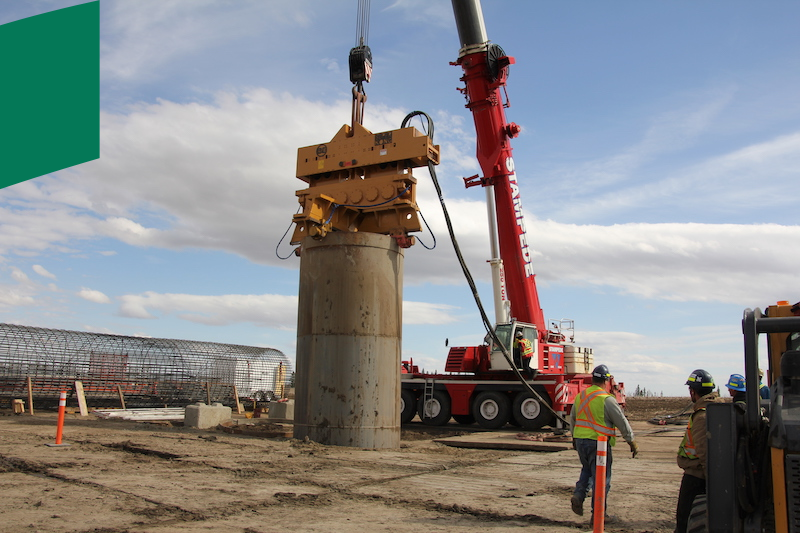
Deep foundations are structural elements that transfer the loads of a building or structure to deeper, more competent soil or rock layers. They are essential when the surface soil conditions are not suitable for shallow foundations due to low bearing capacity, potential settlement, or other geotechnical concerns. Deep foundations play a vital role in ensuring the stability and safety of various construction projects, ranging from high-rise buildings and bridges to offshore platforms and retaining walls.
What are Deep Foundations?
Deep foundations are specialized foundation systems designed to transfer structural loads to deeper, more stable soil or rock strata. Unlike shallow foundations that rely on the near-surface soil layers for support, deep foundations extend far below the ground surface to derive their load-bearing capacity from the underlying soil or rock layers. These foundation types are commonly used when the surface soil conditions are inadequate to support the anticipated loads or when the structure’s design requirements necessitate additional support.
Importance of Deep Foundations in Construction
The importance of deep foundations in construction cannot be overstated. They play a crucial role in ensuring the stability, safety, and long-term performance of structures in various challenging soil conditions. Deep foundations are particularly vital in the following scenarios:
- Poor Surface Soil Conditions: When the surface soil layers have low bearing capacity, high compressibility, or are susceptible to settlements, deep foundations are employed to transfer the loads to more competent strata below.
- High-Rise Buildings and Tall Structures: Tall buildings and structures require deep foundations to safely transfer the substantial vertical and lateral loads to the underlying soil or rock layers.
- Heavy or Concentrated Loads: Structures with heavy or concentrated loads, such as industrial facilities, bridges, or offshore platforms, often necessitate the use of deep foundations to distribute these loads effectively.
- Seismic Regions: In areas with high seismic activity, deep foundations are essential for providing additional lateral resistance and minimizing the potential for differential settlements during earthquakes.
- Environmentally Sensitive Areas: Deep foundations can be advantageous in environmentally sensitive areas where minimizing disturbance to the surface soil and groundwater is critical.
By providing a reliable and robust foundation system, deep foundations ensure the structural integrity, durability, and stability of various construction projects, ultimately contributing to public safety and economic development.
Types of Deep Foundations
Deep foundations encompass a wide range of types and construction methods, each suited to specific project requirements and site conditions. The choice of deep foundation type is influenced by factors such as soil and rock properties, anticipated loads, construction constraints, and environmental considerations. Some of the most common types of deep foundations include:
- Driven Piles
- Bored Piles (Drilled Shafts)
- Caissons (Well Foundations)
- Micropiles
- Screw Piles and Helical Anchors
- Diaphragm Walls (Slurry Walls)
- Geotechnical Anchors
Driven Piles
Driven piles are long, slender structural elements that are driven into the ground using impact or vibratory hammers. They transfer loads through a combination of end bearing and skin friction along their shaft. Driven piles can be made of various materials, including timber, steel, concrete, or composite materials.
Bored Piles (Drilled Shafts)
Bored piles, also known as drilled shafts, are constructed by drilling a hole in the ground and filling it with reinforced concrete. They can be straight or belled (widened at the bottom) to increase their load-bearing capacity. Bored piles are often used when driving piles is not feasible or when large lateral loads need to be resisted.
Caissons (Well Foundations)
Caissons are large, reinforced concrete shafts that are constructed by sinking a watertight casing or lining into the ground. They can be open, pneumatic (using compressed air to support the excavation), or box caissons. Caissons are commonly used for bridge foundations, offshore structures, and buildings with very heavy loads.
Micropiles
Micropiles are small-diameter, drilled and grouted piles that can be installed in low headroom or confined spaces. They are often used for underpinning existing foundations, slope stabilization, and other applications where conventional piles are not feasible.
Screw Piles and Helical Anchors
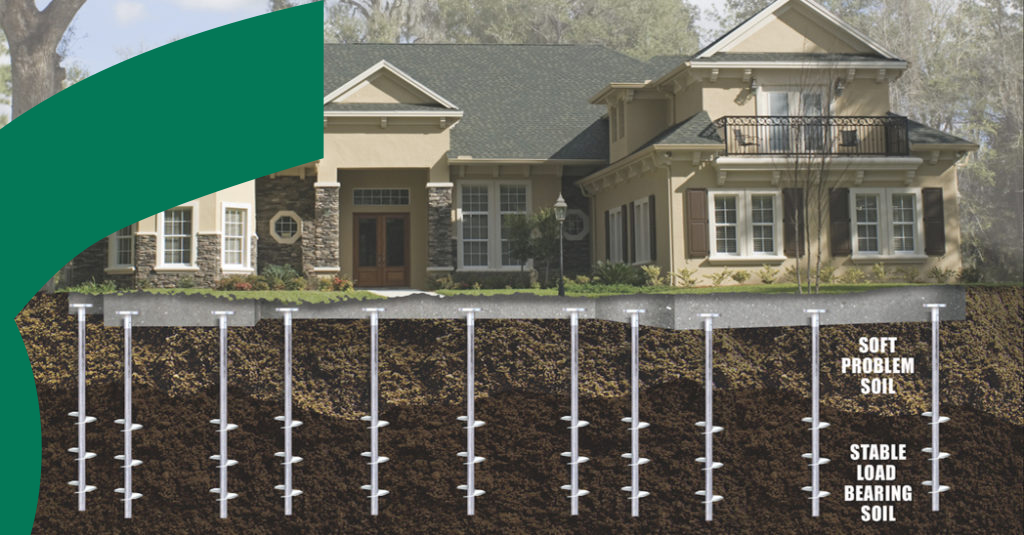
Screw piles and helical anchors are deep foundation systems that consist of a central shaft with helical plates or flanges welded to it. They are installed by rotating and advancing the pile into the ground, deriving their load-bearing capacity from the soil’s resistance to the helical plates.
Diaphragm Walls (Slurry Walls)
Diaphragm walls, also known as slurry walls, are reinforced concrete walls constructed in a slurry-filled trench. They are commonly used for deep excavations, retaining walls, and as permanent foundations for structures in urban areas where space is limited.
Geotechnical Anchors
Geotechnical anchors are tensile elements that are installed in soil or rock to provide additional support and stabilization for structures or excavations. They can be rock anchors or soil anchors, depending on the type of material they are anchored in.
Driven Piles
Driven piles are one of the most widely used types of deep foundations due to their versatility, cost-effectiveness, and ability to handle a wide range of loads. They are suitable for various applications, including bridges, high-rise buildings, offshore platforms, and industrial facilities.
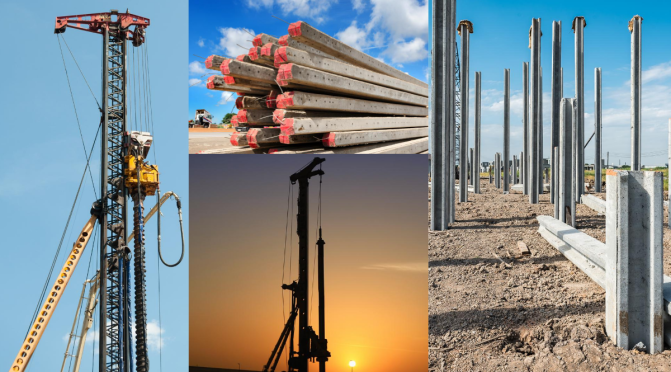
Types of Driven Piles
Driven piles can be categorized based on the materials used in their construction:
Timber Piles
Timber piles are the oldest type of driven piles and are still used in certain applications, particularly for temporary works or in areas with suitable soil conditions. They are typically made of treated wood, such as oak, pine, or douglas fir, and are available in various lengths and diameters.
Steel Piles
Steel piles are widely used in modern construction due to their high strength, durability, and ability to resist lateral loads. They can be H-piles, pipe piles, or sheet piles, and are often used in bridge foundations, marine structures, and heavy industrial facilities.
Concrete Piles
Concrete piles are cost-effective and durable, offering good resistance to corrosion and environmental conditions. They can be precast or prestressed, and are commonly used in building foundations, bridges, and other structures where high compressive loads need to be supported.
Composite Piles
Composite piles combine different materials, such as concrete-filled steel pipes or fiber-reinforced polymer (FRP) materials. These piles take advantage of the strengths of different materials, offering enhanced strength, durability, and corrosion resistance.
Applications
Driven piles are suitable for a wide range of applications, including:
- Building foundations (residential, commercial, and industrial)
- Bridge foundations
- Offshore structures (oil and gas platforms, wind turbines)
- Retaining walls and earth retention systems
- Slope stabilization and shoring
- Temporary works (e.g., construction staging, falsework)
Installation Process
The installation process for driven piles typically involves the following steps:
- Site preparation and pile layout
- Pile handling and positioning
- Driving the pile using impact or vibratory hammers
- Monitoring and testing (e.g., pile driving analyzer, load testing)
- Pile cut-off and preparation for cap or structure installation
Challenges
Noise and Vibration
Pile driving can generate significant noise and vibration, which can be disruptive to nearby structures, utilities, and communities. These impacts need to be carefully managed and mitigated.
Handling and Driving Issues
Driving piles can be challenging, especially in dense or obstructed soil conditions. Issues such as pile deviation, pile damage, and refusal (inability to drive deeper) can arise, requiring specialized techniques and equipment.
Solutions
Using Cushion Caps
Cushion caps, made of materials like wood or plastic, can be placed on top of the pile during driving to reduce noise, vibration, and potential damage to the pile.
Advanced Driving Equipment
Modern pile driving equipment, such as high-frequency vibratory hammers and hydraulic impact hammers, can improve driving efficiency, reduce noise and vibration, and provide better control over the driving process.
Bored Piles (Drilled Shafts)
Bored piles, also known as drilled shafts, are another widely used type of deep foundation, particularly in situations where driven piles are not feasible or when large lateral loads need to be resisted. They are commonly used in bridge foundations, high-rise buildings, and other structures with substantial vertical and lateral load requirements.

Types of Bored Piles
Straight-Shaft Bored Piles
Straight-shaft bored piles are cylindrical shafts with a constant diameter throughout their length. They are the most common type of bored pile and are suitable for a wide range of applications and soil conditions.
Belled-Shaft Bored Piles
Belled-shaft bored piles have an enlarged base or “bell” at the bottom, which increases the end-bearing capacity of the pile. This type of pile is often used when high axial loads need to be supported or when the soil conditions at the bearing stratum are less favorable.
Applications
Bored piles are used in various applications, including:
- High-rise building foundations
- Bridge foundations (abutments and piers)
- Retaining walls and shoring systems
- Foundation support for heavy industrial facilities
- Foundations for transmission line towers and wind turbines
Installation Process
The installation process for bored piles typically involves the following steps:
- Site preparation and layout
- Drilling a cylindrical hole using auger drilling rigs or drilling buckets
- Temporary casing installation (if required)
- Placement of reinforcement cage
- Concrete placement via tremie pipe or reverse circulation methods
- Curing and integrity testing
Challenges
Soil Stability
Maintaining the stability of the borehole during drilling is a critical challenge, particularly in loose or water-bearing soils. Caving or collapse of the borehole can lead to construction delays, increased costs, and potential safety issues.
Water Table Issues
When drilling through water-bearing soils or below the groundwater table, proper water control measures are necessary to ensure the stability of the borehole and the quality of the concrete.
Solutions
Use of Bentonite Slurry
Bentonite slurry, a dense and viscous fluid made from bentonite clay, is often used to maintain borehole stability and prevent caving. The slurry exerts a positive pressure on the borehole walls, counteracting soil and water pressures.
Temporary Casing
Temporary casing, made of steel or other materials, can be installed to support the borehole walls and prevent collapse. The casing is typically removed during or after concrete placement.
Caissons (Well Foundations)
Caissons, also known as well foundations, are large-diameter, reinforced concrete shafts that are constructed by sinking a watertight casing or lining into the ground. They are typically used for bridge foundations, offshore structures, and buildings with very heavy loads that require deep foundation support.
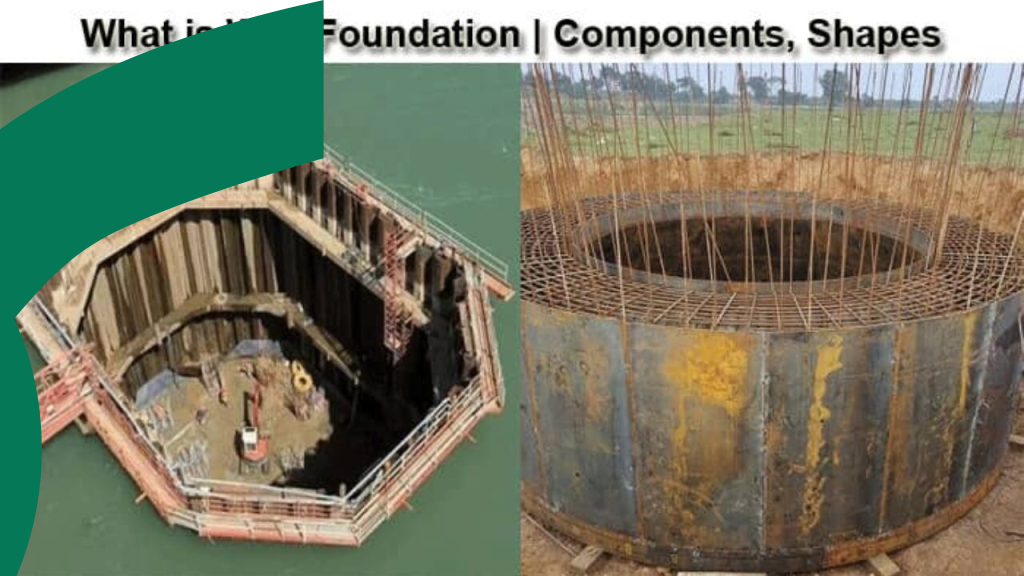
Types of Caissons
Open Caissons
Open caissons are constructed by sinking an open-bottom casing or lining into the ground, followed by excavation and concrete placement inside the casing. They are suitable for dry or dewatered soil conditions.
Pneumatic Caissons
Pneumatic caissons, also known as compressed air caissons, are constructed using compressed air to counterbalance the hydrostatic pressure and enable excavation below the groundwater table. Workers operate in a pressurized environment, and special precautions are required for their safety.
Box Caissons
Box caissons are reinforced concrete boxes that are prefabricated and then sunk into the ground using weighted or jacking systems. They are often used for offshore structures or foundations in water-bearing soils.
Applications
Caissons are used in various applications, including:
- Bridge foundations (piers and abutments)
- Offshore oil and gas platforms
- Foundations for high-rise buildings and heavy industrial facilities
- Foundations for dams and other water-retaining structures
Installation Process
The installation process for caissons can vary depending on the type and specific project requirements, but generally involves the following steps:
- Site preparation and excavation
- Sinking the caisson casing or lining into the ground
- Excavation inside the caisson (for open and pneumatic caissons)
- Placement of reinforcement and concrete inside the caisson
Challenges
Sealing and Groundwater Management
One of the main challenges in caisson construction is ensuring a proper seal against groundwater intrusion, particularly for pneumatic caissons and those constructed below the water table. Effective groundwater control and dewatering measures are crucial.
Solutions
Caisson Sinking Techniques
Various techniques, such as jacking, weighted sinking, or using specialized sinking equipment, can be employed to sink the caisson casing or lining into the ground while maintaining its alignment and stability.
De-watering Methods
Effective dewatering methods, such as well-point systems, deep wells, or grouting techniques, can be used to control groundwater and maintain a dry working environment during caisson construction.
Micropiles
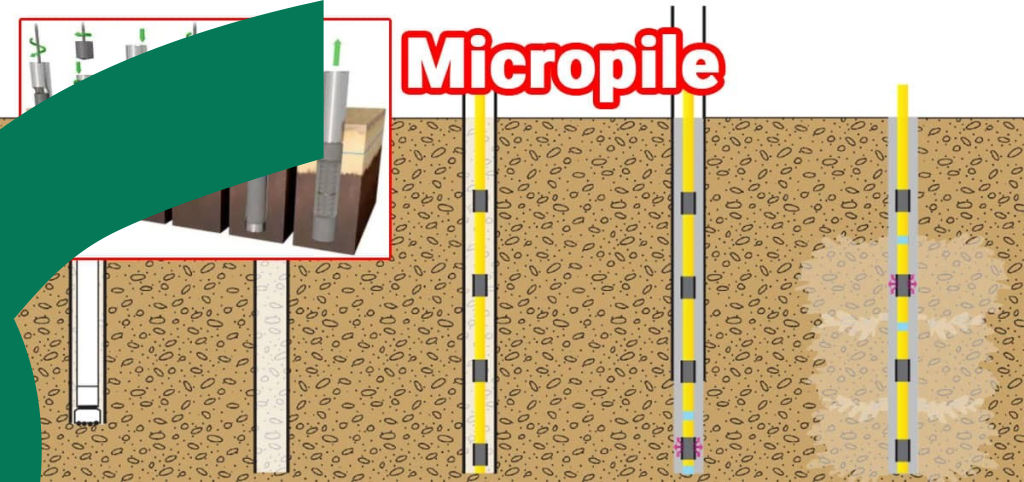
Micropiles are small-diameter, drilled and grouted piles that are typically used for underpinning existing foundations, slope stabilization, and other applications where conventional piles are not feasible due to space constraints or accessibility issues.
Applications
Micropiles are commonly used in the following applications:
- Underpinning and strengthening existing foundations
- Slope stabilization and earth retention systems
- Seismic retrofitting of structures
- Foundation support for new construction in confined spaces
- Temporary shoring and support systems
Installation Process
The installation process for micropiles generally involves the following steps:
- Drilling a small-diameter borehole
- Placement of reinforcement (typically a high-strength steel bar or pipe)
- Grouting the borehole with a high-strength cementitious grout
- Allowing the grout to cure and develop its full strength
Challenges
Limited Space
Micropiles are often used in confined spaces or areas with limited headroom, which can make their installation challenging and require specialized equipment and techniques.
Load Capacity
While micropiles offer a cost-effective solution in many cases, their load-bearing capacity is generally lower than that of larger-diameter piles, which may limit their application in certain projects.
Solutions
High-Strength Grout
The use of high-strength grouts, often incorporating admixtures or additives, can enhance the load-bearing capacity of micropiles and improve their performance.
Advanced Drilling Techniques
Specialized drilling rigs and techniques, such as hollow-stem augers or down-hole hammers, can be employed to install micropiles in challenging soil conditions or confined spaces.
Screw Piles and Helical Anchors
Screw piles and helical anchors are deep foundation systems that consist of a central shaft with one or more helical plates or flanges welded to it. They are installed by rotating and advancing the pile into the ground, deriving their load-bearing capacity from the soil’s resistance to the helical plates.
Applications
Screw piles and helical anchors are commonly used in the following applications:
- Foundations for light to moderate-weight structures (e.g., residential buildings, solar panel arrays, telecommunication towers)
- Temporary or permanent earth anchors for retaining walls and shoring systems
- Slope stabilization and erosion control measures
- Underpinning and strengthening existing foundations
Installation Process
The installation process for screw piles and helical anchors is relatively simple and involves the following steps:
- Site preparation and layout
- Positioning the pile or anchor at the desired location
- Rotating and advancing the pile or anchor into the ground using a hydraulic torque motor or specialized driving equipment
- Monitoring and adjusting the installation process based on torque measurements
- Termination and preparation for loadbearing
Challenges
Soil Resistance
The installation of screw piles and helical anchors can be challenging in very dense or obstructed soil conditions, as excessive soil resistance can hinder the advancement of the helical plates and lead to refusal or damage.
Solutions
Optimizing Helix Design
Optimizing the size, number, and configuration of the helical plates can improve the installation efficiency and load-bearing capacity of screw piles and helical anchors in various soil conditions.
Torque Monitoring
Continuous monitoring of the installation torque can provide valuable insights into the soil resistance encountered and help guide the installation process, ensuring proper embedment and load transfer.
Diaphragm Walls (Slurry Walls)
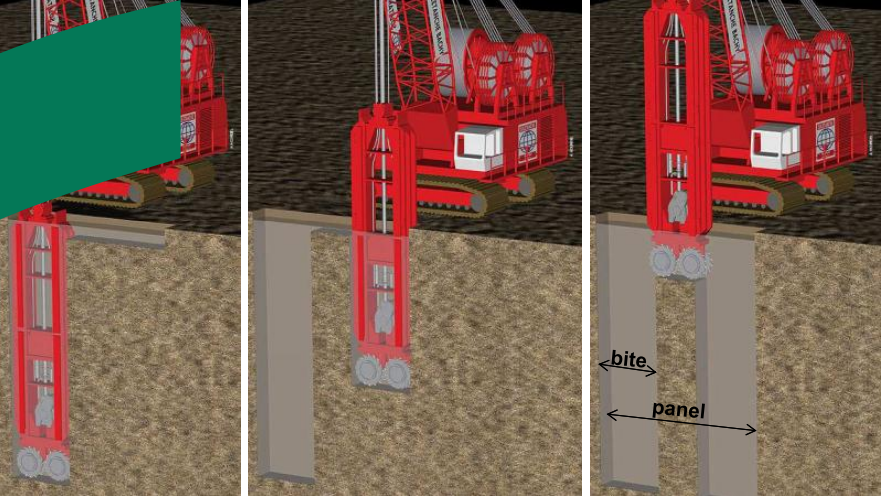
Diaphragm walls, also known as slurry walls, are reinforced concrete walls constructed in a slurry-filled trench. They are commonly used for deep excavations, retaining walls, and as permanent foundations for structures in urban areas where space is limited.
Applications
Diaphragm walls are used in various applications, including:
- Deep excavations for basements and underground structures
- Retaining walls for soil and water retention
- Permanent foundations for buildings in urban areas
- Cut-off walls for dams and other water-retaining structures
- Foundations for bridges and other transportation infrastructure
- Shoring systems for tunnels and underground construction
Installation Process
The installation process for diaphragm walls typically involves the following steps:
- Site preparation and layout
- Excavation of a slurry-filled trench using specialized equipment (e.g., hydromill, grab, or cutter)
- Placement of reinforcement cages in the trench
- Concreting the trench, typically using tremie pipes or skip buckets
- Curing and quality control measures (e.g., integrity testing)
Challenges
Slurry Stability
Maintaining the stability and properties of the slurry used to support the trench during excavation is crucial. Improper slurry management can lead to trench instability, slurry loss, or contamination, compromising the integrity of the diaphragm wall.
Wall Continuity
Ensuring the continuity and watertightness of the diaphragm wall is essential, particularly in applications where water retention or groundwater control is critical. Joints between wall panels must be properly designed and constructed to prevent leakage or structural deficiencies.
Solutions
Use of Polymer Slurries
Advanced polymer slurries, which offer improved viscosity and gel strength, can be used to enhance trench stability and reduce the risk of slurry loss or contamination.
Innovative Joint Solutions
Various joint solutions, such as hydrophilic waterstops, specialized gaskets, or grouted connections, can be employed to ensure the continuity and watertightness of diaphragm walls, minimizing the potential for leakage or differential settlements.
Geotechnical Anchors
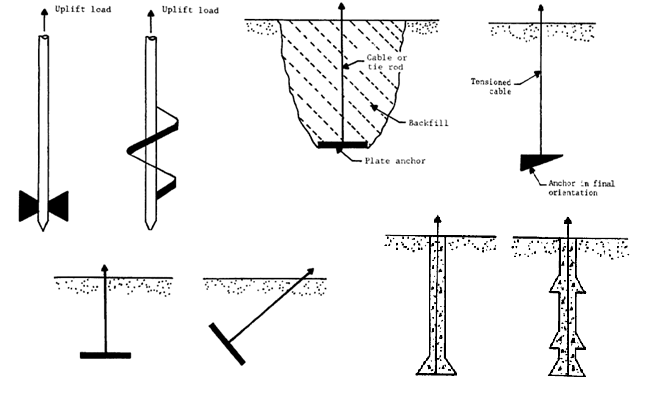
Geotechnical anchors are tensile elements that are installed in soil or rock to provide additional support and stabilization for structures or excavations. They can be rock anchors or soil anchors, depending on the type of material they are anchored in.
Types of Geotechnical Anchors
Rock Anchors
Rock anchors are tensile elements that are grouted or bonded into competent rock formations. They are commonly used for stabilizing rock slopes, retaining walls, and anchoring structures to the underlying rock.
Soil Anchors
Soil anchors, also known as ground anchors or tie-back anchors, are tensile elements that derive their load-bearing capacity from the shear resistance of the surrounding soil. They are often used for retaining walls, excavation support systems, and slope stabilization measures.
Applications
Geotechnical anchors are used in various applications, including:
- Stabilization of rock slopes and soil slopes
- Anchoring retaining walls and basement walls
- Providing lateral support for excavations and shoring systems
- Anchoring structures to competent rock or soil formations
- Stabilizing landslides and erosion control measures
Installation Process
The installation process for geotechnical anchors typically involves the following steps:
- Site preparation and layout
- Drilling a borehole for the anchor
- Placement of the anchor tendon (typically a high-strength steel bar or strand)
- Grouting the anchor bond length (rock anchors) or the anchor bond zone (soil anchors)
- Stressing and lock-off of the anchor
- Load testing (if required)
Challenges
Load Transfer Efficiency
Ensuring efficient load transfer between the anchor and the surrounding soil or rock is critical for the proper performance of geotechnical anchors. Factors such as grout quality, bond length, and anchor geometry can affect the load transfer efficiency.
Solutions
Enhanced Grouting Techniques
Advanced grouting techniques, such as pressure grouting or specialized grout mixes, can improve the bond between the anchor and the surrounding soil or rock, enhancing load transfer efficiency.
Load Testing
Conducting load testing, either during installation or as part of a quality control program, can verify the load-bearing capacity of geotechnical anchors and provide valuable data for design and performance evaluation.
Comparative Analysis of Deep Foundations
When selecting the appropriate deep foundation type for a project, it is essential to consider various factors, including cost, performance in different soil conditions, installation timeframes, and environmental impact.
- Cost Comparison
The cost of deep foundations can vary significantly depending on the type, site conditions, and project requirements. Generally, driven piles and bored piles tend to be more cost-effective for most applications, while caissons, micropiles, and diaphragm walls can be more expensive due to their specialized construction methods and materials.
- Performance in Different Soil Conditions
Different deep foundation types have varying performance characteristics in different soil conditions. For example, driven piles may be more suitable for dense or cohesive soils, while bored piles or caissons may perform better in loose or water-bearing soils. Screw piles and helical anchors are often preferred in relatively consistent soil conditions, while micropiles can be effective in challenging or obstructed soil conditions.
- Installation Timeframes
The installation timeframe for deep foundations can also vary considerably. Driven piles and screw piles can be installed relatively quickly, while bored piles, caissons, and diaphragm walls may require longer installation times due to the complexity of their construction processes.
- Environmental Impact
The environmental impact of deep foundation construction should be carefully considered, particularly in sensitive areas. Driven piles can generate significant noise and vibration, while bored piles and caissons may require specialized techniques for groundwater management and soil handling. Diaphragm walls and geotechnical anchors generally have a smaller environmental footprint but may still require measures to control groundwater and minimize disturbance.
Case Studies and Examples
Real-World Applications
Deep foundations have been instrumental in the successful completion of numerous high-profile projects around the world. Here are a few notable examples:
- Burj Khalifa, Dubai, UAE: The world’s tallest building, standing at 828 meters (2,717 feet), is supported by a deep foundation system consisting of 192 bored piles extending up to 50 meters (164 feet) into the ground.
- Golden Gate Bridge, San Francisco, USA: This iconic suspension bridge features massive concrete caissons as deep foundations, sunk into the bedrock beneath the San Francisco Bay to support the main towers.
- Millau Viaduct, Millau, France: This remarkable cable-stayed bridge, with a maximum height of 343 meters (1,125 feet), relies on deep foundations comprising bored piles and micropiles to anchor the structure to the underlying terrain.
- Chernobyl Nuclear Power Plant Containment Shelter, Ukraine: The construction of the New Safe Confinement structure, designed to contain the remnants of the Chernobyl disaster, utilized a combination of driven piles, bored piles, and diaphragm walls to provide a stable foundation in a highly radioactive environment.
Lessons Learned
These real-world projects have provided valuable lessons and insights into the design, construction, and performance of deep foundations in various challenging conditions. Some key lessons include:
- Thorough site investigation and soil characterization are crucial for proper deep foundation design and selection.
- Innovative construction techniques and specialized equipment may be required to overcome site-specific challenges.
- Continuous monitoring and quality control measures are essential to ensure the integrity and performance of deep foundations.
- Collaboration between engineers, contractors, and specialized subcontractors is vital for successful project execution.
Innovative Solutions Implemented
Many of these projects have also contributed to the development and implementation of innovative solutions in deep foundation engineering, such as:
- Use of high-performance materials (e.g., ultra-high-strength concrete, advanced steel alloys) to enhance pile capacity and durability.
- Adoption of advanced numerical modeling and analysis techniques for optimized deep foundation design.
- Development of specialized installation equipment and techniques (e.g., high-frequency vibratory hammers, down-hole hammers) for improved efficiency and quality control.
- Implementation of real-time monitoring systems and data acquisition technologies for construction quality assurance and performance evaluation.
Deep foundations play a vital role in ensuring the stability, safety, and longevity of various construction projects, from high-rise buildings and bridges to offshore structures and retaining walls. This comprehensive guide has explored the different types of deep foundations, including driven piles, bored piles, caissons, micropiles, screw piles and helical anchors, diaphragm walls, and geotechnical anchors.
Each deep foundation type has its unique characteristics, applications, installation processes, challenges, and solutions. Selecting the appropriate deep foundation system requires careful consideration of factors such as soil conditions, anticipated loads, construction constraints, and environmental concerns.
The field of deep foundation engineering continues to evolve, driven by the increasing complexity of construction projects, the need for sustainable and environmentally-friendly solutions, and advancements in materials, technology, and construction methods. Some future trends and developments in deep foundations include:
- Use of alternative materials: Exploration of alternative materials, such as fiber-reinforced polymers (FRP) and engineered wood products, for deep foundation elements to enhance durability, reduce environmental impact, and improve performance.
- Automation and digital construction: Increased adoption of automation, robotics, and digital technologies in deep foundation construction, enabling more efficient and precise installation processes, as well as improved monitoring and quality control.
- Sustainable construction practices: Greater emphasis on sustainable construction practices, including the use of low-carbon materials, optimization of material usage, and minimization of environmental impacts during deep foundation installation.
- Performance-based design: Shift towards performance-based design approaches for deep foundations, where the design is driven by specific performance criteria rather than prescriptive codes and standards, allowing for more cost-effective and optimized solutions.
- Integration of monitoring and sensing technologies: Widespread integration of advanced monitoring and sensing technologies, such as fiber-optic sensors and wireless sensor networks, to enable real-time performance monitoring and condition assessment of deep foundations throughout their service life.
Final Thoughts
Deep foundations are critical components of modern construction projects, ensuring the stability and longevity of structures in various challenging soil conditions. By understanding the different types of deep foundations, their applications, installation processes, challenges, and solutions, engineers and contractors can make informed decisions and implement effective strategies to meet project-specific requirements.
Continuous research, innovation, and knowledge sharing within the deep foundation engineering community are essential for addressing future challenges and developing more efficient, sustainable, and resilient deep foundation systems. Collaboration among stakeholders, including engineers, contractors, material suppliers, and regulatory agencies, will be key to driving progress and advancing the state of the art in deep foundation engineering.